
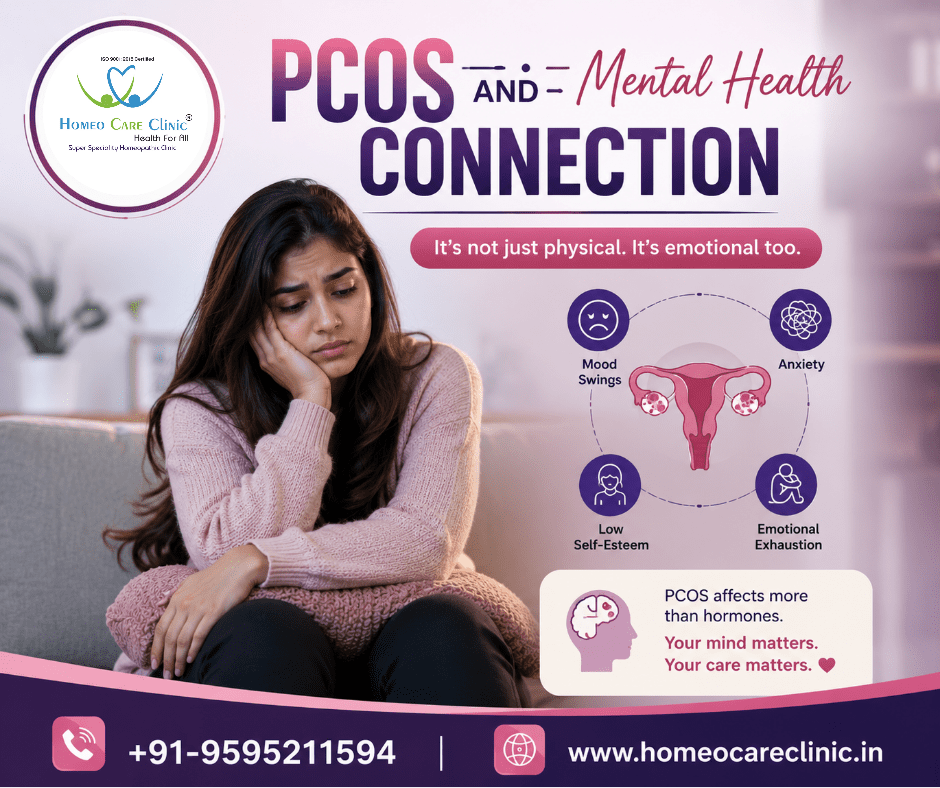
In our clinics across Pune, we routinely consult with women seeking help for Polycystic Ovary Syndrome (PCOS). Usually, they come in with a very specific list of physical complaints: irregular menstrual cycles, stubborn weight gain, cystic acne, and unwanted facial hair. They hand over ultrasound reports showing cystic ovaries and blood tests revealing high testosterone and insulin levels.
But when we sit down and conduct a thorough consultation, a completely different, much darker picture often emerges.
Once we look past the physical symptoms and ask about their daily emotional reality, the floodgates open. These women describe profound, crippling exhaustion. They talk about waking up with a racing heart and a sense of impending doom. They describe days where getting out of bed feels physically impossible, and moments where their mood swings so violently that they do not recognize themselves. They feel irritable, deeply sad, and entirely disconnected from their own bodies.
For decades, the conventional medical system has treated PCOS strictly as a reproductive and metabolic disorder. Doctors focus on regulating the period, managing weight, and preserving fertility. However, this fragmented approach ignores one of the most devastating aspects of the syndrome. We must talk openly and directly about pcos mental health.
The reality is that the brain and the ovaries are in constant communication. When the endocrine system is disrupted, the nervous system suffers the consequences. Women and their families frequently ask, can pcos affect mental health? The answer is a definitive and absolute yes. The effects of pcos on mental health are not a secondary issue; they are a primary, biological symptom of the syndrome itself.
It is time to look at the facts directly. We need to dissect the PCOS and mental health connection, understand exactly why hormonal imbalances alter brain chemistry, identify the precise pcos mental symptoms, and explore why conventional treatments often fail to provide relief. Finally, we will outline how deep, constitutional homeopathy combined with targeted lifestyle changes can restore both hormonal balance and mental peace.
Here is a straightforward, comprehensive guide to reclaiming your mind and your body.
The Biological Reality: What Causes the PCOS and mental health connection?
To understand why a condition characterized by ovarian cysts causes severe psychological distress, you have to understand the intricate web of human endocrinology. The brain runs on hormones. When your hormones are fundamentally dysregulated, your brain chemistry changes.
The link between pcos and mental illness or distress is not a character flaw. It is a biological chain reaction driven by four distinct physiological and psychosocial factors.
1. Insulin Resistance and Blood Sugar Volatility
Up to 70% of women with PCOS suffer from insulin resistance. This means your cells do not respond properly to insulin, forcing your pancreas to pump out massive amounts of it just to keep your blood sugar stable.
When you have high insulin levels, you experience dramatic blood sugar spikes and crashes throughout the day. When your blood sugar crashes rapidly, your brain perceives it as a life-threatening emergency. To save you from slipping into a coma, your brain signals the adrenal glands to release a massive surge of cortisol and adrenaline to force stored sugar into the bloodstream. This adrenaline dump causes a physical panic attack—a racing heart, sweating, shaking, and extreme anxiety. Your severe mood swings and midday anxiety attacks are often direct results of these invisible blood sugar crashes.
2. Hyperandrogenism (Excess Male Hormones)
PCOS is characterized by hyperandrogenism, which is the overproduction of “male” hormones like testosterone and DHEA. While all women have some testosterone, elevated levels actively interfere with the brain’s neurotransmitters.
High testosterone levels can disrupt the normal production and receptor sensitivity of serotonin and dopamine—the chemicals responsible for keeping you happy, calm, and motivated. When serotonin drops, the biological result is a heavy, persistent depression and an inability to feel joy. Furthermore, excess androgens cause physical symptoms like severe cystic acne and hirsutism (unwanted hair growth on the face and chest), which directly contribute to severe psychological distress.
3. Chronic, Low-Grade Inflammation
PCOS is now widely recognized by endocrinologists as a state of chronic, low-grade systemic inflammation. Women with PCOS routinely show elevated levels of inflammatory markers like C-reactive protein (CRP) in their bloodwork.
Recent breakthroughs in psychiatry have revealed a profound connection between neuroinflammation (inflammation in the brain) and mental illness. Inflammatory cytokines can cross the blood-brain barrier and alter brain function, directly triggering fatigue, depression, and severe brain fog. Your brain is literally inflamed, which drastically lowers your threshold for handling daily stress.
4. The Psychosocial Burden of the Symptoms
We cannot ignore the psychological trauma caused by the physical symptoms of PCOS. We live in a society that places a massive premium on female physical appearance and fertility.
When a woman begins to lose the hair on her head (androgenic alopecia), gains weight rapidly around her midsection despite intense dieting, develops thick facial hair, and is told she may struggle to have children, the psychological toll is catastrophic. The daily battle against one’s own body breeds intense body dysmorphia, social anxiety, and a profound sense of brokenness. The physical symptoms alone are enough to trigger severe depressive episodes.
Decoding The Signs: Recognizing Pcos Mental Symptoms
Because society largely views PCOS as a fertility issue, many women do not realize that their psychological struggles are directly tied to their ovaries and pancreas. They suffer in silence, believing they are simply “going crazy” or failing to manage their stress.
It is vital to recognize the specific pcos mental symptoms so that you can seek the correct systemic treatment.
Clinical Depression and Anhedonia
Depression in PCOS is incredibly common. Women are three times more likely to be diagnosed with depression if they have PCOS. This is not just feeling a bit sad; it is a heavy, physical exhaustion. It often presents as anhedonia—the complete inability to feel pleasure. Things that used to bring you joy, like hobbies or socializing, suddenly feel like massive, exhausting chores. You may feel a constant, dull emptiness, accompanied by a desire to sleep excessively or withdraw from your family and friends.
Severe, Unpredictable Anxiety and Panic
The anxiety associated with PCOS is often physical and sudden, largely driven by the cortisol and insulin fluctuations mentioned earlier. Women report waking up in the middle of the night with a racing heart. They experience generalized anxiety disorder (GAD), where they feel a constant, low-grade buzz of worry about the future, their health, and their appearance. This anxiety makes it incredibly difficult to concentrate at work or relax at home.
Brain Fog and Cognitive Fatigue
Many women with PCOS report feeling like they are walking through wet concrete. They experience severe “brain fog.” This looks like forgetting simple words in the middle of a sentence, struggling to read a single page of a book without losing focus, and feeling entirely overwhelmed by minor decisions. This cognitive fatigue is a direct result of insulin resistance and neuroinflammation depriving the brain of steady, clean energy.
Eating Disorders and Binge Eating
There is a massive, documented link between PCOS and eating disorders, particularly Binge Eating Disorder (BED) and bulimia. Because insulin resistance prevents cells from absorbing glucose properly, the brain constantly thinks the body is starving, even after a large meal. This triggers intense, uncontrollable biological cravings for sugar and carbohydrates. Women often binge eat to satisfy this biological drive, followed by intense psychological guilt, shame, and severe body hatred, creating a vicious, destructive cycle.
Intense Irritability and “PCOS Rage”
Hormonal fluctuations, particularly the lack of calming progesterone and the excess of testosterone and cortisol, severely shorten the temper. Women with PCOS often experience flashes of intense, disproportionate anger over minor inconveniences. They snap at their partners or children and immediately feel profound guilt afterward. They have zero emotional buffer to handle the standard frictions of daily life.
Conventional Treatment: The Limits of the Standard Approach
When a woman experiencing both the physical and mental symptoms of PCOS goes to a conventional doctor, the treatment plan is usually highly compartmentalized. An endocrinologist or gynecologist treats the ovaries, while a psychiatrist treats the brain. This fragmented approach often fails to heal the whole person.
The Oral Contraceptive Pill (Birth Control)
The first-line conventional treatment for PCOS is almost always the birth control pill. The goal is to force a regular bleeding cycle and lower testosterone.
However, the pill does not cure PCOS; it acts as a chemical band-aid. It shuts down your natural hormone production entirely and replaces it with synthetic hormones. More importantly, synthetic birth control pills have been clinically shown to worsen depression and anxiety in a significant percentage of women. For a woman already struggling with pcos mental health, adding synthetic hormones can push her deeper into a depressive episode.
Metformin for Insulin Resistance
Doctors frequently prescribe Metformin to improve insulin sensitivity and lower blood sugar. While Metformin can be highly effective for managing the metabolic side of PCOS, it comes with notorious side effects, including severe gastrointestinal distress (nausea, diarrhea, and cramping). Furthermore, Metformin is known to deplete Vitamin B12 in the body. B12 deficiency directly causes fatigue, memory loss, and severe depression, potentially worsening the mental health symptoms over time.
Antidepressants (SSRIs) and Anti-Anxiety Medications
If a woman mentions her severe mood swings or depression, she is usually referred to a psychiatrist who prescribes Selective Serotonin Reuptake Inhibitors (SSRIs) like Lexapro or Zoloft.
While SSRIs can be lifesaving in acute psychiatric emergencies, they do not address the underlying hormonal or metabolic roots of PCOS. They treat the brain while ignoring the ovaries and the pancreas. Furthermore, common side effects of SSRIs include weight gain and a loss of libido—two things that women with PCOS are already struggling with severely.
Cognitive Behavioral Therapy (CBT)
Therapy is an essential tool. CBT can help women process the trauma of body dysmorphia and learn coping skills for anxiety. However, talk therapy cannot change your fasting insulin levels, nor can it lower your testosterone. You cannot logic your way out of a biological hormone crash. Therapy must be combined with a treatment that actually heals the endocrine system.
Homeopathy Treatment: Healing the Neuroendocrine System
This is exactly why frustrated, exhausted women bring themselves to Homeo Care Clinic. They are tired of taking four different pills for four different symptoms. They want to address the effects of pcos on mental health by actually healing their biology from the inside out.
Homeopathy provides a profound, structural reset for a neuroendocrine system that has completely lost its rhythm. We do not use synthetic hormones to force a fake period, nor do we use chemical sedatives to numb the brain. We use incredibly safe, highly diluted, constitutional nanomedicines that stimulate the body’s own vital force to regulate insulin, balance testosterone, and calm the nervous system simultaneously.
We look at the complete clinical picture. Do you gain weight mostly around your stomach? Do you weep easily, or do you get violently angry? Are your periods early, late, or non-existent? By matching your specific physical and psychological pathology to the exact energetic frequency of the remedy, we can prompt the central nervous system to restore true homeostasis.
Here are 5 homeopathic medicines from our clinical cabinet that we rely on constantly to treat the complex PCOS and mental health connection.
1. Sepia
- Indicated for: Severe exhaustion, emotional indifference, and irregular menses with a dragging sensation.
- Best suited for: The Sepia patient is completely depleted. The defining mental symptom is a profound, terrifying indifference to the people she loves the most. She feels irritable, deeply exhausted, and just wants to be left entirely alone. She may feel physically repulsed by the idea of intimacy or social interaction. Physically, she suffers from irregular or totally absent periods, facial hair growth, and a heavy, dragging-down sensation in the pelvic region, as if her internal organs are going to fall out.
- Key actions: Sepia acts as a massive reset for the female reproductive axis and the adrenal glands. It lifts the heavy physical fatigue, regulates the menstrual cycle, and restores emotional warmth and empathy, lifting the dark cloud of indifference.
2. Pulsatilla Nigricans
- Indicated for: The weeping, highly emotional patient with late, scanty periods and insulin issues.
- Best suited for: While the Sepia patient wants to be alone, the Pulsatilla patient is deeply needy and afraid of abandonment. Her mood is incredibly changeable—laughing one minute and weeping the next. She craves constant physical affection, hugs, and reassurance. Physically, her periods are always late, completely unpredictable, and the blood is often scanty and pale. She cannot tolerate fatty foods and usually craves sweets and pastries (a sign of insulin resistance). She hates stuffy, warm rooms and feels much better walking in the cool, open air.
- Key actions: Pulsatilla deeply grounds an emotionally volatile, dependent nervous system. It regulates the delayed menstrual cycle, helps stabilize the intense cravings for sugar, and builds internal emotional security.
3. Natrum Muriaticum
- Indicated for: PCOS triggered by suppressed grief, isolation, and severe body image issues.
- Best suited for: The Natrum Mur patient often traces the beginning of her PCOS and weight gain back to a period of severe emotional trauma, betrayal, or suppressed grief. She hides her emotions behind a wall of cold independence. She isolates herself entirely when she is sad and hates being pitied or comforted. Physically, she suffers from severe hair thinning, oily skin, and throbbing headaches or migraines right before or during her irregular period. She often craves salty junk food to cope with stress.
- Key actions: Natrum Mur safely dismantles the defensive emotional fortress. It helps the body physically process trapped grief, stopping the chronic fight-or-flight response. It is a premier remedy for restoring hair growth, clearing oily skin, and balancing the menstrual cycle.
4. Calcarea Carbonica
- Indicated for: The sluggish, anxious patient with severe weight gain and thyroid involvement.
- Best suited for: The classic “Calc Carb” patient responds to the hormonal stress of PCOS by completely slowing down. She suffers from a sluggish metabolism and gains weight very rapidly, particularly around the abdomen, even if she eats a strict diet. She feels constantly cold, her hands and feet are clammy, and she sweats heavily on her head while sleeping. Mentally, she is deeply overwhelmed by her responsibilities and suffers from severe health anxiety, constantly worrying that something is fatally wrong with her body. Her periods are often early, heavy, and prolonged.
- Key actions: It is a massive constitutional builder. It supports overall metabolic function, stimulates a sluggish endocrine system, helps the body process carbohydrates efficiently to stop the stubborn weight gain, and clears the heavy, anxious brain fog.
5. Thuja Occidentalis
- Indicated for: Multiple ovarian cysts, severe facial hair growth, and deep issues with self-worth.
- Best suited for: Thuja is a master remedy for conditions where the body produces excess tissue, such as multiple ovarian cysts, skin tags, and warts. The Thuja patient suffers terribly from the physical manifestations of hyperandrogenism, specifically severe cystic acne and thick facial hair. Mentally, this causes profound issues with self-worth. She feels fundamentally unattractive, broken, and “ugly” on the inside. She often hides her body and her true feelings from the world out of deep shame.
- Key actions: Thuja works deeply to dissolve cystic growths in the ovaries and regulate testosterone production. By clearing the cysts and the resulting physical symptoms, it relieves the profound body dysmorphia and restores the patient’s sense of internal and external worth.
Why Choose Homeo Care Clinic
You cannot treat a complex metabolic and neuroendocrine disorder by reading self-help blogs and guessing which remedy to buy online. Human biology is entirely too delicate for a trial-and-error approach.
This is exactly why women suffering from the physical and mental fallout of PCOS bring themselves to Homeo Care Clinic to sit down with Dr. Vaseem Choudhary.
- Deep Mastery of Endocrine Pathology: Dr. Vaseem Choudhary has been practicing right here in Pune for nearly two decades. He understands that the PCOS and mental health connection is a biological reality, not a psychological weakness. He listens to you without judgment. He doesn’t just look at an ultrasound report; he looks at the entire clinical picture. He observes your physical symptoms, your sleep patterns, and your emotional state to find the exact pathological root of your hormonal imbalance.
- Healing the Root Cause, Not the Symptom: We do not believe in forcing a fake period with synthetic hormones. We believe in prompting your own ovaries to function correctly. By treating the insulin resistance, the systemic inflammation, and the nervous system dysregulation simultaneously, we provide true holistic healing.
- Accessible and State-of-the-Art Clinics: When you are already overwhelmed by severe fatigue and depression, you do not have the bandwidth for a chaotic commute. With established, fully staffed, and incredibly welcoming clinics strategically located in Viman Nagar, Hadapsar, and Magarpatta, you can access world-class constitutional care in an environment that respects your time and your mental space.
- Zero Harmful Side Effects: We absolutely refuse to put you on harsh medications that cause weight gain, gastrointestinal distress, or emotional numbing. Our nanomedicines are safe, non-toxic, and incredibly gentle, working in harmony with your body’s natural rhythms.
The Transformative Benefits of Homeopathy
Why should you consider this holistic route instead of just relying entirely on birth control pills and antidepressants?
- It Restores Your Natural Rhythm: Homeopathy aims to actually heal the HPA axis and the ovarian feedback loop. When the profound chronic stress response is healed, your body naturally lowers testosterone and resumes normal ovulation, regulating your cycle without synthetic interference.
- Improves Mental and Physical Symptoms Simultaneously: You do not need separate doctors for your brain and your ovaries. Remedies like Sepia and Natrum Mur treat the deep depression and anxiety at the exact same time they treat the irregular bleeding and hair loss.
- No Rebound Chaos: When you stop taking oral contraceptives, women often experience “post-pill PCOS,” where their symptoms return with double the intensity. Because homeopathy heals the structural root of the issue, the healing is permanent. You do not experience a massive hormonal crash when the constitutional treatment has successfully concluded.
- Restores Metabolic Health: By assisting the body in reducing systemic inflammation and calming the nervous system, homeopathy supports better insulin sensitivity. This makes it easier to lose the stubborn abdominal weight that traditional diets fail to move.
Lifestyle and Diet: Building a Foundation for Hormonal Health
Homeopathic medicine provides the biological spark to reset your ovaries and calm your brain. But you must act as the architect of your own environment. You cannot take a homeopathic remedy and then continue to eat a diet of pure sugar and sleep four hours a night.
If you want to survive and reverse the effects of pcos on mental health, you must implement firm, structural changes in your daily life to support your blood sugar and lower inflammation.
1. Stabilize Your Blood Sugar (The Non-Negotiable Rule)
Because insulin resistance drives the testosterone production and the anxiety panic attacks, stabilizing your blood sugar is the single most important lifestyle change you can make.
- Eat Heavy Protein for Breakfast: Do not eat sweet cereal, toast, or drink sweet coffee for breakfast. This causes a massive glucose spike and subsequent cortisol crash. You must eat 30 grams of high-quality protein (eggs, chicken, or paneer) and healthy fats within an hour of waking up to keep your blood sugar flat.
- Fiber Before Carbs: If you are going to eat carbohydrates (like rice or potatoes), always eat a large portion of fibrous vegetables (like a green salad) first. The fiber coats the stomach and drastically slows down the absorption of glucose into your bloodstream.
2. Embrace Anti-Inflammatory Nutrition
Chronic inflammation damages the brain and the ovaries. You must ruthlessly cut out highly processed, inflammatory foods.
- Eliminate refined seed oils (sunflower, canola, soybean oil) and replace them with high-quality olive oil, ghee, and coconut oil.
- Reduce dairy if you notice it triggers your cystic acne, as conventional dairy can contain hormones that exacerbate hyperandrogenism.
- Incorporate massive amounts of Omega-3 fatty acids. Take a high-quality, heavy-metal-free liquid fish oil supplement every day to actively reduce neuroinflammation and clear brain fog.
3. Targeted Supplementation
Your body burns through specific micronutrients when fighting PCOS.
- Myo-Inositol & D-Chiro Inositol: Inositol acts as a secondary messenger for insulin. Supplementing with the correct 40:1 ratio of Myo and D-Chiro inositol has been clinically proven to improve insulin sensitivity, lower testosterone, and restore ovulation.
- Magnesium Glycinate: PCOS causes you to burn through magnesium rapidly. Magnesium is required to sensitize cells to insulin and relax the nervous system. Take it right before bed to improve sleep and reduce anxiety.
- Zinc: Essential for lowering androgens (testosterone) and clearing up cystic acne and facial hair.
4. Exercise for Hormones, Not Exhaustion
If your body is inflamed and your cortisol is high, doing high-intensity interval training (HIIT) or running for an hour on a treadmill is the absolute worst thing you can do. It spikes your stress hormones further. You must switch your focus to building muscle.
- Strength Training: Lifting heavy weights slowly increases your muscle mass. Muscle tissue is highly sensitive to insulin. The more muscle you have, the better your body processes glucose, directly improving your PCOS.
- Low-Intensity Steady State (LISS): Walking outside in nature for forty-five minutes a day lowers cortisol, reduces inflammation, and clears the mind without stressing the adrenal glands.
5. Prioritize Sleep Hygiene
You cannot heal your hormones if you are sleeping less than seven hours a night. Lack of sleep immediately worsens insulin resistance the very next day. Keep your bedroom cool, pitch black, and absolutely ban all blue-light screens (phones, laptops) for one full hour before going to sleep.
5 Commonly Asked FAQs
1. Does PCOS directly cause bipolar disorder or schizophrenia?
- No. When we talk about pcos and mental illness, we are primarily referring to severe anxiety, depression, and eating disorders driven by hormone imbalances. PCOS does not cause structural psychiatric illnesses like schizophrenia or bipolar disorder, though hormonal swings can certainly exacerbate mood instability in individuals who already have those conditions.
2. Can insulin resistance actually cause panic attacks?
- Yes, absolutely. A rapid drop in blood sugar (hypoglycemia) triggers the adrenal glands to release adrenaline to force the liver to produce glucose. This adrenaline dump physically mimics the exact symptoms of a severe panic attack: shaking, sweating, racing heart, and intense fear.
3. Will homeopathy cure my PCOS completely?
- PCOS is a genetic and metabolic condition, meaning you may always have a predisposition to it. However, proper constitutional homeopathy, combined with diet and lifestyle changes, can completely reverse the symptoms. You can restore regular ovulation, lose weight, clear your skin, and eliminate the anxiety and depression, essentially putting the syndrome into total remission.
4. Why do I feel so violently angry right before my period with PCOS?
- This is often due to estrogen dominance. In a healthy cycle, you ovulate, which produces progesterone. Progesterone is a highly calming, soothing hormone. Because women with PCOS frequently fail to ovulate, they produce no progesterone. The unopposed estrogen, combined with high testosterone and cortisol, severely shortens the temper and causes intense “PCOS rage” and irritability.
5. If I just lose weight, will my mental health symptoms go away?
- Weight loss can improve insulin sensitivity, which certainly helps. However, telling a woman with PCOS to “just lose weight” ignores the fact that the hormonal imbalance makes weight loss biologically incredibly difficult. Furthermore, weight loss alone does not heal the trauma, the neuroinflammation, or the adrenal burnout. You must treat the endocrine system holistically; when the hormones are balanced, the weight loss and mental clarity naturally follow.
Conclusion: Reclaiming Your Mind and Body
Living with Polycystic Ovary Syndrome is a deeply frustrating, exhausting, and often incredibly lonely experience. It is profoundly unsettling to wake up every single day, look in the mirror, and feel like your own body has turned against you. You watch your weight climb, your skin break out, and your hair thin.
But the hardest part is the invisible battle. It is the crushing depression that makes getting out of bed feel impossible. It is the sudden, terrifying spikes of anxiety that ruin your workday. It is the exhaustion that steals your joy. When conventional doctors tell you that you just need to lose weight or go on the birth control pill, completely ignoring your profound psychological pain, you feel entirely invalidated.
But your pain is real, and it has a biological root.
When you finally step back and truly understand the reality of the PCOS and mental health connection, the chaos starts to make sense. You realize that your anxiety, your brain fog, and your mood swings are not a reflection of a weak character. They are not a personal failure. They are simply the direct pcos mental symptoms of a neuroendocrine system that is desperately struggling to find its balance in the face of insulin resistance, inflammation, and excess androgens.
You do not have to just surrender to the exhaustion. You don’t have to spend the rest of your life relying on synthetic hormones to force a fake period, or heavy psychiatric drugs just to blunt the pain of existence.
You can step off the medical treadmill. You can stabilize your blood sugar. You can implement the dietary changes required to rebuild your hormones. And by bringing yourself into Homeo Care Clinic for a deep, constitutional reset with Dr. Vaseem Choudhary, you can actually give your fragile, exhausted nervous system the exact biological push it needs to heal the root cause.
You have a powerful, resilient body and a brilliant mind waiting to be reactivated. You just need to clear the static, turn off the inflammatory alarm bells, and give your organs the right support. Be patient, build your nutritional boundaries, trust the holistic process, and watch what happens when your mind and body finally feel safe enough to thrive again. You’ve got this.
“Your health deserves more than temporary relief. Choose homeopathy for lasting results”
Start your journey towards better focus today.
About the Author Bio:
Dr. Vaseem Choudhary M.D is a seasoned classical homeopath with over 16+ years of experience, dedicated to treating patients with compassion, precision and holistic care. Mainly in Pune & Mumbai, serving both national and international patients from UK, USA, Germany, France, Canada, Bhutan, Dubai and China. With a wide range of acute and chronic conditions—from skin disorders, hormonal issues, and digestive problems to autoimmune diseases and mental health concerns.
Dr. Vaseem is widely respected for his unique approach that combines classical homeopathy, personalized diet planning, lifestyle guidance, and a spiritual perspective on healing. He is known for his detailed and empathetic case-taking process, which focuses on treating the root cause rather than just symptoms.
In recognition of his dedication and clinical excellence, Dr. Vaseem Choudhary MD has been honored with the Best Homeopathic Doctor in Pune award by leading platforms such as:
- Awarded for International Excellence in Autism & ADHD Treatment 2026 in UK Parliament, London
- Dr. Vaseem Choudhary honoured at the UK Parliament, receiving International recognition PG from the London College of Homeopathy 2026
- Dr. Vaseem Choudhary, MD, was further acknowledged in Dubai in 2026 for his expertise in Autism and ADHD, reinforcing his growing international recognition in this field
- Best Homeopathy Doctor in Pune – National Healthcare Service Excellence Awards 2024
- Most Trusted Centre for Autism and ADHD in India 2025 – Healthcare Excellence & Leadership Awards
- Best Homeopathy Doctor in Pune – Dr. Vaseem Choudhary Shines at Ayush 2nd International Conference, Dubai
- Recognized for spearheading homeopathic treatment protocols, improving patient satisfaction, and healthcare advancements.
He is also a contributing author to the International Journal of Homeopathy and Natural Medicines (IJHNM), where he shares his research and clinical experiences with the global medical community.
With a passion to take homeopathy to new heights, Dr. Vaseem continues to guide patients towards natural, safe, and sustainable healing.
Homeo Care Clinic offers a holistic approach to treating the disease. The remedies mentioned above can treat the underlying causes of the condition and offer relief from the discomfort. However, it is important to consult a qualified homeopathic practitioner for the correct dosage and duration of treatment. Homeo Care Clinic provides comprehensive care for various ailments, and offers customized treatment plans based on individual requirements.
To schedule an appointment or learn more about our treatment, please visit our website or give us a call +91 9595211594 our best homeopathy doctor will be here to help.
Follow us on Facebook, Twitter and Instagram for valuable insights into the world of homeopathy and holistic health.
- Facebook– https://www.facebook.com/homeocareclinicpune
- Instagram– https://www.instagram.com/homeocareclinic_in
- Website– https://linktr.ee/homeocareclinic
- Success Stories of Patients –https://www.homeocareclinic.in/category/case-study/
- Patient Testimonials – https://www.homeocareclinic.in/testimonial/
Chat with a best homeopathic doctor privately:
If you have any queries regarding your disease or any symptoms, click to send a What‘s App message. Our best homeopathy doctor will be happy to answer you. About Us Click
Book an Appointment:
If you want to visit our clinic, click to book an appointment.
Online treatment:
If you are a busy professional, or you are living in a remote town or city, with no best homeopathic doctor near you, Click to start an online homeopathic treatment with the world’s exclusive, most experienced and best homeopathic clinic, managed by Dr. Vaseem Choudhary world-renowned homeopathic doctor expert
- About Us – https://www.homeocareclinic.in/about-us/
- Our Doctors –https://www.homeocareclinic.in/team/