

I had a thirty-two-year-old new mother sit in my Pune clinic a few weeks ago. Her baby was four months old, sleeping peacefully in a stroller next to my desk. From the outside, she looked like she had everything under control. The diaper bag was perfectly organized. The baby was thriving.
But when I asked her how she was really doing, she stared at the floor, her hands gripping the armrests of the chair until her knuckles turned white.
She said, “I took the postpartum depression screening test at the pediatrician’s office. I didn’t score high because I’m not crying all day, and I don’t feel disconnected from my baby. I actually love him desperately. But I think I am losing my mind. I am terrified to walk down the stairs because my brain constantly flashes an image of me dropping him. If my husband breathes too loudly while I am trying to get the baby to sleep, I feel a surge of physical, violent rage that makes me want to throw my phone at the wall. I check the baby’s breathing twenty times a night. I am exhausted, I am furious, and I am absolutely terrified all the time. But because I am not ‘depressed,’ everyone tells me this is just normal motherhood.”
It is not normal. And she is not alone.
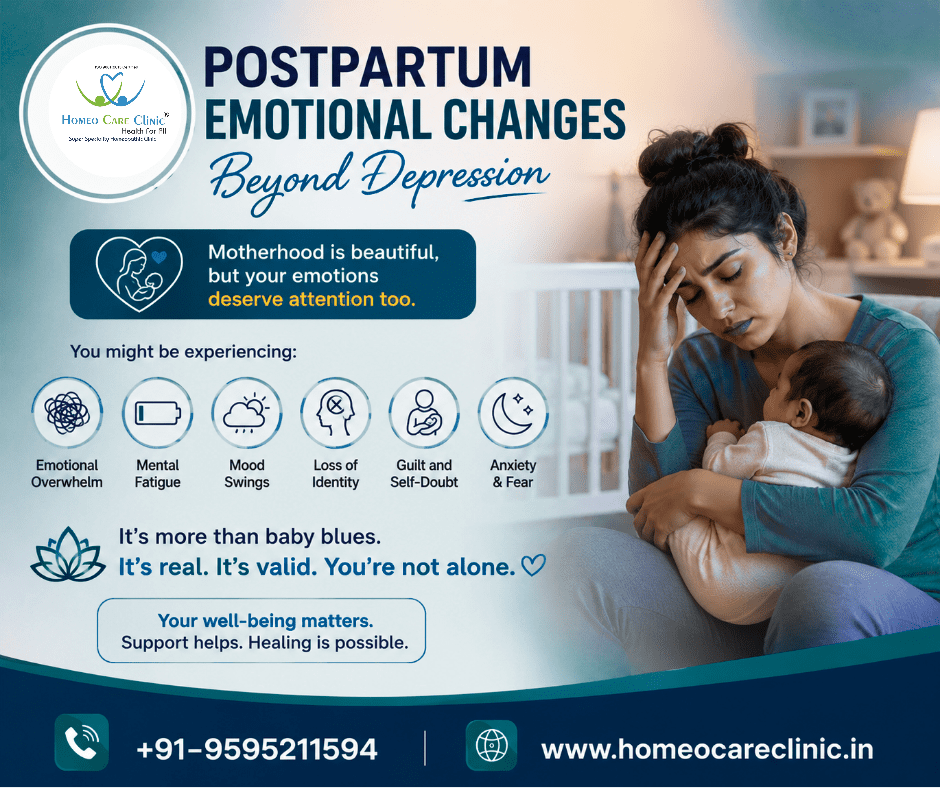
We have a massive blind spot in maternal healthcare. Society has finally learned to talk about Postpartum Depression (PPD). We know to look for the weeping mother who feels hopeless and detached. But the medical system completely fails to prepare women for the intense, terrifying, and overwhelming Postpartum emotional changes beyond depression.
Mothers are sitting in the dark at 3:00 AM, experiencing terrifying intrusive thoughts, crippling anxiety, and explosive rage. They search the internet frantically, feeling like monsters, because their symptoms do not fit neatly into the standard “depression” box. They are suffering in absolute, suffocating silence.
It is time to rip the bandage off this topic. We need to look directly at the reality of postpartum anxiety, postpartum rage, and postpartum obsessive-compulsive disorder. We are going to dissect the brutal biological mechanics of the postpartum hormone crash, decode exactly what these hidden symptoms look like behind closed doors, expose the limits of conventional medicine, and explore how deep, constitutional homeopathy can repair the maternal nervous system. Grab a massive cup of coffee. We have a heavy, deeply necessary conversation ahead of us.
The Biological Reality: What Causes the Chaos?
To fix the exhaustion and the terror, you have to understand exactly what your body just went through. You are not losing your mind. You are experiencing a violent, unprecedented biological collision. The causes of Postpartum emotional changes beyond depression are deeply rooted in endocrinology, neurology, and evolutionary biology.
1. The Catastrophic Hormonal Crash
During pregnancy, your body produces massive, unprecedented amounts of estrogen and progesterone to sustain the baby. Your brain bathes in these hormones for nine months. Progesterone, in particular, is nature’s ultimate anti-anxiety medication; it is highly sedating and calming.
Within forty-eight hours of delivering the placenta, your estrogen and progesterone levels drop by a factor of 100. It is the single largest and most sudden hormonal drop a human being will ever experience in their lifetime. To put it in perspective, it is the equivalent of going through menopause overnight. This violent withdrawal strips the brain of its chemical safety blanket, leaving the nervous system completely raw, uninsulated, and highly reactive to stress.
2. The Torture of Sleep Deprivation
We joke about new parents not sleeping. But chronic, fragmented sleep is not a joke; it is a literal method of torture used to break prisoners of war. When you do not sleep in solid, 90-minute REM cycles, your brain cannot clear metabolic waste, and your prefrontal cortex (the logical part of the brain) completely shuts down. You are left operating entirely from your amygdala—the primitive, emotional alarm center. A sleep-deprived brain interprets a crying baby not as a task, but as a mortal threat, triggering massive dumps of adrenaline that result in panic and rage.
3. The Thyroid Rollercoaster (Postpartum Thyroiditis)
The immune system shifts dramatically after giving birth. In up to 10% of women, this triggers postpartum thyroiditis. The thyroid gland becomes inflamed and dumps excess thyroid hormone into the bloodstream (hyperthyroidism), causing racing heart rates, severe anxiety, and insomnia. A few months later, the thyroid burns out and drops into hypothyroidism, causing crushing fatigue and brain fog. This biological rollercoaster directly drives severe emotional volatility that is entirely outside the mother’s control.
4. Matrescence and the Death of the Old Identity
Matrescence is the anthropological term for the physical, psychological, and emotional transition of becoming a mother. It is as profound a biological shift as adolescence. You literally shed your former identity. The autonomy, the freedom, and the career identity you built for decades are suddenly gone, replaced by a relentless, 24/7 caretaking role. Grieving your old life is a painful, complex psychological process that often manifests as profound irritability and an identity crisis, entirely separate from clinical depression.
Decoding the Shadows: Recognizing the Hidden Symptoms
Because the medical community focuses almost exclusively on depression, women experiencing other symptoms feel entirely alienated. You cannot treat a dysregulated nervous system if you do not know how to name the problem.
If you are suffering in the dark, here is the definitive breakdown of the Postpartum emotional changes beyond depression that nobody warned you about.
Postpartum Anxiety (PPA) and Hyper-Vigilance
Anxiety is actually much more common than depression in the postpartum period, but it is vastly underdiagnosed. It is not just “worrying about the baby.” It is a state of severe, biological hyper-vigilance.
- The Symptoms: You cannot sleep even when the baby is sleeping because your body is vibrating with adrenaline. You experience a constant, physical tightness in your chest. You check the baby’s breathing obsessively, sometimes waking them up just to make sure they are alive. You are terrified to drive, terrified to carry the baby down the stairs, and terrified of anyone else holding them. Your brain is a runaway train of catastrophic “What If” scenarios.
Postpartum Rage (PPR)
This is the most deeply hidden, heavily stigmatized symptom in all of maternal health. Women are terrified to admit they feel rage because society tells them mothers should be infinitely patient and glowing.
- The Symptoms: You experience sudden, blinding flashes of anger that feel completely out of proportion to the trigger. If your partner asks what is for dinner, or if the baby refuses to latch, you feel a surge of heat and fury. You might scream, throw objects, punch a pillow, or have to walk out of the house to avoid losing control. This is not malice. Postpartum rage is almost always a manifestation of severe sensory overload, sleep deprivation, and unexpressed anxiety. The nervous system is so overloaded that anger is the only way it can vent the pressure.
Postpartum Obsessive-Compulsive Disorder (PPOCD) and Intrusive Thoughts
This is arguably the most terrifying emotional change. Up to 70% of new mothers experience intrusive thoughts, but in PPOCD, the thoughts become “sticky” and paralyzing.
- The Symptoms: Your brain suddenly flashes a horrific, violent image. It might be an image of you accidentally dropping the baby out a window, drowning them in the bathtub, or putting them in the microwave. Crucially, these thoughts cause you immense distress and horror. You do not want to act on them. To cope, you develop compulsions: you refuse to bathe the baby, you hide all the knives in the house, or you mentally repeat prayers. You suffer in total silence because you are terrified that if you tell a doctor, they will take your baby away. (Note: Intrusive thoughts are entirely different from postpartum psychosis, where a mother loses touch with reality and does not recognize the thoughts as abnormal).
The “Touched Out” Phenomenon (Sensory Overload)
You spend your entire day nursing, rocking, carrying, and soothing an infant. Your physical boundary is constantly being breached. By 7:00 PM, your sensory bucket is overflowing. When your partner comes home and tries to hug you, or even grazes your arm, your skin literally crawls. You feel a physical repulsion to being touched. You snap, “Don’t touch me.” This is not a relationship problem; it is a biological state of severe sensory exhaustion.
Conventional Treatment: The Limits of the Standard Approach
When a mother finally reaches her absolute breaking point and confesses to a doctor that she is drowning in anxiety or rage, the conventional medical response is often alarmingly inadequate.
The Flawed Screening Process
The standard of care in most pediatric or OB-GYN offices is the Edinburgh Postnatal Depression Scale (EPDS). It is a short questionnaire focused heavily on sadness, crying, and anhedonia (lack of joy). It does not explicitly ask about rage, panic attacks, or horrifying intrusive thoughts. If a mother marks that she isn’t crying, the doctor smiles, tells her she is doing great, and sends her home. She falls right through the massive cracks in the system because the screening tool is not designed to catch Postpartum emotional changes beyond depression.
The Rush to SSRIs and Chemical Numbing
If a mother does successfully articulate her severe anxiety or rage, the conventional medical system immediately reaches for the prescription pad. Selective Serotonin Reuptake Inhibitors (SSRIs) like Zoloft or Lexapro are handed out freely.
While SSRIs can be lifesaving in severe, life-threatening psychiatric emergencies, they come with massive complications for a new mother. Many mothers are terrified of the medication passing through breastmilk. More importantly, SSRIs often cause severe emotional numbing. They might dull the sharp edges of the panic, but they also blunt the joy of bonding with the baby. They do not balance the hormones; they simply throw a chemical blanket over the brain, leaving the underlying endocrine crash completely unresolved.
The Disconnect of Talk Therapy
Therapy is an essential tool. Cognitive Behavioral Therapy (CBT) can help reframe intrusive thoughts. However, trying to practice logical CBT coping skills while your estrogen is at zero and you are surviving on two hours of fragmented sleep is virtually impossible. You cannot logic your way out of a biological adrenaline dump. The nervous system must be physically stabilized before psychological therapy can truly take root.
Homeopathy Treatment: Healing the Maternal Nervous System
This is exactly why desperate, exhausted mothers find themselves sitting in my clinic, weeping with relief when I tell them they are not crazy. They want to actually heal the physical exhaustion and the mental dread, but they refuse to be chemically numbed.
Homeopathy offers a profound, structural reset for a neuroendocrine system that has been shattered by birth and sleep deprivation. We do not use medicine to suppress your personality or artificially manipulate your serotonin. We use incredibly safe, highly diluted, constitutional nanomedicines to treat the physiological and psychological roots of your postpartum trauma.
We look at the exact flavor of your struggle. Are you terrified of germs? Are you furiously angry at your husband? Do you just want to run away and hide? By matching your specific emotional pathology to the exact energetic frequency of the remedy, we can prompt the central nervous system to turn off the alarm bells and regulate the hormones naturally.
Here are 5 medicines from my clinical cabinet that we rely on constantly to treat severe postpartum emotional chaos.
1. Sepia
- Indicated for: Severe postpartum exhaustion, physical heaviness, and emotional indifference.
- Best suited for: The Sepia mother is completely, utterly depleted. The defining mental symptom is a profound, terrifying indifference to her family. She looks at her husband and her baby and just wants to be left entirely alone. She feels irritable, deeply exhausted, and overwhelmed by the demands of caretaking. She may feel physically repulsed by the idea of intimacy or being touched. Physically, she suffers from a heavy, dragging-down sensation in her pelvic region, as if her internal organs are going to fall out, often accompanied by hair loss.
- Key actions: Sepia acts as a massive reset for the female reproductive axis and the adrenal glands. It lifts the heavy physical fatigue, regulates the hormone crash, and restores emotional warmth and empathy, lifting the dark cloud of indifference without guilt.
2. Arsenicum Album
- Indicated for: Severe postpartum anxiety, hyper-vigilance, and obsessive-compulsive checking.
- Best suited for: The Arsenicum mother is entirely ruled by fear. She is terrified that the baby is going to get sick, stop breathing, or die. She becomes obsessively focused on cleanliness, sterilizing bottles repeatedly, and micromanaging the baby’s schedule to an exhaustive degree. She checks the baby monitor twenty times an hour. She is incredibly restless, pacing the floors when she is stressed. She demands constant reassurance from her pediatrician or her partner, but is rarely comforted by it. Her anxiety usually peaks in a state of sheer panic between midnight and 2:00 AM.
- Key actions: Arsenicum is the premier remedy for deep-seated, restless insecurity. It calms the obsessive need for perfection and control, soothing the extreme fear of the unknown, and allowing the mother to finally trust that her baby is safe so she can rest.
3. Cimicifuga Racemosa (Actaea Racemosa)
- Indicated for: Postpartum gloom, feeling trapped, and physical pain.
- Best suited for: The Cimicifuga mother feels like she is under a heavy, black cloud. Her emotional state is characterized by a profound feeling of being trapped in her new life. She might say, “I feel like I am going crazy.” Her emotional symptoms are heavily tied to physical pain; she often suffers from severe, shooting pains in her neck and back, or intense, cramping pelvic pain that radiates across her body. Her moods are wildly erratic, and she is easily overwhelmed by the physical sensations of her recovering body.
- Key actions: Cimicifuga works deeply on the mind-body connection. It lifts the heavy, dark, trapped sensation, clears the brain fog, and simultaneously relieves the severe muscular and uterine spasms associated with the physical trauma of childbirth.
4. Nux Vomica
- Indicated for: Postpartum rage, irritability, and extreme sensory overload.
- Best suited for: The Nux Vomica mother is running on fumes and pure anger. She is highly ambitious, used to being in control of her life, and completely derailed by the chaos of a newborn. To survive the sleep deprivation, she relies heavily on coffee. Her nervous system is totally overstimulated. She suffers from intense postpartum rage, snapping violently at her partner for not loading the dishwasher correctly. She is hyper-sensitive to noise, light, and touch. She suffers from severe acid reflux, chronic constipation, and wakes up at 3:00 AM with her mind racing, completely furious that she cannot sleep.
- Key actions: Nux Vomica detoxifies an overworked, highly strung nervous system. It cuts through the raw impatience and explosive irritability. It allows the mother to actually relax, detox from the constant need for stimulation, and process the sensory overload without screaming.
5. Pulsatilla Nigricans
- Indicated for: The weeping, highly emotional mother who feels deeply inadequate.
- Best suited for: The Pulsatilla mother doesn’t push people away; she clings to them desperately. Her mood is incredibly changeable—laughing one minute and weeping uncontrollably the next. She feels deeply insecure about her ability to mother her child and craves constant physical affection, hugs, and reassurance from her partner or her own mother. She hates being alone with the baby because she is terrified she will do something wrong. She feels much worse in a hot, stuffy room and her mood instantly lifts if she goes for a walk in the cool, open air.
- Key actions: Pulsatilla deeply grounds an emotionally volatile, dependent nervous system. It takes away the desperate, weeping panic, stabilizes the wildly swinging hormones, and builds internal maternal confidence.
Why Choose Homeo Care Clinic
You cannot treat a fundamentally dysregulated neuroendocrine system by reading internet articles and guessing which remedy to buy at a health food store. Human biology is entirely too delicate for a trial-and-error approach, especially when a newborn is involved.
This is exactly why exhausted, terrified mothers bring themselves to Homeo Care Clinic to sit down with Dr. Vaseem Choudhary.
- Deep Mastery of Maternal Pathology: Dr. Vaseem Choudhary has been practicing right here in Pune for nearly two decades. He understands that Postpartum emotional changes beyond depression are a biological reality, not a psychological weakness. He listens to you without judgment. If you tell him you have terrifying intrusive thoughts or blinding rage, he will not look at you like you are a monster. He looks at the entire clinical picture—your sleep, your digestion, your birth trauma—to find the exact pathological root of your imbalance.
- Healing the Gut-Brain Axis: You cannot balance your hormones or cure anxiety if your gut is destroyed by stress and antibiotics given during labor. The mind and the body are one unit. We treat the sluggish, painful postpartum digestion at the exact same time we treat the nervous system, because a healthy gut creates the serotonin needed to actually calm the brain.
- Accessible and State-of-the-Art Clinics: When you are already overwhelmed by severe fatigue and a screaming infant, you do not have the bandwidth for a chaotic commute. With established, fully staffed, and incredibly welcoming clinics strategically located in Viman Nagar, Hadapsar, and Magarpatta, you can access world-class constitutional care in an environment that respects your time and your boundaries.
- Absolute Safety for Breastfeeding: This is the most crucial benefit. Our homeopathic nanomedicines are incredibly safe, non-toxic, and gentle. There are no chemical side effects, and they are completely safe to use while breastfeeding. They provide the energetic frequency the body needs to hit the reset button, allowing your endocrine system to heal itself without passing heavy pharmaceuticals to your baby.
The Transformative Benefits of Homeopathy
Why should you consider this holistic route instead of just relying entirely on conventional medications or pushing through the pain until the baby grows up?
- It Treats the Root Cause: If you take an SSRI, you are just painting over rust. Homeopathy actually lowers the internal alarm system. When the profound chronic stress response is healed, your adrenal glands calm down, your thyroid stabilizes, and the panic attacks naturally fade away.
- Restores Your Authentic Bond: Remedies like Sepia and Arsenicum do not numb you. They clear the static of fear and rage. You suddenly have the mental clarity to actually look at your baby and feel the warmth of joy, rather than just a constant sense of crushing obligation.
- No Rebound Chaos or Side Effects: When the constitutional treatment has done its job, you stop taking the medicine. You do not experience brain zaps, severe withdrawal, or the lethargy that comes with stopping psychiatric medications. The healing is structural and permanent.
- Heals Birth Trauma Physically: Homeopathy treats the whole body. While we are calming your mind, the remedies actively help heal the bruised tissues, the pelvic floor weakness, and the physical exhaustion caused by the delivery itself.
Lifestyle and Diet: Building a Foundation for Maternal Sanity
Homeopathic medicine provides the biological spark to calm your nervous system. But you must act as the architect of your own environment. You cannot take a homeopathic remedy and then continue to survive on zero sleep and leftover crackers.
If you want to survive and reverse the trauma of the postpartum period, you must implement firm, structural changes in your daily life to support your biology.
1. The Non-Negotiable 4-Hour Sleep Block
You cannot cure postpartum anxiety or rage if you do not sleep for four consecutive hours. The brain requires four unbroken hours to complete a full REM cycle and clear the cortisol from the amygdala. You must pump a bottle, or use formula, and hand the baby to your partner, a family member, or a night nurse. Put in earplugs. Sleep in a different room. You must get one 4-hour block of sleep every 24 hours. It is a medical necessity, not a luxury.
2. Stop the Doomscrolling
When you are up at 3:00 AM nursing the baby, your brain is highly vulnerable. Do not open your phone and read parenting forums about SIDS, child illnesses, or perfect sleep schedules. Consuming terrifying data while sleep-deprived directly feeds Postpartum Obsessive-Compulsive Disorder. Read a fiction book on a Kindle or listen to an audiobook. Protect your digital environment aggressively.
3. Eat Heavy Protein and Fats
Your body is literally manufacturing milk (which requires massive calories) and trying to rebuild blood and tissue. You cannot survive on toast and coffee. An anxious, overwhelmed brain burns through glucose rapidly, leading to blood sugar crashes that trigger panic attacks. You must eat heavy protein (eggs, chicken, lentils) and high-quality fats (ghee, avocado, nuts) at every single meal to synthesize hormones and keep your blood sugar perfectly flat.
4. Targeted Supplementation
Your body was depleted of micronutrients to build the baby.
- Massive Omega-3 Support: The fetal brain stripped your body of DHA and EPA. A severe Omega-3 deficiency directly causes brain fog and depression. Take a very high-quality, heavy-metal-free liquid fish oil supplement every day to actively reduce neuroinflammation.
- Magnesium Glycinate: Stress and sleep deprivation cause you to burn through magnesium rapidly. Magnesium is required to relax the nervous system and prevent muscle cramping. Take it right before bed to physically release tension.
- Vitamin D and Iron: Check your ferritin (iron storage) levels. Severe postpartum anemia mimics depression and exhaustion perfectly. You cannot feel happy if your brain is not getting oxygen.
5 Commonly Asked FAQs
1. How long do these postpartum emotional changes last?
- Without treatment, postpartum anxiety and rage can persist for years, long after the baby becomes a toddler. The “hormone crash” happens in the first few weeks, but the resulting nervous system dysregulation can become a permanent baseline if not addressed. With constitutional homeopathic treatment, mothers usually see significant relief within the first month.
2. I have terrifying thoughts about hurting my baby. Does this mean I have postpartum psychosis?
- If the thoughts horrify you, disgust you, and cause you immense anxiety because you do not want to do them, it is highly likely you have Postpartum OCD (intrusive thoughts), not psychosis. Psychosis involves a complete break from reality, delusions, and a lack of distress regarding the thoughts. However, any intrusive thoughts must be discussed with a medical professional immediately to ensure safety and proper treatment.
3. Is postpartum rage a sign that I am a bad mother?
- No. Absolutely not. Postpartum rage is a biological symptom of a severely overloaded, sleep-deprived nervous system. Your brain is short-circuiting due to sensory overload and hormone drops. It is a medical symptom, just like a fever or a cough. It does not define your character or your love for your child.
4. Will homeopathic remedies dry up my milk supply?
- No. Unlike some conventional medications (like certain antihistamines or decongestants) that can negatively impact lactation, homeopathic nanomedicines are entirely safe and will not interfere with or dry up your milk supply.
5. How do I explain to my partner that I am struggling when I look fine on the outside?
- Shift the conversation from emotions to biology. Do not say, “I am stressed.” Say, “My autonomic nervous system is currently misfiring due to the massive hormone crash and sleep deprivation of giving birth. I am experiencing a medical condition that is causing severe anxiety/rage. It is not something I can just ‘snap out of,’ and I need structural help with the baby and medical support to heal.”
Conclusion: Taking Your Mind Back
Living with severe Postpartum emotional changes beyond depression is one of the most isolating, terrifying experiences a woman can endure. It is profoundly unsettling to wake up every single day, look at the baby you waited nine months to hold, and feel entirely consumed by paralyzing panic, blinding rage, or a heavy, crushing sense of indifference.
When society tells you that this should be the happiest time of your life, and you feel like you are drowning in your own living room, the guilt becomes almost unbearable. You feel like a failure. You feel like a monster.
But you are not a monster. You are a mother who is bleeding out biologically and neurologically.
When you finally step back and truly understand the violent biological mechanics of why your brain pulled the fire alarm, the chaos starts to make sense. You realize that your symptoms are not a reflection of your character. They are simply the hallmarks of a nervous system that has been pushed far beyond human limits, desperately trying to survive the shock of matrescence, sleep deprivation, and an endocrine crash.
You do not have to just surrender to the terror. You don’t have to spend the rest of your maternity leave terrified of the stairs, snapping at your husband, or wondering where your sanity went. And you definitely don’t have to resort to heavy psychiatric drugs that blunt your personality just to survive the day.
You can demand your 4-hour sleep block. You can implement the dietary changes required to rebuild your hormones. And by bringing yourself into Homeo Care Clinic for a deep, constitutional reset with Dr. Vaseem Choudhary, you can actually give your fragile, exhausted nervous system the exact biological push it needs to heal the root cause.
You have a powerful, resilient body and a brilliant mind waiting to be reactivated. You just need to clear the static, turn off the inflammatory alarm bells, and give your organs the right support. Be patient, build your nutritional boundaries, trust the holistic process, and watch what happens when the fog finally lifts and you can truly, deeply enjoy the life you created. You’ve got this.
“Your health deserves more than temporary relief. Choose homeopathy for lasting results”
Start your journey towards better focus today.
About the Author Bio:
Dr. Vaseem Choudhary M.D is a seasoned classical homeopath with over 16+ years of experience, dedicated to treating patients with compassion, precision and holistic care. Mainly in Pune & Mumbai, serving both national and international patients from UK, USA, Germany, France, Canada, Bhutan, Dubai and China. With a wide range of acute and chronic conditions—from skin disorders, hormonal issues, and digestive problems to autoimmune diseases and mental health concerns.
Dr. Vaseem is widely respected for his unique approach that combines classical homeopathy, personalized diet planning, lifestyle guidance, and a spiritual perspective on healing. He is known for his detailed and empathetic case-taking process, which focuses on treating the root cause rather than just symptoms.
In recognition of his dedication and clinical excellence, Dr. Vaseem Choudhary MD has been honored with the Best Homeopathic Doctor in Pune award by leading platforms such as:
- Awarded for International Excellence in Autism & ADHD Treatment 2026 in UK Parliament, London
- Dr. Vaseem Choudhary honoured at the UK Parliament, receiving International recognition PG from the London College of Homeopathy 2026
- Dr. Vaseem Choudhary, MD, was further acknowledged in Dubai in 2026 for his expertise in Autism and ADHD, reinforcing his growing international recognition in this field
- Best Homeopathy Doctor in Pune – National Healthcare Service Excellence Awards 2024
- Most Trusted Centre for Autism and ADHD in India 2025 – Healthcare Excellence & Leadership Awards
- Best Homeopathy Doctor in Pune – Dr. Vaseem Choudhary Shines at Ayush 2nd International Conference, Dubai
- Recognized for spearheading homeopathic treatment protocols, improving patient satisfaction, and healthcare advancements.
He is also a contributing author to the International Journal of Homeopathy and Natural Medicines (IJHNM), where he shares his research and clinical experiences with the global medical community.
With a passion to take homeopathy to new heights, Dr. Vaseem continues to guide patients towards natural, safe, and sustainable healing.
Homeo Care Clinic offers a holistic approach to treating the disease. The remedies mentioned above can treat the underlying causes of the condition and offer relief from the discomfort. However, it is important to consult a qualified homeopathic practitioner for the correct dosage and duration of treatment. Homeo Care Clinic provides comprehensive care for various ailments, and offers customized treatment plans based on individual requirements.
To schedule an appointment or learn more about our treatment, please visit our website or give us a call +91 9595211594 our best homeopathy doctor will be here to help.
Follow us on Facebook, Twitter and Instagram for valuable insights into the world of homeopathy and holistic health.
- Facebook– https://www.facebook.com/homeocareclinicpune
- Instagram– https://www.instagram.com/homeocareclinic_in
- Website– https://linktr.ee/homeocareclinic
- Success Stories of Patients –https://www.homeocareclinic.in/category/case-study/
- Patient Testimonials – https://www.homeocareclinic.in/testimonial/
Chat with a best homeopathic doctor privately:
If you have any queries regarding your disease or any symptoms, click to send a What‘s App message. Our best homeopathy doctor will be happy to answer you. About Us Click
Book an Appointment:
If you want to visit our clinic, click to book an appointment.
Online treatment:
If you are a busy professional, or you are living in a remote town or city, with no best homeopathic doctor near you, Click to start an online homeopathic treatment with the world’s exclusive, most experienced and best homeopathic clinic, managed by Dr. Vaseem Choudhary world-renowned homeopathic doctor expert
- About Us – https://www.homeocareclinic.in/about-us/
- Our Doctors –https://www.homeocareclinic.in/team/