

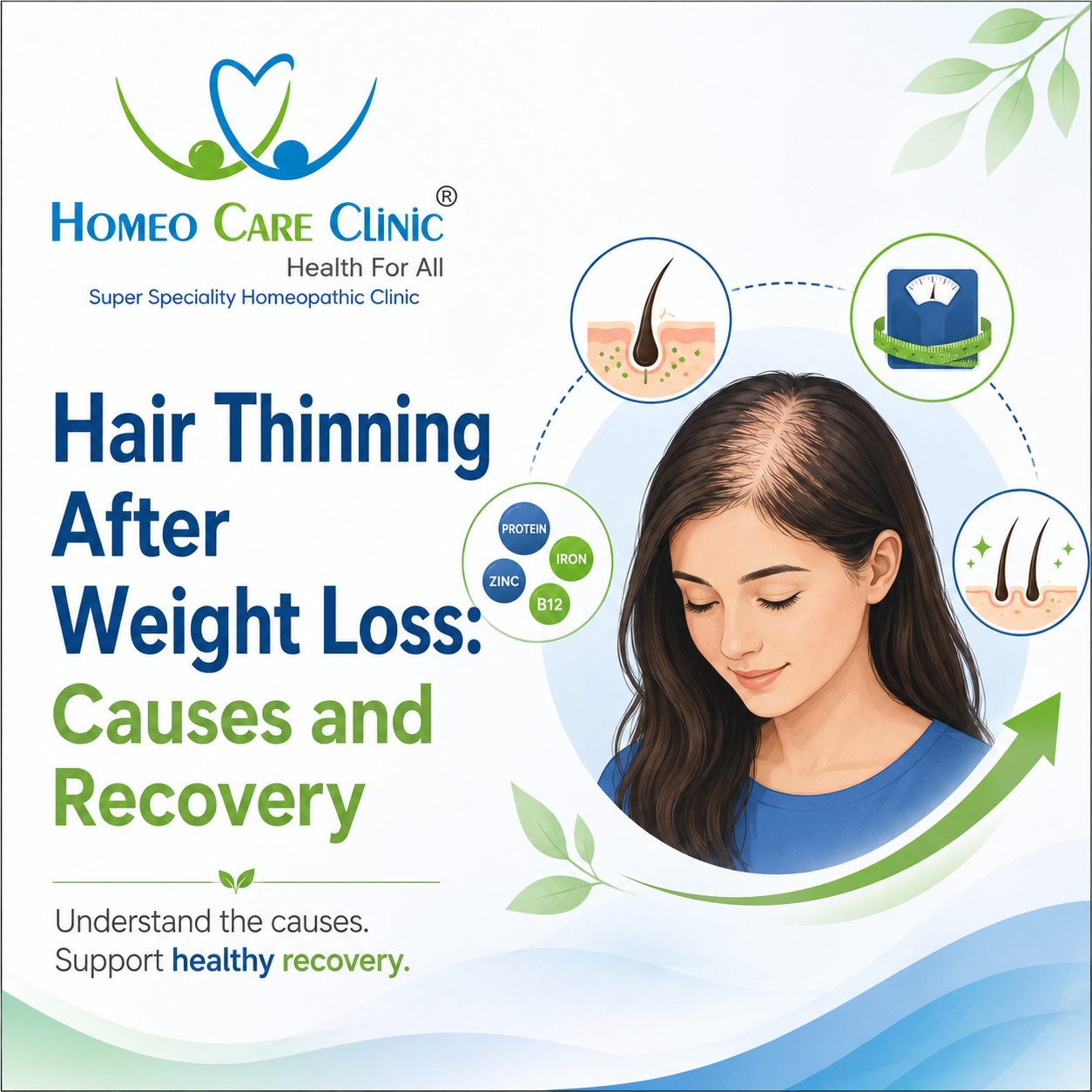
Hair thinning after weight loss is a common concern, especially after rapid weight loss, restrictive dieting, or significant changes in calorie and nutrient intake. When the body does not receive enough protein, iron, zinc, vitamins, or overall energy, more hair follicles can temporarily enter the resting phase and lead to increased shedding.
The good news is that weight-loss-related hair loss is often temporary when the underlying cause is identified and addressed. Understanding the connection between weight loss, nutrition, stress, and the hair-growth cycle can help you choose the right recovery approach.
Quick Summary
- Hair thinning after weight loss can occur because of rapid weight reduction, calorie restriction, nutritional deficiencies, or physical stress.
- Telogen effluvium is one possible cause of sudden, diffuse hair shedding after a major body or dietary change.
- Adequate protein, iron, zinc, vitamins, healthy fats, and balanced nutrition are important for maintaining healthy hair.
- Hair usually takes time to recover because the hair-growth cycle is slow.
- Persistent or severe hair loss should be evaluated by a qualified healthcare professional.
- PRP treatment for hair loss may be considered in appropriate patients after assessment of the cause and condition of the hair follicles.
What Causes Hair Thinning After Weight Loss?
Hair thinning after weight loss occurs when the body experiences nutritional or physiological stress that affects the normal hair-growth cycle. Rapid weight loss, very low-calorie diets, inadequate protein intake, and deficiencies in nutrients required for hair growth can contribute to increased shedding.
Hair is not considered an essential function for immediate survival. During periods of significant physical stress or inadequate nutrition, the body may redirect resources toward essential functions, potentially affecting the hair-growth cycle.
Common Causes of Hair Loss After Weight Loss
Several factors can contribute to hair shedding following weight loss:
| Possible Cause | How It May Affect Hair |
| Rapid weight loss | Can place physical stress on the body and alter the hair-growth cycle |
| Very low-calorie diet | May reduce the availability of energy and nutrients needed for hair growth |
| Low protein intake | Hair follicles require adequate protein to support normal hair production |
| Iron deficiency | Low iron stores may contribute to diffuse hair shedding in some people |
| Zinc deficiency | Zinc is involved in normal cell growth and tissue repair |
| Vitamin deficiencies | Certain vitamin deficiencies may affect normal hair and scalp health |
| Physical or emotional stress | Significant stress can trigger increased shedding |
| Hormonal changes | Changes in the body’s hormonal environment can influence hair growth |
Can Losing Weight Cause Hair Loss?
Yes, significant or rapid weight loss can be associated with temporary hair shedding. The risk may be greater when weight loss involves severe calorie restriction, inadequate protein intake, nutritional deficiencies, or substantial physical stress.
However, weight loss itself is not necessarily the direct cause of hair loss. The underlying dietary changes, nutrient deficiencies, stress, hormonal factors, and pre-existing hair conditions should also be considered.
Telogen Effluvium After Weight Loss
Telogen effluvium is a temporary form of diffuse hair shedding that can occur when a physical or nutritional stressor causes more hair follicles than usual to enter the resting phase of the hair-growth cycle.
After a trigger such as rapid weight loss or significant dietary restriction, increased shedding may not happen immediately. This delay can make it difficult to connect the hair loss with the earlier weight-loss phase.
Signs of Telogen Effluvium
Common signs may include:
- Increased hair shedding during washing or brushing
- More hair visible on pillows or clothing
- Overall thinning rather than a single bald patch
- Reduced hair volume
- A wider-looking parting
- Increased hair shedding several weeks or months after a significant trigger
If shedding is persistent, severe, patchy, or accompanied by scalp symptoms, professional evaluation is important because other forms of hair loss can produce similar symptoms.
How Long Does Hair Thinning After Weight Loss Last?
Recovery time varies depending on the underlying cause, nutritional status, overall health, and individual hair-growth cycle.
When weight-loss-related shedding is temporary, improvement generally takes time because hair follicles do not immediately return to their previous growth pattern. Even after shedding decreases, visible improvement in hair density can take several months.
A practical recovery timeline may look like this:
| Recovery Stage | What You May Notice |
| Early stage | Increased shedding may be the main concern |
| Stabilization | Hair fall may gradually become less noticeable once the trigger is addressed |
| Regrowth phase | Fine new hairs may gradually become visible |
| Longer-term recovery | Hair density and thickness may progressively improve |
There is no single recovery timeline that applies to everyone. The cause of hair loss should be identified before assuming that weight loss is the only reason for thinning.
How to Stop Hair Loss After Weight Loss
The most important step is to identify and correct the factors contributing to hair shedding rather than focusing only on the hair itself.
1. Follow a Balanced Diet
A balanced diet provides the energy, protein, vitamins, minerals, and other nutrients required for normal body functions and healthy hair growth.
Avoid extreme calorie restriction or crash diets. If you are continuing to lose weight, work toward gradual and sustainable weight management with appropriate professional guidance.
2. Get Enough Protein
Hair is primarily composed of a protein called keratin. Inadequate protein intake can therefore be an important nutritional consideration when evaluating hair shedding after weight loss.
Include appropriate protein sources in your diet according to your dietary preferences and health requirements.
3. Check for Nutritional Deficiencies
If hair shedding is significant or persistent, a healthcare professional may recommend an assessment for nutritional deficiencies based on your symptoms and medical history.
Iron status and other nutritional factors may be considered when clinically appropriate.
Do not start high-dose supplements without professional advice. Taking unnecessary supplements does not automatically improve hair growth and, in some cases, excessive intake can be harmful.
4. Avoid Crash Diets
Crash diets can cause rapid changes in calorie and nutrient intake. If you have experienced hair thinning after rapid weight loss, transitioning toward a balanced and sustainable eating pattern may be an important part of recovery.
5. Manage Physical and Emotional Stress
Stress can influence the hair-growth cycle. Adequate sleep, regular physical activity appropriate for your condition, relaxation practices, and a sustainable lifestyle can support overall wellbeing.
6. Use Gentle Hair Care
During periods of increased shedding:
- Avoid excessive heat styling
- Limit harsh chemical treatments
- Avoid very tight hairstyles
- Use a gentle shampoo and conditioner
- Handle wet hair carefully
- Avoid aggressive brushing or combing
These steps may reduce additional mechanical damage while the underlying cause of shedding is addressed.
Can Hair Grow Back After Weight Loss?
In many cases, hair can gradually recover when temporary weight-loss-related shedding is addressed. The likelihood and speed of recovery depend on the underlying cause.
If the hair follicles remain healthy and the trigger is corrected, the hair-growth cycle may gradually return toward normal. However, persistent hair thinning may indicate another condition, such as androgenetic alopecia, thyroid-related problems, nutritional deficiency, or another type of hair disorder.
This is why professional assessment is important when hair loss does not improve.
When Should You See a Hair Specialist?
Consider professional evaluation if you experience:
- Hair shedding that continues for several months
- Rapid or severe hair thinning
- Noticeable bald patches
- A progressively widening hair part
- Receding hairline
- Scalp itching, scaling, pain, or inflammation
- Hair loss despite correcting your diet
- Repeated episodes of unexplained hair shedding
A specialist can assess the scalp and hair pattern and determine whether the problem is related to weight loss, nutrition, an underlying hair disorder, or a combination of factors.
Can PRP Help With Hair Thinning After Weight Loss?
Platelet-Rich Plasma (PRP) therapy is a minimally invasive hair treatment that uses a concentrated portion of the patient’s own blood and delivers it to areas of scalp hair thinning. PRP is used as a treatment option for certain types of hair loss and may support hair density and follicle health in appropriately selected patients.
PRP should not be viewed as a replacement for correcting nutritional deficiencies or addressing the underlying cause of weight-loss-related shedding. A proper evaluation can help determine whether PRP is suitable for your particular pattern of hair loss.
How Hair PRP Treatment Works
The general PRP process involves:
- Blood collection: A small blood sample is taken.
- PRP preparation: The blood is processed to separate the platelet-rich portion.
- Scalp application/injection: The prepared PRP is delivered to areas of concern.
- Follow-up: The treatment plan and number of sessions depend on individual factors and clinical assessment.
Homeo Care Clinic describes its Hair PRP Treatment in Pune as a non-surgical approach intended to support hair growth, improve hair thickness, and address hair thinning.
PRP Treatment and Nutritional Recovery: Why Both Matter
Hair recovery after weight loss should address the underlying trigger as well as the condition of the hair follicles.
| Approach | Main Purpose |
| Balanced nutrition | Supports adequate nutrient intake |
| Protein-rich diet | Provides amino acids needed for normal body functions and hair structure |
| Nutritional assessment | Helps identify possible deficiencies |
| Stress management | Supports overall wellbeing and healthy physiological function |
| Gentle hair care | Helps reduce mechanical hair damage |
| PRP therapy | May support hair density and follicle health in suitable candidates |
| Professional consultation | Helps identify the actual cause of persistent hair loss |
A combined approach may be considered when clinically appropriate rather than relying on a single treatment.
Hair PRP Treatment in Pune for Post-Weight-Loss Hair Thinning
If you are experiencing persistent hair thinning after weight loss, Homeo Care Clinic in Pune provides Hair PRP Treatment and other hair-loss-related services. The clinic states that treatment plans are customized following assessment of the individual’s hair and scalp condition.
The clinic offers services including:
- Hair PRP Treatment
- Hair Fall Treatment
- Alopecia Areata Treatment
- Anti-Hair Loss Treatment
- Hair Transplant Treatment
- Mesotherapy Hair Treatment
You can learn more about the available hair treatments through the For persistent hair loss, a consultation can help determine whether PRP or another treatment approach is appropriate.
Why Choose Homeo Care Clinic for Hair Treatment in Pune?
Homeo Care Clinic highlights personalized consultation, an experienced in-house team, trained therapists, and structured treatment protocols as part of its approach to patient care. The clinic’s website also identifies Dr. Vaseem Choudhary and other doctors as part of its team.
Choosing a hair clinic should involve more than simply comparing treatment names. A proper evaluation of the type and possible cause of hair loss is important before selecting a treatment.
Frequently Asked Questions
What causes hair thinning after weight loss?
Hair thinning after weight loss may be associated with rapid weight reduction, calorie restriction, inadequate protein intake, nutritional deficiencies, physical stress, or hormonal changes. Telogen effluvium is one possible cause of diffuse shedding following a significant physiological trigger.
Is hair loss after weight loss permanent?
Not necessarily. Weight-loss-related shedding can be temporary, particularly when it is caused by a reversible nutritional or physiological trigger. However, persistent thinning should be evaluated because other types of hair loss may occur at the same time.
How long does hair loss after weight loss last?
The duration varies from person to person. Hair recovery is gradual because follicles follow a natural growth cycle. Shedding may decrease after the underlying trigger is addressed, but visible improvement in hair density can take several months.
Does rapid weight loss cause hair loss?
Rapid weight loss can increase the risk of hair shedding, particularly when it involves significant calorie restriction, inadequate protein intake, or nutritional deficiencies. A balanced and sustainable approach to weight management may help reduce these risks.
What should I eat to prevent hair loss during weight loss?
A balanced diet should provide adequate protein, energy, iron, zinc, vitamins, healthy fats, and other essential nutrients. Individual nutritional needs differ, so people experiencing significant hair loss may benefit from professional dietary and medical assessment.
Can PRP treatment help hair thinning after weight loss?
PRP may be considered for certain types of hair thinning and hair loss after an appropriate evaluation. It should not replace treatment of nutritional deficiencies or other underlying causes. The suitability of PRP depends on the individual’s hair-loss pattern and follicle condition.
Is PRP treatment available in Pune?
Yes. Homeo Care Clinic offers Hair PRP Treatment in Pune for individuals experiencing hair thinning and certain forms of hair loss. The clinic states that treatment plans are personalized according to the patient’s condition.
When should I consult a hair specialist after weight loss?
Consult a healthcare professional if shedding is severe, persistent, patchy, associated with scalp symptoms, or continues despite improving your nutrition. Early assessment can help identify the cause and guide appropriate treatment.
About the Author Bio:
Dr. Vaseem Choudhary
Homeopathic Physician | 20+ Years Experience
Specialist in Chronic & Behavioral Disorders
LinkedIn: Dr. Vaseem Choudhary
Clinic: Homeo Care Clinic, Pune
Dr. Vaseem Choudhary M.D is a seasoned classical homeopath with over 16+ years of experience, dedicated to treating patients with compassion, precision and holistic care. Mainly in Pune & Mumbai, serving both national and international patients from UK, USA, Germany, France, Canada, Bhutan, Dubai and China. With a wide range of acute and chronic conditions—from skin disorders, hormonal issues, and digestive problems to autoimmune diseases and mental health concerns.
Dr. Vaseem is widely respected for his unique approach that combines classical homeopathy, personalized diet planning, lifestyle guidance, and a spiritual perspective on healing. He is known for his detailed and empathetic case-taking process, which focuses on treating the root cause rather than just symptoms.
In recognition of his dedication and clinical excellence, Dr. Vaseem Choudhary MD has been honored with the Best Homeopathic Doctor in Pune award by leading platforms such as:
- Awarded for International Excellence in Autism & ADHD Treatment 2026 in UK Parliament, London
- Dr. Vaseem Choudhary honoured at the UK Parliament, receiving International recognition PG from the London College of Homeopathy 2026
- Dr. Vaseem Choudhary, MD, was further acknowledged in Dubai in 2026 for his expertise in Autism and ADHD, reinforcing his growing international recognition in this field
- Best Homeopathy Doctor in Pune – National Healthcare Service Excellence Awards 2024
- Most Trusted Centre for Autism and ADHD in India 2025 – Healthcare Excellence & Leadership Awards
- Best Homeopathy Doctor in Pune – Dr. Vaseem Choudhary Shines at Ayush 2nd International Conference, Dubai
- Recognized for spearheading homeopathic treatment protocols, improving patient satisfaction, and healthcare advancements.
He is also a contributing author to the International Journal of Homeopathy and Natural Medicines (IJHNM), where he shares his research and clinical experiences with the global medical community.
With a passion to take homeopathy to new heights, Dr. Vaseem continues to guide patients towards natural, safe, and sustainable healing.
Homeo Care Clinic offers a holistic approach to treating the disease. The remedies mentioned above can treat the underlying causes of the condition and offer relief from the discomfort. However, it is important to consult a qualified homeopathic practitioner for the correct dosage and duration of treatment. Homeo Care Clinic provides comprehensive care for various ailments, and offers customized treatment plans based on individual requirements.
To schedule an appointment or learn more about our treatment, please visit our website or give us a call +91 9595211594 our best homeopathy doctor will be here to help.
- Success Stories of Patients –https://www.homeocareclinic.in/category/case-study/
- Patient Testimonials – https://www.homeocareclinic.in/testimonial/
Chat with a best homeopathic doctor privately:
If you have any queries regarding your disease or any symptoms, click to send a What‘s App message. Our best homeopathy doctor will be happy to answer you. About Us Click
Book an Appointment:
If you want to visit our clinic, click to book an appointment.
Online treatment:
If you are a busy professional, or you are living in a remote town or city, with no best homeopathic doctor near you, Click to start an online homeopathic treatment with the world’s exclusive, most experienced and best homeopathic clinic, managed by Dr. Vaseem Choudhary world-renowned homeopathic doctor expert
- Our Doctors –https://www.homeocareclinic.in/team/