
Introduction
MEDICAL DISCLAIMER
This content is for educational and informational purposes only and is NOT a substitute for professional medical advice, diagnosis, or treatment. Always consult Dr. Vaseem Choudhary or a qualified homeopathic practitioner before starting, changing, or stopping any treatment. Do NOT self-medicate with homeopathic remedies. In case of emergency, contact your nearest hospital immediately.
Warts are benign growths on the skin caused by the human papillomavirus (HPV). While they are generally harmless, warts can be unsightly and may cause discomfort, particularly when located on sensitive areas of the body. Many people seek effective treatment options to remove warts, and homeopathy has emerged as a popular alternative due to its natural approach and minimal side effects. In this blog, we will explore warts, their causes and symptoms, and how homeopathy can provide effective wart treatment.
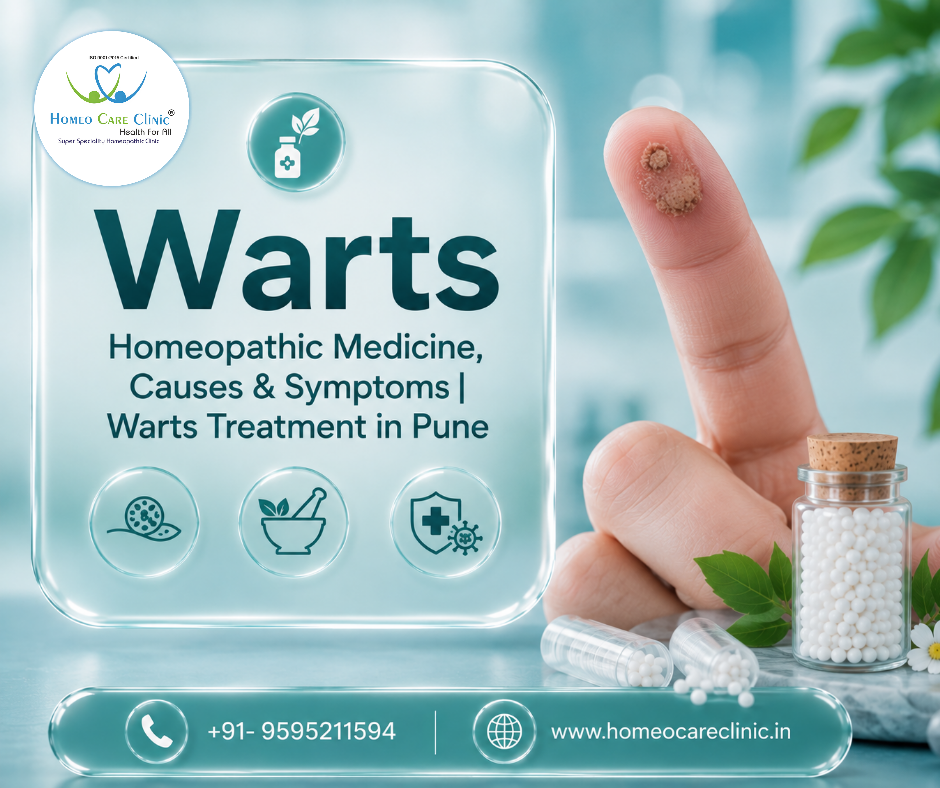
If you are searching for what is a wart, it is important to understand that a wart is a localized skin growth associated with infection by certain types of human papillomavirus (HPV). Warts can occur in children as well as adults and may appear on the hands, feet, face, fingers, or other areas of the body.
The appearance and location of a wart can vary considerably. Some are rough and raised, while others may be smooth, flat, or cauliflower-like.
What Is a Wart?
Warts are small, rough bumps that can appear on various parts of the body, including the hands, feet, and face. They can vary in size, shape, and color and are often characterized by a hard, raised surface. There are several types of warts, including:
- Common warts: Typically found on the hands and fingers.
- Plantar warts: Located on the soles of the feet and can be painful.
- Flat warts: Usually small and smooth, often appearing in groups.
- Genital warts: A sexually transmitted form caused by specific strains of HPV.
While warts are generally harmless, they can be a source of embarrassment and discomfort for many individuals.
For someone searching what is a wart, the simplest explanation is that it is a non-cancerous skin growth associated with certain HPV infections. Most common skin warts are harmless, but a growth that looks unusual, changes rapidly, bleeds repeatedly, or does not respond to treatment should be examined by a qualified healthcare professional.
What Are Warts and What Do They Mean?
The term warts disease is commonly used by patients to describe the condition in which wart-like growths appear on the skin. Technically, warts are not usually considered a serious systemic disease. They are localized skin growths caused by particular types of HPV.
The virus can enter through tiny breaks in the skin and cause cells in the outer layer of the skin to grow excessively, resulting in a wart.
Not every skin growth is a wart, however. Conditions such as moles, skin tags, seborrheic keratoses, corns, calluses, and certain skin cancers can sometimes resemble warts. This is why an unusual or persistent growth should not automatically be assumed to be a wart.
What Causes Warts?
Warts are caused by an infection with the human papillomavirus (HPV). The virus enters the body through small cuts or breaks in the skin, leading to the growth of warts. Factors that may increase the risk of developing warts include:
- Weakened immune system: Individuals with compromised immune systems are more susceptible to HPV infections.
- Frequent skin-to-skin contact: Warts can spread through direct contact with an infected person or surface.
- Environmental factors: Walking barefoot in public places, such as swimming pools or locker rooms, can increase the risk of plantar warts.
What Are Warts Caused By?
If you are searching for warts are caused by, the primary answer is certain types of human papillomavirus (HPV).
The virus may enter the skin through:
- Small cuts
- Scratches
- Cracked skin
- Nail-biting injuries
- Shaving-related skin breaks
- Damaged skin around the fingers or feet
Once HPV enters the skin, it can cause an area of skin cells to grow abnormally and form a wart.
Warts can spread from one area of the body to another, particularly when a person scratches, picks, or cuts a wart and then touches another area.
However, not everyone exposed to HPV will necessarily develop visible warts. Individual susceptibility, immune response, skin integrity, and the specific HPV type can influence whether a wart develops.
What Is the Reason for Warts?
The reason for warts is usually infection with a particular type of HPV.
However, several factors can make a person more susceptible to developing or spreading warts, including:
- Direct contact with a wart
- Sharing towels, razors, or personal items
- Walking barefoot in communal wet areas
- Picking or scratching existing warts
- Nail biting
- Small injuries to the skin
- Certain immune-system problems
- Prolonged exposure of damaged skin to contaminated surfaces
A person can sometimes develop multiple warts even without remembering a specific exposure.
What Are the Wart Symptoms?
The appearance of warts varies according to their type and location.
Common wart symptoms may include:
- Small raised growth on the skin
- Rough or irregular surface
- Hard or thickened skin
- Skin-colored, gray, brownish, or darker appearance
- Multiple growths appearing together
- Mild tenderness
- Pain when pressure is applied, especially with plantar warts
- Itching or irritation in some cases
- Bleeding when a wart is repeatedly scratched or injured
Some warts produce no symptoms at all and are discovered accidentally.
Plantar warts, which occur on the soles of the feet, may become painful because walking puts pressure on them.
Genital warts can appear differently and should be evaluated by a healthcare professional because sexually transmitted infections require appropriate diagnosis and management.
What Are the Types of Warts?
There are several types of warts, and their appearance often depends on where they occur on the body.
Common Warts
Common warts are rough, raised bumps usually found on:
- Fingers
- Hands
- Around the nails
- Back of the hands
They may have a rough surface and can occur as single or multiple lesions.
Plantar Warts
Plantar warts occur on the soles of the feet.
They can sometimes grow inward because of pressure from walking and may cause discomfort or pain.
Flat Warts
Flat warts are usually:
- Smaller
- Smoother
- Flatter than common warts
They may appear in groups and are frequently seen on the face, arms, or legs.
Filiform Warts
Filiform warts have thin, finger-like projections and commonly occur around:
- Face
- Nose
- Mouth
- Neck
- Eyelids
Because they occur on visible areas, they may cause cosmetic concern.
Genital Warts
Genital warts occur around the genital or anal region and are associated with specific HPV types.
Because genital lesions can have several possible causes, proper medical examination is important.
The major types of warts are therefore common, plantar, flat, filiform, and genital warts.
How Are Warts Treatment in Homeopathy Approached?
The Homeopathic Approach to Warts
Warts treatment homeopathy focuses on treating the individual rather than just the wart itself. Homeopathy aims to stimulate the body’s natural healing mechanisms by using highly diluted remedies derived from natural substances. By considering the patient’s overall health, lifestyle, and emotional state, homeopathy seeks to address the underlying causes of warts and promote their elimination.
Homeopathic remedies can help boost the immune system, making it more effective in fighting off the HPV infection and reducing the likelihood of recurrence.
Important Medical Note
Homeopathy has not been scientifically established as a treatment that eliminates HPV or reliably cures warts. Some warts also disappear spontaneously without treatment because of the body’s immune response. Conventional wart treatments such as salicylic acid, cryotherapy, electrosurgery, or other procedures may be recommended depending on the wart’s type and location.
Homeopathy should therefore not delay appropriate diagnosis or proven treatment, particularly for genital warts, rapidly changing lesions, bleeding lesions, or uncertain skin growths.
How Does Homeopathy Help in Treating Warts?
Homeopathy offers a natural, gentle, and holistic approach to treating warts by:
- Strengthening the immune system.
- Targeting the root cause (susceptibility to HPV).
- Preventing recurrence.
It doesn’t just remove the wart physically—it treats the individual’s tendency to get warts.
From a medical-evidence perspective, these proposed benefits have not been conclusively demonstrated in high-quality clinical studies. Patients should therefore discuss treatment options with an appropriately qualified healthcare professional.
Which Are the Best Homeopathic Medicines for Warts?
Several remedies are traditionally used in homeopathic practice. The remedy is generally selected according to the appearance, location, sensation, associated symptoms, and individual characteristics.
1. Thuja Occidentalis – First Choice for All Types of Warts
Thuja is the most commonly used homeopathic remedy for all kinds of warts, especially moist, cauliflower-like warts, or genital warts.
When to Use Thuja:
- Multiple, moist or cauliflower-like warts
- Genital or anal warts
- Warts that itch, bleed, or ooze
- Accompanied by greasy or oily skin
How to Use:
- Thuja 30C, 2–3 times daily for small warts
- In chronic cases, Thuja 200C once weekly under guidance
- Thuja Q (mother tincture) can be applied externally on the wart (if advised)
2. Causticum – For Large, Hard or Painful Warts
Causticum is effective for old, hard, and painful warts, especially when they appear on the face, eyelids, or fingertips.
When to Use Causticum:
- Warts that are large, horny, or painful
- Flat warts on face or nose
- Warts that bleed easily or have a burning sensation
- Warts that are associated with nerve weakness or paralysis
How to Use:
- Causticum 30C, twice daily
- In persistent cases, 200C weekly under supervision
3. Antimonium Crudum – For Hard, Horny Warts on Hands and Feet
Antimonium Crudum works best for thick, hard warts, especially on palms, soles, and under nails.
When to Use Antimonium Crudum:
- Warts with a thick crust or horn-like structure
- Found on palms, soles, or under fingernails
- Accompanied by corns or calluses
- Worsening from cold bathing
How to Use:
- Antimonium Crudum 30C, 2–3 times daily
- Discontinue or reduce once visible improvement occurs
4. Nitric Acid – For Painful, Bleeding Warts
Nitric Acid is suitable for warts that are painful, cracked, or bleeding, especially genital and anal warts.
When to Use Nitric Acid:
- Warts that are splitting, cracked, or bleeding
- Sensitive to touch with sharp, sticking pain
- Genital or anal warts with offensive discharge
- Often seen in immunocompromised patients
How to Use:
- Nitric Acid 30C, twice daily
- In stubborn cases, use 200C once every 7 days under guidance
5. Dulcamara – For Warts Triggered by Damp Weather
Dulcamara helps treat warty eruptions that appear or worsen during cold and damp weather.
When to Use Dulcamara:
- Flat, smooth warts, often on face, neck, or back
- Triggered by dampness or weather changes
- Accompanied by cold symptoms
- Suited for patients prone to skin eruptions in humid environments
How to Use:
- Dulcamara 30C, 2–3 times daily
- Monitor response and taper accordingly
6. Sabina – For Soft, Moist Genital Warts
Sabina is useful for genital warts in both men and women, especially if they are soft, spongy, and prone to bleeding.
When to Use Sabina:
- Soft, fleshy warts on genitals
- Burning or sensitive skin in private parts
- Bleeding after touch or washing
- Often associated with sexual activity history or HPV
How to Use:
- Sabina 30C, twice daily during active symptoms
- Continue for several weeks for complete resolution
⚠️* Note – Above medicines are for knowledge purpose only. DO NOT SELF MEDICATE, These remedies must be selected individually after a complete case-taking session
What Is the Conventional Treatment for Warts?
Although the original content focuses primarily on homeopathy, it is useful for patients to understand that several established medical treatments are available.
Depending on the type, location, number, and duration of warts, a dermatologist may recommend:
- Salicylic acid preparations
- Cryotherapy
- Electrosurgery
- Curettage
- Laser treatment in selected cases
- Other prescription or procedural treatments
Some warts disappear naturally, while others may persist for months or years.
Genital warts require particular attention because they are associated with specific HPV types and may require examination and treatment by a qualified healthcare professional.
How Can Warts Be Managed Naturally?
General Tips for Managing Warts Naturally
- Avoid picking or scratching warts
- Keep the skin clean and dry
- Boost your immune system with good diet and rest
- Avoid sharing personal items like razors or towels
- Wash hands after touching a wart
It is also advisable to avoid cutting, burning, or attempting to remove a wart with household chemicals. Such methods can cause burns, infection, and scarring.
What Lifestyle Changes Can Help Prevent Warts?
Supporting Homeopathic Treatment
In addition to homeopathic remedies, certain lifestyle changes can help manage and prevent warts:
- Boost Your Immune System: Maintaining a healthy diet rich in fruits, vegetables, and whole grains can strengthen the immune system, making it less susceptible to HPV infections.
- Practice Good Hygiene: Regularly washing hands and avoiding touching warts can help prevent the spread of the virus to other parts of the body or to other individuals.
- Avoid Skin-to-Skin Contact: Limiting direct contact with individuals who have warts can help reduce the risk of transmission.
- Protect Your Feet: Wearing sandals or shoes in public areas, such as pools or gyms, can help prevent plantar warts.
Additional practical precautions include keeping feet dry, avoiding sharing footwear, and covering an active wart when appropriate.
Can Warts Spread From One Person to Another?
Yes. Warts can spread through direct contact with an infected wart or indirectly through contaminated objects and surfaces.
Transmission may occur through:
- Skin-to-skin contact
- Shared towels
- Shared razors
- Shared personal items
- Contact with contaminated surfaces
- Picking or scratching existing warts
Not every person exposed to HPV will develop visible warts. The immune response and condition of the skin can influence susceptibility.
Can Warts Be Prevented?
There is no guaranteed way to prevent every wart, but several measures can reduce the risk:
- Avoid touching other people’s warts.
- Do not pick or scratch existing warts.
- Wash your hands regularly.
- Avoid sharing towels and razors.
- Wear footwear in communal wet areas.
- Keep cuts and skin breaks clean and covered.
- Avoid biting fingernails or picking cuticles.
- Do not shave directly over a wart.
These measures can reduce opportunities for HPV to enter damaged skin or spread to other areas.
Real-Life Case Study: Homeopathy for Warts
- Patient: R.M., 24 years old, Male
- Location: Pune, India
- Problem: Multiple flat warts on face and forehead
- Duration: 1.5 years
History: Tried topical creams and freezing therapy with no long-term success. Warts kept returning.
Symptoms:
- Around 10–12 flat warts on the forehead and cheeks.
- No pain, but patient was deeply embarrassed and avoided social events.
- Skin was oily; tendency to sweat easily.
- Mild gastric complaints and constipation.
Homeopathic Treatment:
- After a detailed consultation, Thuja 200 was prescribed in repeated doses for 3 weeks, followed by Sulphur 200 as an intercurrent remedy.
- Dietary advice and stress management were also suggested.
Follow-up (after 2 months):
- 70% of warts disappeared
- Skin became clearer, and patient’s self-confidence improved.
- No new warts formed.
Outcome (after 4 months):
- Completely wart-free skin.
- No recurrence in the past 6 months of follow-up.
This case shows how homeopathy treats the person as a whole, not just the skin issue.
This is a clinic-reported case and does not establish that homeopathy is effective for warts in general.
Why Is Consultation Important for Warts?
Consulting Dr Vaseem Choudhary, MD is essential for developing a personalized treatment plan for warts. They will assess your individual symptoms, medical history, and lifestyle to recommend the most appropriate remedies.
A medical assessment is especially important when:
- The growth is rapidly changing.
- It repeatedly bleeds.
- It is very painful.
- It has an unusual color.
- It occurs on the genitals.
- It appears in someone with a weakened immune system.
- The diagnosis is uncertain.
- A supposed wart does not improve with treatment.
Is Homeopathic Treatment Better Than Surgery for Warts?
Surgery or freezing might remove the wart faster, but they don’t address the root cause, which is susceptibility.
Homeopathy:
- Is non-invasive and painless.
- Has no risk of scarring.
- Prevents recurrence by working on immunity.
- Is suitable for all ages and sensitive skin areas.
However, these statements represent the original homeopathic perspective. In evidence-based dermatology, procedures such as cryotherapy can have side effects including pain, blistering, pigment changes, and occasionally scarring, while the claim that homeopathy prevents wart recurrence through immune effects has not been conclusively established.
What Are the Benefits of Homeopathy for Warts?
Why Choose Homeopathy?
Homeopathy offers several advantages for individuals dealing with warts:
- Natural and Safe: Homeopathic medicines are derived from natural substances, minimizing the risk of side effects often associated with conventional treatments.
- Holistic Treatment: Homeopathy addresses the underlying causes of warts rather than merely removing them, promoting long-term healing.
- Personalized Care: Homeopathic treatment is tailored to each individual’s unique condition and overall health, ensuring a more effective approach.
- No Painful Procedures: Unlike some conventional treatments that may involve freezing or cutting, homeopathic remedies provide a gentle and painless alternative.
Patients should understand that the clinical effectiveness of homeopathy for wart removal has not been established to the same standard as conventional dermatological treatments.
Can Warts in Children Be Treated With Homeopathy?
Absolutely. Children often respond very well to homeopathy for warts. Since their immune system is still developing, a personalized remedy can help both remove the warts and build immunity.
Also, since homeopathic medicines are gentle and without side effects, they are safe for long-term use in children.
However, because children’s skin can be sensitive and because not every skin growth is a wart, parents should have an uncertain or unusual lesion examined before attempting treatment.
Frequently Asked Questions About Warts
1. Can homeopathy cure warts?
Homeopathy can help manage warts effectively, promoting their disappearance and reducing the likelihood of recurrence.
However, there is currently insufficient high-quality scientific evidence to conclude that homeopathy cures HPV-related warts. Some warts also disappear naturally without treatment.
2. What is a wart?
A wart is a benign skin growth associated with infection by certain types of human papillomavirus (HPV). The appearance varies according to the type and location.
3. What are warts caused by?
If you are searching for warts are caused by, the primary cause is infection with specific types of HPV. The virus can enter through small cuts, scratches, or breaks in the skin.
4. What is the reason for warts?
The main reason for warts is HPV infection. Factors such as skin injuries, direct contact, shared personal items, and walking barefoot in communal areas can increase the chance of transmission.
5. What are the types of warts?
The main types of warts include:
- Common warts
- Plantar warts
- Flat warts
- Filiform warts
- Genital warts
6. What are the common wart symptoms?
Common wart symptoms include a raised or rough skin growth, thickened skin, tenderness, pain in plantar warts, and sometimes itching or irritation.
7. What is warts meaning in Hindi?
The warts meaning in Hindi is commonly expressed as “मस्से” (masse). Warts are generally benign skin growths associated with certain types of HPV infection.
8. Is warts disease contagious?
Yes. Warts can spread through direct contact or contaminated objects and surfaces. Picking or scratching a wart can also facilitate spread to other areas of the body.
9. Can warts disappear on their own?
Yes. Some warts disappear spontaneously as the immune system responds to the HPV infection. Others can persist for a long time and may require treatment.
10. How long does it take to see results with homeopathy for warts?
Results can vary; some individuals may notice improvements within a few weeks, while others may take longer to see significant changes.
11. Are homeopathic remedies safe for children with warts?
Yes, homeopathic remedies are safe for children and can be a gentle alternative to conventional treatments.
Parents should nevertheless consult a qualified healthcare professional before treating an uncertain skin lesion in a child.
12. Should I stop conventional treatments if I start homeopathy for warts?
It’s advisable to discuss any changes to your treatment plan with your healthcare provider. Homeopathy can complement conventional treatments for better outcomes.
13. What is genital warts treatment in homeopathy?
Genital warts can be effectively treated with homeopathy using remedies like Thuja Occidentalis, which helps reduce the size and discomfort of warts. Nitric Acid is also beneficial for painful warts. Homeopathic treatment is safe, natural, and tailored to the individual, promoting overall healing and immune support. Always consult a qualified homeopath for personalized care.
Because genital warts are sexually transmitted and can resemble other genital lesions, professional examination and evidence-based treatment should not be delayed.
What Should You Remember About Warts?
Warts are common skin growths associated with certain types of HPV. Understanding what is a wart, the reason for warts, and the different types of warts can help patients recognize the condition and take sensible precautions.
The main points to remember are:
- Warts are caused by specific types of HPV.
- They can spread through direct or indirect contact.
- Picking or scratching can spread them to other areas.
- Wart symptoms vary according to their type and location.
- Common, plantar, flat, filiform, and genital warts have different appearances.
- Some warts disappear naturally.
- Persistent, painful, bleeding, rapidly changing, or unusual growths should be examined.
- Genital lesions require appropriate medical evaluation.
- Good hygiene and avoiding shared personal items can reduce transmission.
- Treatment should be selected according to the type and location of the wart.
At Homeo Care Clinic, individualized consultation with Dr. Vaseem Choudhary, M.D. can help patients understand their symptoms and available treatment options. Homeopathic remedies may be discussed as complementary care, while appropriate dermatological or gynecological treatment should be used whenever medically indicated.
Start your journey towards better focus today.
“Your health deserves more than temporary relief. Choose homeopathy for lasting results”
About the Author Bio:
Dr. Vaseem Choudhary M.D is a seasoned classical homeopath with over 16+ years of experience, dedicated to treating patients with compassion, precision and holistic care. Mainly in Pune & Mumbai, serving both national and international patients from UK, USA, Germany, France, Canada, Bhutan, Dubai and China. With a wide range of acute and chronic conditions—from skin disorders, hormonal issues, and digestive problems to autoimmune diseases and mental health concerns.
Dr. Vaseem is widely respected for his unique approach that combines classical homeopathy, personalized diet planning, lifestyle guidance, and a spiritual perspective on healing. He is known for his detailed and empathetic case-taking process, which focuses on treating the root cause rather than just symptoms.
In recognition of his dedication and clinical excellence, Dr. Vaseem Choudhary MD has been honored with the Best Homeopathic Doctor in Pune award by leading platforms such as:
- Awarded for International Excellence in Autism & ADHD Treatment 2026 in UK Parliament, London
- Dr. Vaseem Choudhary honoured at the UK Parliament, receiving International recognition PG from the London College of Homeopathy 2026
- Dr. Vaseem Choudhary, MD, was further acknowledged in Dubai in 2026 for his expertise in Autism and ADHD, reinforcing his growing international recognition in this field
- Best Homeopathy Doctor in Pune – National Healthcare Service Excellence Awards 2024
- Most Trusted Centre for Autism and ADHD in India 2025 – Healthcare Excellence & Leadership Awards
- Best Homeopathy Doctor in Pune – Dr. Vaseem Choudhary Shines at Ayush 2nd International Conference, Dubai
- Recognized for spearheading homeopathic treatment protocols, improving patient satisfaction, and healthcare advancements.
He is also a contributing author to the International Journal of Homeopathy and Natural Medicines (IJHNM), where he shares his research and clinical experiences with the global medical community.
With a passion to take homeopathy to new heights, Dr. Vaseem continues to guide patients towards natural, safe, and sustainable healing.
Homeo Care Clinic offers a holistic approach to treating the disease. The remedies mentioned above can treat the underlying causes of the condition and offer relief from the discomfort. However, it is important to consult a qualified homeopathic practitioner for the correct dosage and duration of treatment. Homeo Care Clinic provides comprehensive care for various ailments, and offers customized treatment plans based on individual requirements.
To schedule an appointment or learn more about our treatment, please visit our website or give us a call +91 9595211594 our best homeopathy doctor will be here to help.
- Success Stories of Patients –https://www.homeocareclinic.in/category/case-study/
- Patient Testimonials – https://www.homeocareclinic.in/testimonial/
Chat with a best homeopathic doctor privately:
If you have any queries regarding your disease or any symptoms, click to send a What‘s App message. Our best homeopathy doctor will be happy to answer you. About Us Click
Book an Appointment:
If you want to visit our clinic, click to book an appointment.
Online treatment:
If you are a busy professional, or you are living in a remote town or city, with no best homeopathic doctor near you, Click to start an online homeopathic treatment with the world’s exclusive, most experienced and best homeopathic clinic, managed by Dr. Vaseem Choudhary world-renowned homeopathic doctor expert
- Our Doctors –https://www.homeocareclinic.in/team/