

MEDICAL DISCLAIMER
This content is for educational and informational purposes only and is NOT a substitute for professional medical advice, diagnosis, or treatment. Always consult Dr. Vaseem Choudhary or a qualified homeopathic practitioner before starting, changing, or stopping any treatment. Do NOT self-medicate with homeopathic remedies. In case of emergency, contact your nearest hospital immediately.
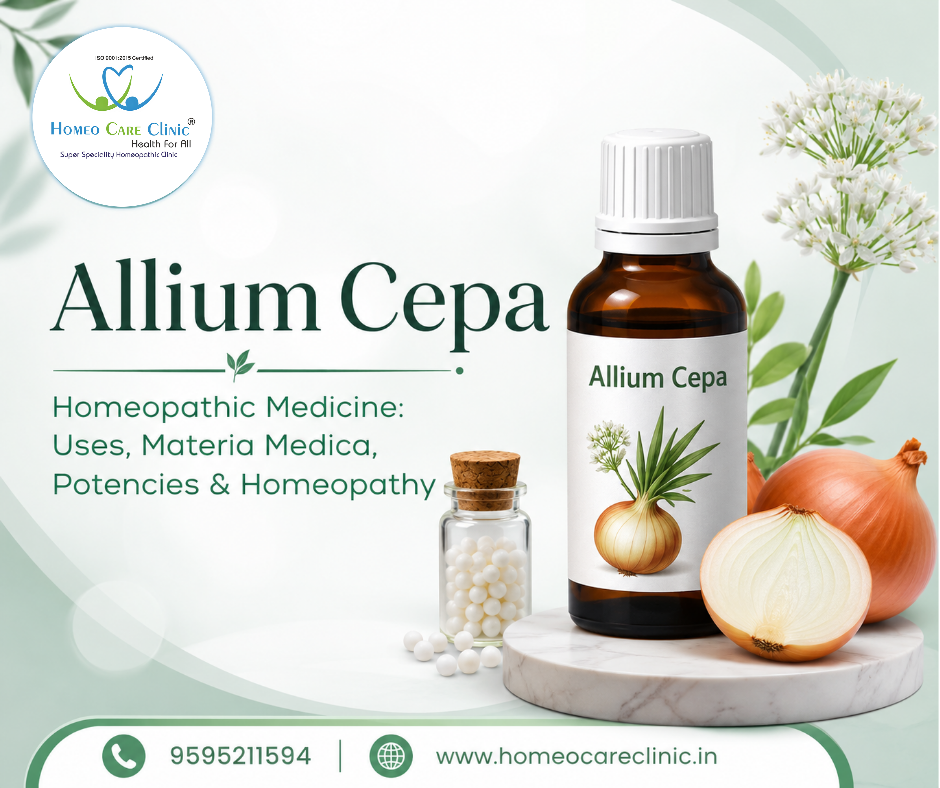
Allium cepa, commonly known as onion, is a well-known remedy in traditional homeopathic materia medica, particularly associated with symptoms affecting the nose, eyes and upper respiratory tract. It is prepared from the onion plant and is traditionally considered when symptoms resemble the characteristic effects produced by cutting or handling a fresh onion.
If you are searching for allium cepa homeopathic medicine, allium cepa uses, allium cepa 30 uses, or allium cepa 200 uses, understanding its traditional symptom picture is more useful than selecting the remedy based only on a diagnosis.
What Is Allium Cepa?
Allium cepa is the homeopathic preparation associated with onion (Allium cepa).
In allium cepa homeopathy, the remedy is traditionally associated with:
- Watery, irritating nasal discharge
- Profuse sneezing
- Burning and watery eyes
- Symptoms resembling hay fever
- Allergic-type nasal complaints
- Throat irritation
- Hoarseness
- Certain cough patterns
The traditional allium cepa materia medica picture is especially known for the contrast between nasal and eye symptoms.
What Is the Traditional Allium Cepa Materia Medica Picture?
The allium cepa materia medica describes a characteristic pattern involving the mucous membranes.
A traditional homeopathic description includes:
- Frequent sneezing
- Profuse watery nasal discharge
- Irritation of the nose and upper lip
- Watery eyes
- Burning or irritation of the eyes
- Nasal symptoms that may feel more irritating than the eye discharge
The remedy is particularly associated with complaints resembling those experienced when cutting a fresh onion.
This traditional symptom picture is the foundation for many of the allium cepa homeopathy uses described in homeopathic literature.
What Are the Traditional Allium Cepa Uses?
The commonly discussed allium cepa uses include symptoms associated with the upper respiratory tract and mucous membranes.
Allergic-Type Nasal Symptoms
Allium cepa is traditionally considered when there is:
- Repeated sneezing
- Watery nasal discharge
- Irritation around the nostrils
- Runny nose
- Seasonal allergy-like symptoms
Watery Eyes
The remedy is traditionally associated with watery eyes occurring alongside nasal irritation.
Cold and Coryza Symptoms
In traditional homeopathy, Allium cepa is commonly considered for acute coryza with profuse nasal discharge and sneezing.
Throat Irritation
Some traditional materia medica descriptions associate the remedy with irritation of the throat caused by nasal symptoms.
Hoarseness
Allium cepa may traditionally be considered when hoarseness occurs together with upper respiratory symptoms.
What Are Allium Cepa 30 Uses?
Allium cepa 30 uses are traditionally based on the characteristic symptom picture of the remedy rather than simply the diagnosis of allergy or cold.
Homeopathic practitioners may consider Allium cepa 30 when a person experiences:
- Frequent sneezing
- Watery nasal discharge
- Irritated nostrils
- Watery eyes
- Seasonal allergy-like symptoms
- Throat irritation associated with coryza
The appropriate potency and repetition should be determined individually by a qualified practitioner.
What Are Allium Cepa 200 Uses?
Allium cepa 200 uses are traditionally considered when the complete symptom picture strongly corresponds to the remedy.
In traditional homeopathic prescribing, Allium cepa 200 may be considered for acute or recurrent symptom patterns involving:
- Profuse watery nasal discharge
- Continuous sneezing
- Irritating nasal symptoms
- Watery eyes
- Upper respiratory irritation
However, potency selection is not simply based on the severity of symptoms. A practitioner may consider the totality of symptoms before selecting Allium cepa 200 homeopathy uses for an individual patient.
What Are Allium Cepa 200 Homeopathy Uses?
The traditional allium cepa 200 homeopathy uses are primarily discussed in relation to its characteristic upper-respiratory symptom pattern.
It may traditionally be considered when:
- Sneezing is frequent and repetitive.
- The nose produces abundant watery discharge.
- The nasal discharge causes irritation.
- The eyes are watery.
- Symptoms resemble seasonal allergic rhinitis.
- Symptoms are particularly noticeable in a specific environmental setting.
A homeopathic consultation is preferable before using a higher potency such as 200C.
What Is Allium Cepa Homeopathy Used For?
Allium cepa homeopathy is traditionally used for symptom patterns involving the nose, eyes and upper respiratory tract.
Commonly discussed indications include:
- Allergic rhinitis-like symptoms
- Watery runny nose
- Sneezing
- Watery eyes
- Coryza
- Throat irritation
- Hoarseness
It is important to distinguish traditional homeopathic use from established medical evidence. Homeopathy has not been demonstrated through high-quality evidence to cure allergies, infections or other respiratory diseases.
What Is Allium Cepa Extract?
Allium cepa extract refers to an extract prepared from the onion plant.
This is different from a highly diluted homeopathic preparation.
Onion contains naturally occurring compounds that have been studied for various biological properties. However, an onion extract and Allium cepa homeopathic medicine should not be treated as the same product.
The concentration, preparation method and intended use can be very different.
What Is the Relationship Between Onion and Allium Cepa?
Onion allium cepa refers to the botanical source associated with the remedy.
The common onion belongs to the genus Allium and species cepa.
The traditional homeopathic remedy takes its name from this botanical classification.
The characteristic traditional symptom picture is based partly on the effects of fresh onion exposure, including:
- Watery eyes
- Nasal irritation
- Sneezing
- Runny nose
- Burning sensations
What Is the Floral Formula of Allium Cepa?
The floral formula of Allium cepa is a botanical description of the onion flower.
Allium cepa belongs to the family Amaryllidaceae.
A commonly represented floral formula is:
Br, ⊕, ⚥, P(3+3), A3+3, G(3)
The exact notation can vary depending on the botanical convention being used.
The onion flower is generally characterized by:
- Actinomorphic symmetry
- Bisexual flowers
- Six tepals
- Six stamens
- A tricarpellary, syncarpous ovary
- Superior ovary
For academic or examination purposes, students should follow the floral-formula convention prescribed by their specific botany curriculum.
What Is an Allium Cepa Diagram?
An allium cepa diagram can refer to either a botanical diagram of the onion plant/flower or a diagram showing its floral structure.
A botanical diagram may illustrate:
- Bulb
- Roots
- Stem
- Leaves
- Inflorescence
- Individual flower
- Tepals
- Stamens
- Ovary
For students studying botany, the floral diagram can be particularly useful for understanding the arrangement of the reproductive structures.
What Does Boericke Say About Allium Cepa?
Allium cepa Boericke refers to the description of the remedy found in William Boericke’s Pocket Manual of Homeopathic Materia Medica, a commonly referenced homeopathic materia medica text.
Traditional descriptions emphasize symptoms involving:
- Eyes
- Nose
- Throat
- Respiratory tract
- Hoarseness
- Sneezing
- Watery nasal discharge
The remedy’s characteristic nasal and eye symptoms are among the most recognizable features associated with Allium cepa in traditional materia medica.
How Is Allium Cepa Traditionally Selected in Homeopathy?
Homeopathy generally does not prescribe a remedy solely because a person has “allergy” or “cold.”
Instead, a practitioner may examine:
Nasal Symptoms
- Is the discharge watery?
- Is it irritating?
- How frequently does the patient sneeze?
Eye Symptoms
- Are the eyes watery?
- Is there burning or irritation?
- Are eye symptoms more or less irritating than nasal symptoms?
Triggers
- Seasonal changes
- Dust
- Pollen
- Cold air
- Strong smells
Associated Symptoms
- Headache
- Throat irritation
- Hoarseness
- Cough
- Fatigue
This complete picture helps determine whether Allium cepa homeopathic medicine fits the traditional remedy profile.
What Is the Difference Between Allium Cepa 30 and Allium Cepa 200?
The main difference is the homeopathic potency designation.
Allium cepa 30 is a 30C potency, while Allium cepa 200 is a 200C potency.
They should not simply be treated as “the same medicine with 200 being stronger.”
In traditional homeopathic practice, potency selection and repetition depend on factors such as:
- Acuteness of symptoms
- Individual symptom pattern
- Sensitivity of the patient
- Previous response
- Overall clinical picture
Do not repeatedly change potency without professional guidance.
How Should Allium Cepa Be Taken?
There is no universally appropriate dose for every person.
The correct preparation and repetition depend on the product and the prescribing approach.
If you are considering Allium cepa 30 or Allium cepa 200, it is better to consult a qualified practitioner rather than repeatedly taking the remedy based on online recommendations.
Is Allium Cepa Safe?
Safety depends on the actual preparation, potency, ingredients and manufacturing quality.
Highly diluted homeopathic products generally contain little or none of the original starting substance, but commercially available products can differ.
Possible concerns include:
- Incorrect diagnosis
- Delayed treatment of infection or serious disease
- Contaminated or poor-quality products
- Alcohol in some liquid preparations
- Additional ingredients in combination products
Seek medical attention for breathing difficulty, facial or throat swelling, severe allergic reactions, persistent high fever or other serious symptoms.
Can Allium Cepa Treat Allergy?
Allium cepa is traditionally used in homeopathy for symptoms resembling allergic rhinitis.
However, there is insufficient high-quality scientific evidence to conclude that homeopathic Allium cepa treats or cures allergic rhinitis.
People with persistent allergies should discuss evidence-based options with an appropriate healthcare professional.
Homeopathic treatment should not replace prescribed allergy treatment, particularly when symptoms are severe.
Can Allium Cepa Help With a Runny Nose?
A watery runny nose and frequent sneezing are among the classic traditional indications of Allium cepa.
The traditional homeopathic picture is particularly associated with profuse nasal discharge and watery eyes.
However, a runny nose can occur due to allergies, viral infections, irritants and other causes. The cause should therefore be considered before treatment.
Can Allium Cepa Be Used for Children?
Children can develop allergic rhinitis and viral respiratory infections, but persistent symptoms should be properly assessed.
Parents should avoid selecting Allium cepa homeopathic medicine solely because a child has a runny nose.
A pediatrician should evaluate:
- Persistent nasal obstruction
- Breathing difficulty
- Recurrent infections
- Fever
- Poor feeding
- Sleep disturbance
- Persistent cough
Why Choose Professional Homeopathic Consultation?
At Homeo Care Clinic, homeopathic treatment is approached through individualized case-taking rather than prescribing a remedy solely from the disease name.
A consultation may consider:
- Present complaints
- Complete symptom pattern
- Triggers
- Medical history
- Lifestyle
- Sleep
- Diet
- Previous treatment
- Response to previous medicines
If Allium cepa does not match the patient’s overall symptom picture, another approach may be considered.
Frequently Asked Questions About Allium Cepa
- What is Allium cepa in homeopathy?
Allium cepa is a traditional homeopathic remedy prepared from onion and is particularly associated with nasal, eye and upper-respiratory symptoms.
- What are Allium cepa 30 uses?
Traditional allium cepa 30 uses include watery nasal discharge, frequent sneezing, watery eyes and allergy-like upper-respiratory symptoms when the overall symptom picture corresponds to the remedy.
- What are Allium cepa 200 uses?
Traditional allium cepa 200 uses are based on the same characteristic remedy picture. The choice of 200C potency should be individualized by a qualified practitioner.
- What is Allium cepa homeopathic medicine used for?
Allium cepa homeopathic medicine is traditionally used for symptom patterns involving profuse watery nasal discharge, sneezing, watery eyes and upper-respiratory irritation.
- What does Allium cepa Boericke describe?
The allium cepa Boericke materia medica description emphasizes characteristic symptoms involving the eyes, nose, throat and respiratory tract, particularly watery nasal discharge and sneezing.
- What is Allium cepa extract?
Allium cepa extract is an extract prepared from onion. It is different from a highly diluted homeopathic preparation.
- What is the floral formula of Allium cepa?
The floral formula of Allium cepa is commonly represented as Br, ⊕, ⚥, P(3+3), A3+3, G(3), although notation may vary according to the botanical convention used.
- What is an Allium cepa diagram?
An allium cepa diagram may show the botanical structure of the onion plant or its flower, including the tepals, stamens and ovary.
- What is the difference between Allium cepa 30 and 200?
They are different homeopathic potency designations. The appropriate potency and repetition should be selected according to the individual case rather than simply choosing a higher potency for more severe symptoms.
Conclusion
Allium cepa, or onion allium cepa, is a prominent remedy in traditional homeopathic materia medica, particularly known for its characteristic nasal and eye symptoms.
The most commonly searched allium cepa uses, allium cepa 30 uses, allium cepa 200 uses, allium cepa 200 homeopathy uses, allium cepa homeopathy uses, and allium cepa homeopathic medicine largely relate to watery nasal discharge, sneezing, watery eyes and upper-respiratory complaints.
Understanding the traditional allium cepa materia medica, including the descriptions found in allium cepa Boericke, can help students and readers understand why this remedy is selected in particular symptom patterns.
At the same time, homeopathic claims should be distinguished from scientifically established medical treatment. Persistent, severe or unexplained respiratory symptoms should always receive appropriate medical evaluation.
The right remedy is not simply the one associated with a disease name—it is the one that most closely matches the individual’s complete symptom picture.
“Your health deserves more than temporary relief. Choose homeopathy for lasting results”
Start your journey towards better focus today.
About the Author Bio:
Dr. Vaseem Choudhary M.D is a seasoned classical homeopath with over 16+ years of experience, dedicated to treating patients with compassion, precision and holistic care. Mainly in Pune & Mumbai, serving both national and international patients from UK, USA, Germany, France, Canada, Bhutan, Dubai and China. With a wide range of acute and chronic conditions—from skin disorders, hormonal issues, and digestive problems to autoimmune diseases and mental health concerns.
Dr. Vaseem is widely respected for his unique approach that combines classical homeopathy, personalized diet planning, lifestyle guidance, and a spiritual perspective on healing. He is known for his detailed and empathetic case-taking process, which focuses on treating the root cause rather than just symptoms.
In recognition of his dedication and clinical excellence, Dr. Vaseem Choudhary MD has been honored with the Best Homeopathic Doctor in Pune award by leading platforms such as:
- Awarded for International Excellence in Autism & ADHD Treatment 2026 in UK Parliament, London
- Dr. Vaseem Choudhary honoured at the UK Parliament, receiving International recognition PG from the London College of Homeopathy 2026
- Dr. Vaseem Choudhary, MD, was further acknowledged in Dubai in 2026 for his expertise in Autism and ADHD, reinforcing his growing international recognition in this field
- Best Homeopathy Doctor in Pune – National Healthcare Service Excellence Awards 2024
- Most Trusted Centre for Autism and ADHD in India 2025 – Healthcare Excellence & Leadership Awards
- Best Homeopathy Doctor in Pune – Dr. Vaseem Choudhary Shines at Ayush 2nd International Conference, Dubai
- Recognized for spearheading homeopathic treatment protocols, improving patient satisfaction, and healthcare advancements.
He is also a contributing author to the International Journal of Homeopathy and Natural Medicines (IJHNM), where he shares his research and clinical experiences with the global medical community.
With a passion to take homeopathy to new heights, Dr. Vaseem continues to guide patients towards natural, safe, and sustainable healing.
Homeo Care Clinic offers a holistic approach to treating the disease. The remedies mentioned above can treat the underlying causes of the condition and offer relief from the discomfort. However, it is important to consult a qualified homeopathic practitioner for the correct dosage and duration of treatment. Homeo Care Clinic provides comprehensive care for various ailments, and offers customized treatment plans based on individual requirements.
To schedule an appointment or learn more about our treatment, please visit our website or give us a call +91 9595211594 our best homeopathy doctor will be here to help.
- Success Stories of Patients –https://www.homeocareclinic.in/category/case-study/
- Patient Testimonials – https://www.homeocareclinic.in/testimonial/
Chat with a best homeopathic doctor privately:
If you have any queries regarding your disease or any symptoms, click to send a What‘s App message. Our best homeopathy doctor will be happy to answer you. About Us Click
Book an Appointment:
If you want to visit our clinic, click to book an appointment.
Online treatment:
If you are a busy professional, or you are living in a remote town or city, with no best homeopathic doctor near you, Click to start an online homeopathic treatment with the world’s exclusive, most experienced and best homeopathic clinic, managed by Dr. Vaseem Choudhary world-renowned homeopathic doctor expert
- Our Doctors –https://www.homeocareclinic.in/team/