



I had a client last year. We’ll call him David.
David was the guy everyone went to when things fell apart. He was the rock. Organized, calm, always had a plan. Then, out of absolutely nowhere, his company got bought out by some massive conglomerate, and his entire department was gutted. He lost his job on a Tuesday morning.
You’d think a guy like David would just update his resume, make a few calls, and bounce back.
He didn’t. He completely, utterly fell apart.
His wife dragged him into the clinic about six weeks later. He looked like he had aged ten years. He couldn’t sleep. He wasn’t eating. He told me he was having absolute, chest-crushing panic attacks just walking to the mailbox because he was so terrified of seeing a bill he couldn’t pay. People kept telling him to “look on the bright side” or that “when one door closes, another opens.”
I hate that phrase. I really do.
Because when your brain is misfiring, platitudes feel like insults. David wasn’t just having a normal bad week. He was dealing with a very real, very physical system crash.
Most people think mental struggles are either lifelong, deep-seated issues or just momentary bad moods. But there is this messy, chaotic middle ground. And that is exactly what we are looking at today. Let’s just sit down and talk about how a normal life event can sometimes break your brain’s shock absorbers, and how we actually fix it.
So let’s start with the basics. Because putting a name to the thing you are feeling is usually the first step to not feeling like you are losing your mind.
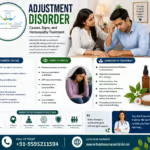
When a patient sits across from me, crying because they just moved to a new city and they can’t stop throwing up from anxiety, I usually have to stop them and explain what is adjustment disorder.
It’s actually a really specific thing. The clinical adjustment disorder definition is basically an abnormally severe emotional or behavioral reaction to an identifiable stressor.
Translation? Something happened to you, and your reaction to it is way, way bigger than what society considers “normal.” It completely derails your life.
There’s a timeline to it, too. It usually kicks in within three months of whatever the stressful event was. You don’t get this out of nowhere. There is always a trigger. You got a divorce. You had a baby. You went away to college. You got a terrible medical diagnosis. The event happens, and instead of just adapting to the new reality over a few weeks, your nervous system essentially gets stuck in a loop of panic or despair.
It is not PTSD. PTSD usually involves a threat to your actual life or physical safety. And it isn’t lifelong clinical depression, where the darkness just comes from inside your own chemistry. This is a reaction. A really bad, really painful reaction.
The Different Types of Adjustment Disorders
I wish it was just one thing. But human brains are weird, and we all break down differently. Depending on how your specific nervous system handles overwhelming stress, you are going to fall into one of a few categories.
The main types of adjustment disorders look like this in the real world:
- With Depressed Mood: This is the person who just unplugs. They cry constantly. They lose all hope. They feel totally worthless and can’t find joy in anything. They just want to lay on the couch and stare at the wall.
- With Anxiety: This is the jittery, terrifying version. Constant worry. A knot in the stomach that never goes away. Being totally overwhelmed by the thought of going to the grocery store. It feels like you drank ten cups of coffee but you are also exhausted.
- The Heavy Hitter: This is the big one. Adjustment disorder with anxiety and depression. It is exactly what it sounds like. It’s a nightmare cocktail. One minute you are crying because you feel hopeless, and the next minute your heart is pounding out of your chest because you are terrified of the future. It whips you back and forth.
- With Disturbance of Conduct: You see this in kids and teenagers a lot. They go through a bad parents’ divorce, and suddenly they are skipping school, getting into fights, or destroying property. They don’t know how to cry about it, so they break things instead.
- Mixed Disturbance of Emotions and Conduct: The teenager who is sobbing in their room one night and then stealing a car the next day. A total emotional and behavioral meltdown.
The Adjustment Disorder Causes
Why does this happen? Why can one person get fired and go play golf, while someone like David ends up having a panic attack at the mailbox?
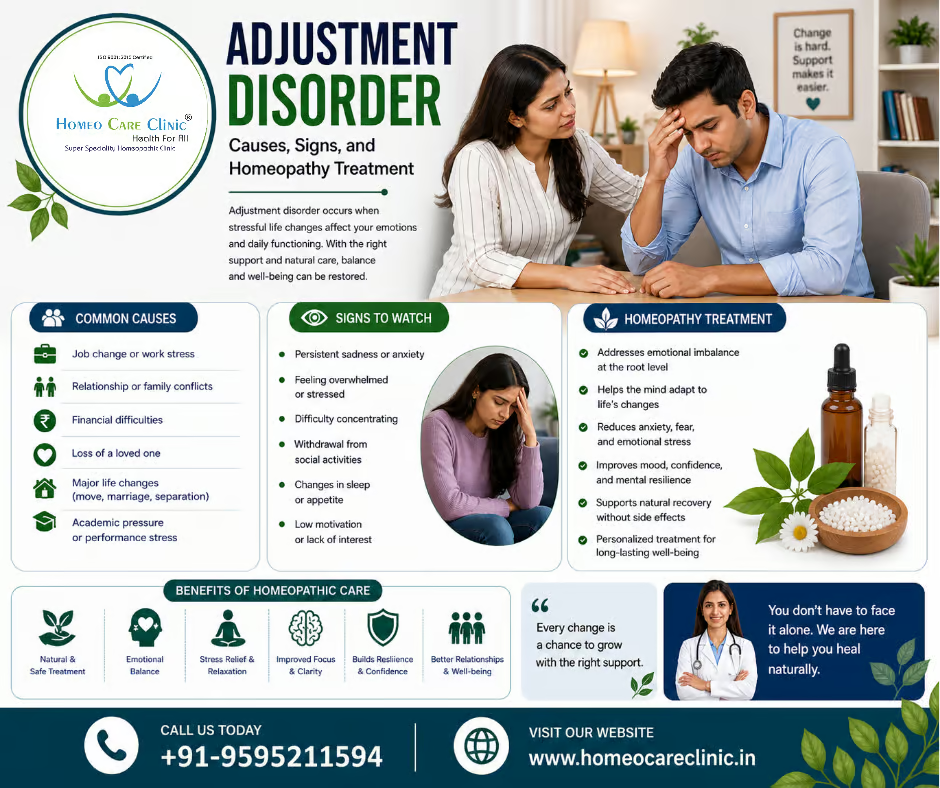
The adjustment disorder causes are almost always normal life transitions. But the reason it turns into a disorder has to do with how full your emotional cup was before the event even happened.
Think about it. If you have been working eighty hours a week, barely sleeping, and eating cold toast for dinner… your nervous system is already frayed. You are operating on fumes. Then, you get a phone call that your landlord is selling your apartment and you have to move in thirty days.
That move is the trigger. But the exhaustion is the real cause.
Some of the most common triggers I see are:
- Divorce or a really bad, messy breakup.
- Moving to a totally new city where you don’t know anyone.
- Getting married or having a baby. Yes, good things cause this too! The sudden change in identity just shorts out the brain.
- Going away to college. Sitting in a tiny dorm room realizing your childhood is over.
- Retirement. Waking up on a Monday and realizing nobody needs you to do anything anymore. It sounds nice until it happens, and then the lack of purpose just crushes people.
- Financial disasters. Losing a business. Going bankrupt.
The Adjustment Disorder Symptoms
You have to look at the daily reality of the person. You aren’t just looking for sadness. You are looking for an inability to function.
The adjustment disorder symptoms creep into every corner of your life.
Emotionally, you feel like you are walking through wet cement. Every decision is exhausting. You might feel totally numb, or you might cry at a laundry detergent commercial.
But the physical symptoms are what usually bring people into my clinic. They get these massive tension headaches that sit right at the base of their skull. Their digestion completely stops working—either they have diarrhea every morning before work, or their stomach is tied in such a tight knot they can’t force down a piece of bread. Insomnia is huge. They lie awake at 3 AM, their brain running terrible, apocalyptic scenarios on a loop.
They stop calling their friends back. They stop doing their laundry. Their whole world shrinks down to just trying to survive until the end of the day.
Conventional Adjustment Disorder Treatment
If you go to a regular doctor, what is the game plan?
Usually, they give you a referral for talk therapy. And therapy is great. Honestly, sitting in a room with a professional and unpacking the stress of a divorce is a really good idea. Cognitive Behavioral Therapy (CBT) helps you reframe those apocalyptic thoughts.
The problem? You usually have to sit on a waiting list for two months to get a good therapist. And when your stomach is in knots and you can’t sleep, two months feels like a decade.
So then comes the medication. The standard adjustment disorder treatment from a psychiatrist usually involves anti-anxiety meds or SSRI antidepressants.
Here is my issue with that. This disorder is, by definition, a temporary reaction to a life event. It usually resolves itself within six months if you get the right support. Putting someone on a heavy, brain-altering SSRI—which takes six weeks to even start working, causes weight gain, kills your sex drive, and requires a miserable tapering-off process—just feels like using a sledgehammer to fix a dent in a car door.
Sometimes people need a sledgehammer. I get that. But mostly, they just need something to hit the reset button on their nervous system without turning them into a numb zombie.
Homeopathy Treatment
This is why I sit here every day and do what I do.
I don’t want to drug a grieving, terrified person into a stupor. I want to figure out exactly how their specific nervous system is reacting to the stress, and then give them a medicine that acts like a tuning fork. Homeopathy works on the principle of finding the exact frequency of your distress and neutralizing it.
We look at your sleep. We look at your stomach. We look at whether you pace the floors or if you hide under the blankets.
Here are the 5 remedies I probably use the most when people’s lives get flipped upside down.
1. Ignatia Amara
- Indicated for: Acute, fresh grief and romantic heartbreak.
- Best suited for: The person who just went through a terrible breakup or got fired yesterday. They are trying so hard not to cry. They sit in the chair, take these huge, shuddering sighs, and say they have a lump in their throat that won’t go away. When they do finally cry, it is hysterical and unpredictable.
- Key actions: It is the absolute best remedy for emotional shock. It stops the hysterical swings. It helps the nervous system process the sudden loss so it doesn’t get trapped in the physical body as muscle tension and stomach cramps.
2. Gelsemium Sempervirens
- Indicated for: Anticipatory anxiety and physical weakness.
- Best suited for: The person who got a scary medical diagnosis, or who has to go to court for a divorce, and they are so terrified of the future that they physically can’t function. Their hands shake. Their knees literally feel weak. They get dizzy just thinking about tomorrow.
- Key actions: It brings courage back to the physical body. It stops the trembling. It clears the brain fog that comes from being paralyzed by fear, allowing them to actually stand up and deal with the stressful event.
3. Natrum Muriaticum
- Indicated for: Silent grief and dwelling on the past.
- Best suited for: The person who moved away and is deeply, painfully homesick. Or the person who is going through a divorce but refuses to talk about it. They build a giant wall around themselves. If you ask them if they are okay, they say “fine” in a tone that makes you step back. They sit alone at night, listening to sad music, and just dwell on the pain.
- Key actions: It softens that hardened, defensive shell. It helps release old, stuck grief. It lets the person actually process the change in their life instead of just carrying it around like a heavy rock in their chest.
4. Aconitum Napellus (Aconite)
- Indicated for: Sudden, terrifying panic attacks after a shock.
- Best suited for: The person who was in a car accident, or saw their house catch fire, and now they are in a state of absolute, sheer terror. Their heart races. They think they are going to die right there in the clinic. The anxiety is intense, fast, and completely overwhelming.
- Key actions: It acts fast to cut the panic circuit. It drops the heart rate and pulls the person out of that terrifying fight-or-flight freeze state.
5. Phosphoric Acid
- Indicated for: Total emotional burnout and apathy.
- Best suited for: The person who was the caregiver for a sick parent for a year, and now the parent is in a nursing home, and the caregiver has just… collapsed. They aren’t even crying anymore. They are just empty. They have zero physical energy. They answer questions with one word. They just want to lie down.
- Key actions: It rebuilds a shattered, exhausted nervous system. It gently brings the vital energy back online after a long period of grueling, exhausting stress.
Why Choose Homeo Care Clinic
You can’t treat a broken life by reading web articles at two in the morning. You just can’t. It is too complicated, and you are too tired.
You need to sit down with someone who does this all day long. And that is why people end up at Homeo Care Clinic with Dr. Vaseem Choudhary.
- We Actually Listen: Dr. Vaseem Choudhary has nearly two decades of experience. He knows that getting fired in your twenties feels completely different than getting fired in your fifties. He listens to the context. He doesn’t just hand you a pill and rush you out the door.
- Safe for the Heavy Stuff: When your brain is fragile, the last thing you want is a drug that might make you feel worse before you feel better. Our nanomedicines are incredibly safe. They don’t cause chemical hangovers.
- We Are in Your Neighborhood: When you can barely get off the couch, driving two hours to see a doctor is impossible. With established clinics in Viman Nagar, Hadapsar, and Magarpatta right here in Pune, you can actually get to your appointments.
- No Stigma: You can walk in and say, “I had a baby and I hate my life right now.” Nobody is going to judge you. We know what a stressed brain sounds like. We just want to fix it.
- Treating the Digestion Too: Stress ruins the gut. We fix the stomach aches, the diarrhea, and the tension headaches at the exact same time we treat the sadness. It is all one system.
Benefits of Homeopathy for Stress Disorders
Why avoid the standard psychiatric route if you can?
- You Still Feel Like You: Our remedies don’t flatten your emotions. You will still feel sad that you got a divorce. That is a normal human feeling. But you won’t feel so sad that you can’t get out of bed. It brings the reaction back down to a manageable size.
- No Weird Withdrawals: You can’t get addicted to a homeopathic remedy. When the stressful event is over and you feel better, you just stop taking it. No shaking, no brain zaps.
- Fast Action on Physical Symptoms: The knot in your stomach? The tension in your neck? The right remedy usually starts dissolving those physical stress markers within a few days.
- Safe with Other Meds: If you are already taking blood pressure medication, or even an anxiety pill, homeopathy won’t interact with it.
Lifestyle Adjustments
Look. I tell this to everyone. Medicine is a bridge. But you have to actually walk across it. If your life is a mess, a remedy won’t magically fix your bank account or your marriage. You have to do the work.
- Stop Doomscrolling: If you just lost your job, do not spend four hours on LinkedIn looking at people getting promotions. It is self-harm. Delete the app off your phone. Read a dumb fiction book instead.
- Move the Adrenaline: Panic is just trapped physical energy. If your chest is tight, you cannot think your way out of it. Put on your shoes and walk really fast for twenty minutes. Sweat. Force the adrenaline out of your muscle tissue.
- Protect Your Sleep: If you don’t sleep, you have no frontal lobe. Your brain cannot process grief if it is exhausted. Make your room freezing cold. Put your phone in the kitchen. If you wake up at 3 AM and start spiraling, get out of bed, sit in a chair, and read until you are tired again. Don’t just lie there torturing yourself.
- Talk to One Person: You don’t have to announce your struggles to the world. But pick one friend. One person who won’t give you stupid advice like “look on the bright side.” Just tell them you are having a hard time.
Diet Adjustments
Stress eats your body’s resources. You have to put the fuel back in.
- Eat Protein Early: If you drink coffee on an empty stomach when you are already anxious, you are basically asking for a panic attack. Eat eggs. Eat a piece of chicken. Stabilize your blood sugar so your brain doesn’t think you are starving on top of everything else.
- Magnesium is Your Best Friend: When you are stressed, your body dumps magnesium. And magnesium is the exact mineral your nerves need to relax. Buy some pumpkin seeds. Eat a ton of spinach. Just get the levels back up.
- Hydrate: It sounds so dumb and basic, but people who are grieving or stressed forget to drink water. Dehydration causes brain fog and headaches. Keep a glass of water next to you and just drink it.
- Cut the Alcohol: I know a glass of wine feels like it helps quiet the brain at night. It is a lie. Alcohol ruins your REM sleep. You wake up the next day feeling ten times more anxious than you did the night before. Skip it until you are stable.
5 Commonly Asked FAQs
1. How long does this usually last?
- It depends on you, but officially, an adjustment disorder usually clears up within six months after the stressful event (or its consequences) ends.
- If it goes on longer than that, we start looking at whether it has morphed into a deeper, chronic depression.
2. Can you get this from a good life event?
- Absolutely. I see it all the time with new parents or people who just got a massive promotion.
- A huge change in your identity, even a positive one, requires your brain to completely rewire its expectations. Sometimes the brain just gets overwhelmed by the transition.
3. Is this just a fancy word for being stressed out?
- No. Everyone gets stressed.
- This is when the stress completely breaks your ability to function. If you are stressed but you are still doing your laundry and paying your bills, you are just stressed. If you haven’t opened your mail in three weeks because you are paralyzed by fear, that is a disorder.
4. How fast does the homeopathic medicine work?
- For the really acute, terrifying panic stuff (like taking Aconite after a shock), it can work in minutes.
- For the deeper, exhausting burnout, it takes a bit of time. Usually, you start sleeping better within a week, and the heavy emotional fog lifts a few weeks after that.
5. How do I help a spouse who is going through this?
- Do not tell them to cheer up.
- Do not try to fix their problem immediately.
- Just do the laundry. Make them dinner. Take the physical burden of life off their shoulders for a little bit, and gently suggest they come talk to someone at the clinic.
A Final Thought
So yeah. Life is really, really hard sometimes.
We all like to pretend we are bulletproof until something comes along and proves that we aren’t. And that is okay. Understanding what is adjustment disorder gives you a little bit of grace. It helps you realize that your brain isn’t broken forever; it is just reacting to a massive hit.
The types of adjustment disorders are vast, and the adjustment disorder causes are just normal, painful life events. But you don’t have to just sit there and suffer through the adjustment disorder symptoms for six months. You don’t have to wait it out in misery.
There is an actual, physical way to help your brain process the shock. Finding the right adjustment disorder treatment doesn’t mean you are weak. It means you are smart enough to ask for a ladder when you are stuck in a hole. And if you are looking for a way out that doesn’t involve heavy, mind-numbing drugs, looking into adjustment disorder with anxiety and depression protocols at Homeo Care Clinic is a really good place to start.
You will get through the move. You will survive the job loss. You just need a little help getting your nervous system back on solid ground. So take a breath, drink some water, and let’s get you sorted out.
“Your health deserves more than temporary relief. Choose homeopathy for lasting results”
Start your journey towards better focus today.
About the Author Bio:
Dr. Vaseem Choudhary M.D is a seasoned classical homeopath with over 16+ years of experience, dedicated to treating patients with compassion, precision and holistic care. Mainly in Pune & Mumbai, serving both national and international patients from UK, USA, Germany, France, Canada, Bhutan, Dubai and China. With a wide range of acute and chronic conditions—from skin disorders, hormonal issues, and digestive problems to autoimmune diseases and mental health concerns.
Dr. Vaseem is widely respected for his unique approach that combines classical homeopathy, personalized diet planning, lifestyle guidance, and a spiritual perspective on healing. He is known for his detailed and empathetic case-taking process, which focuses on treating the root cause rather than just symptoms.
In recognition of his dedication and clinical excellence, Dr. Vaseem Choudhary MD has been honored with the Best Homeopathic Doctor in Pune award by leading platforms such as:
- Awarded for International Excellence in Autism & ADHD Treatment 2026 in UK Parliament, London
- Dr. Vaseem Choudhary honoured at the UK Parliament, receiving International recognition PG from the London College of Homeopathy 2026
- Dr. Vaseem Choudhary, MD, was further acknowledged in Dubai in 2026 for his expertise in Autism and ADHD, reinforcing his growing international recognition in this field
- Best Homeopathy Doctor in Pune – National Healthcare Service Excellence Awards 2024
- Most Trusted Centre for Autism and ADHD in India 2025 – Healthcare Excellence & Leadership Awards
- Best Homeopathy Doctor in Pune – Dr. Vaseem Choudhary Shines at Ayush 2nd International Conference, Dubai
- Recognized for spearheading homeopathic treatment protocols, improving patient satisfaction, and healthcare advancements.
He is also a contributing author to the International Journal of Homeopathy and Natural Medicines (IJHNM), where he shares his research and clinical experiences with the global medical community.
With a passion to take homeopathy to new heights, Dr. Vaseem continues to guide patients towards natural, safe, and sustainable healing.
Homeo Care Clinic offers a holistic approach to treating the disease. The remedies mentioned above can treat the underlying causes of the condition and offer relief from the discomfort. However, it is important to consult a qualified homeopathic practitioner for the correct dosage and duration of treatment. Homeo Care Clinic provides comprehensive care for various ailments, and offers customized treatment plans based on individual requirements.
To schedule an appointment or learn more about our treatment, please visit our website or give us a call +91 9595211594 our best homeopathy doctor will be here to help.
Follow us on Facebook, Twitter and Instagram for valuable insights into the world of homeopathy and holistic health.
- Facebook– https://www.facebook.com/homeocareclinicpune
- Instagram– https://www.instagram.com/homeocareclinic_in
- Website– https://linktr.ee/homeocareclinic
- Success Stories of Patients –https://www.homeocareclinic.in/category/case-study/
- Patient Testimonials – https://www.homeocareclinic.in/testimonial/
Chat with a best homeopathic doctor privately:
If you have any queries regarding your disease or any symptoms, click to send a What‘s App message. Our best homeopathy doctor will be happy to answer you. About Us Click
Book an Appointment:
If you want to visit our clinic, click to book an appointment.
Online treatment:
If you are a busy professional, or you are living in a remote town or city, with no best homeopathic doctor near you, Click to start an online homeopathic treatment with the world’s exclusive, most experienced and best homeopathic clinic, managed by Dr. Vaseem Choudhary world-renowned homeopathic doctor expert
- About Us – https://www.homeocareclinic.in/about-us/
- Our Doctors –https://www.homeocareclinic.in/team/