
Diet for Urinary Incontinence
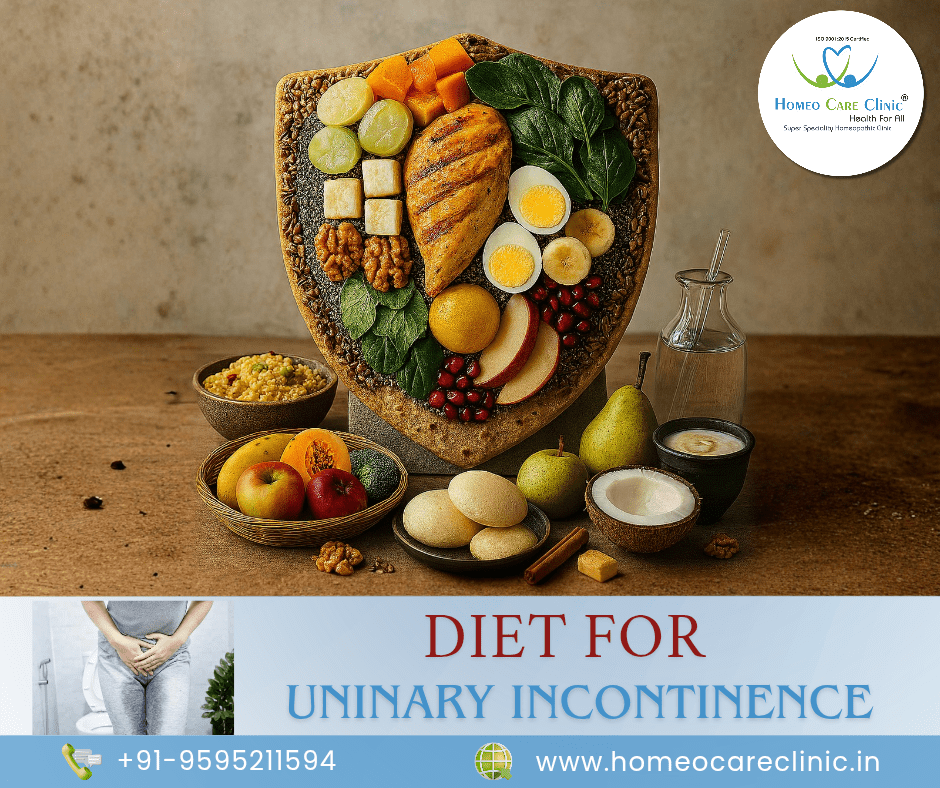
Importance of Diet
Urinary incontinence is the involuntary leakage of urine due to weakened bladder muscles, nerve damage, infection, hormonal changes, or excessive bladder irritants.
A well-planned diet may:
- Improve bladder control through strengthening pelvic and urinary muscles
- Minimize irritation of the bladder lining
- Prevent infections and inflammation
- Support kidney and nerve function
- Provide hydration balance without overloading the bladder
Goals of the Diet
- Maintain bladder muscle tone and nerve health
- Avoid irritants to the bladder (spicy, acidic, caffeine)
- Stay hydrated without excessive fluid consumption
- Supply minerals and antioxidants to combat inflammation
- Encourage bowel regularity, as constipation aggravates incontinence
Daily Diet Chart for Urinary Incontinence
| Time | Vegetarian Option | Non-Vegetarian Option |
| 6:30 AM | Warm water with lemon or methi seed water + 4 soaked almonds | Warm water with ginger + 1 boiled egg + 4 soaked almonds |
| 7:30 AM (Breakfast) | Vegetable oats or suji upma with flaxseeds OR moong dal chilla with mint chutney | 2 boiled eggs + multigrain toast + sautéed spinach + ½ banana |
| 10:30 AM (Snack) | 1 apple or papaya + handful of walnuts/pumpkin seeds | 1 boiled egg + papaya or apple + few walnuts |
| 1:00 PM (Lunch) | 2 multigrain rotis + palak dal + lauki/tinda/pumpkin sabzi + beetroot-cucumber salad + curd | Grilled chicken or fish + rice + sautéed spinach and carrots |
| OR Moong dal khichdi with spinach and 1 tsp ghee | Steamed fish or soft chicken curry + rice + boiled vegetables (pumpkin, beans, carrot) | |
| 4:00 PM (Snack) | Roasted chana or makhana + herbal tulsi tea | Chicken broth or egg soup + handful of almonds |
| 6:30 PM (Evening Drink) | Buttermilk with roasted jeera or herbal tea (tulsi, brahmi) | Light chicken soup or chamomile tea |
| 8:00 PM (Dinner) | Vegetable daliya OR 2 soft rotis + moong dal + palak/tori sabzi | Grilled fish/chicken stew + mashed sweet potatoes + sautéed broccoli |
| 9:30 PM (Before Bed) | Warm milk with nutmeg or turmeric | Warm milk with cardamom OR almond milk |
Recommended Urinary Incontinence Foods
- Bladder-Supportive & Healing Food
- Whole grains: oats, brown rice, dalia, millets (ragi, jowar, bajra)
- Fruits: banana, apple, papaya, pear, pomegranate
- Vegetables: lauki, tinda, spinach, pumpkin, carrot, beetroot
- Healthy fats: flaxseeds, chia seeds, walnuts, olive oil, ghee
- Probiotics: curd, buttermilk, fermented foods (idli, dosa, dhokla)
- Strengthening Protein Foods
- Pulses (moong dal, masoor dal, chana dal)
- Paneer, tofu, milk (if well tolerated)
- Eggs, chicken, fish (for non-vegetarians)
- Anti-Inflammatory Foods
- Turmeric, ginger, garlic, tulsi, cinnamon
- Green leafy vegetables and omega-3 foods
- Fiber-Rich Foods (to avoid constipation)
- Whole fruits (not juices), vegetables, oats, millets, flaxseeds
- Hydration
- Water (in small sips throughout the day, not in large quantities at one time)
- Coconut water, clear soups, herbal teas
Foods to Avoid in Urinary Incontinence
- Caffeine – tea, coffee, cola (enhances urine formation)
- Spicy foods – irritate bladder lining
- Citrus fruits – oranges, lemons, tomatoes (irritating and acidic)
- Artificial sweeteners – in sugar-free foods and diet sodas
- Carbonated beverages – soda, sparkling water
- Alcohol – enhances frequency and urgency
- Processed foods – papad, pickles, chips, sauces (salty)
Lifestyle & Fluid Management
1) Fluid Intake:
- Drink enough but not in excess at one time.
- Limit fluids 2–3 hours at night to avoid leakage at night.
2) Pelvic Floor Exercises (Kegels):
- Strengthen muscles of bladder control; repeat daily under supervision.
3) Maintain Healthy Weight:
- Additional weight puts extra pressure on the bladder.
4) Avoid Constipation:
- Add fiber and fluids; constipation makes urine control worse.
5) Control Coughing and Sneezing:
- Manage the chronic coughs that overwork bladder muscles.
6) Avoid Smoking:
- Nicotine irritates the bladder and compromises the pelvic muscles.
A urinary incontinence diet must emphasize hydration balance, bladder-healthy foods, fiber-rich meals, and muscle-supporting proteins. Typical Indian foods such as moong dal khichdi, lauki sabzi, curd, spinach, chicken stew, and fish are useful in providing nourishment and healing of bladder tissue without irritating it.
Avoidance of caffeine, citrus fruits, alcohol, and processed foods decreases symptoms.
When combined with pelvic muscles exercises, healthy way of life, and fluid management, this diet improves bladder control and general urinary health.
Start your journey towards better focus today.
Homeo Care Clinic offers a holistic approach to treating the disease. The remedies mentioned above can treat the underlying causes of the condition and offer relief from the discomfort. However, it is important to consult a qualified homeopathic practitioner for the correct dosage and duration of treatment. Homeo Care Clinic provides comprehensive care for various ailments, and offers customized treatment plans based on individual requirements.
To schedule an appointment or learn more about our treatment, please visit our website or give us a call +91 9595211594 our best homeopathy doctor will be here to help.
Follow us on Facebook, Twitter and Instagram for valuable insights into the world of homeopathy and holistic health.
- Facebook– https://www.facebook.com/homeocareclinicpune
- Instagram– https://www.instagram.com/homeocareclinic_in
- Website– https://linktr.ee/homeocareclinic
- Success Stories of Patients –https://www.homeocareclinic.in/category/case-study/
- Patient Testimonials – https://www.homeocareclinic.in/testimonial/
Chat with a best homeopathic doctor privately:
If you have any queries regarding your disease or any symptoms, click to send a What‘s App message. Our best homeopathy doctor will be happy to answer you. About Us Click
Book an Appointment:
If you want to visit our clinic, click to book an appointment.
Online treatment:
If you are a busy professional, or you are living in a remote town or city, with no best homeopathic doctor near you, Click to start an online homeopathic treatment with the world’s exclusive, most experienced and best homeopathic clinic, managed by Dr. Vaseem Choudhary world-renowned homeopathic doctor expert
About the Author Bio:
Dr. Vaseem Choudhary, is a seasoned classical homeopath with over 16 years of experience, dedicated to treating patients with compassion, precision and holistic care. Mainly in Pune & Mumbai, serving both national and international patients from UK, USA, Germany, France, Canada, Bhutan, Dubai & China. With a wide range of acute and chronic conditions—from skin disorders, hormonal issues, and digestive problems to autoimmune diseases and mental health concerns.
Dr. Vaseem is widely respected for his unique approach that combines classical homeopathy, personalized diet planning, lifestyle guidance, and a spiritual perspective on healing. He is known for his detailed and empathetic case-taking process, which focuses on treating the root cause rather than just symptoms.
In recognition of his dedication and clinical excellence, Dr. Vaseem has been honored with the Best Homeopathic Doctor in Pune award by leading platforms such as:
- Hindustan Times
- National Health Care Awards
- Punekar News Health Excellence Forum
He is also a contributing author to the International Journal of Homeopathy and Natural Medicines (IJHNM), where he shares his research and clinical experiences with the global medical community.
With a passion to take homeopathy to new heights, Dr. Vaseem continues to guide patients towards natural, safe, and sustainable healing.
- About Us – https://www.homeocareclinic.in/about-us/
- Our Doctors –https://www.homeocareclinic.in/team/