

MEDICAL DISCLAIMER
This content is for educational and informational purposes only and is NOT a substitute for professional medical advice, diagnosis, or treatment. Always consult Dr. Vaseem Choudhary or a qualified homeopathic practitioner before starting, changing, or stopping any treatment. Do NOT self-medicate with homeopathic remedies. In case of emergency, contact your nearest hospital immediately.
Renal parenchymal disease refers to conditions that affect the functional tissue of the kidneys. Because the kidneys are responsible for filtering waste, maintaining fluid and electrolyte balance, and producing urine, damage to this tissue can affect overall kidney function.
This detailed guide explains what is renal parenchymal disease, its possible causes, renal parenchymal disease symptoms, diagnosis, conventional renal parenchymal disease treatment, lifestyle measures, and the role and limitations of homeopathy.
Important: Renal parenchymal disease is a medical finding/description rather than one single disease. The seriousness and treatment depend on the underlying cause and actual kidney function. Homeopathy should not replace nephrologist evaluation, prescribed medicines, or treatment needed to protect kidney function.
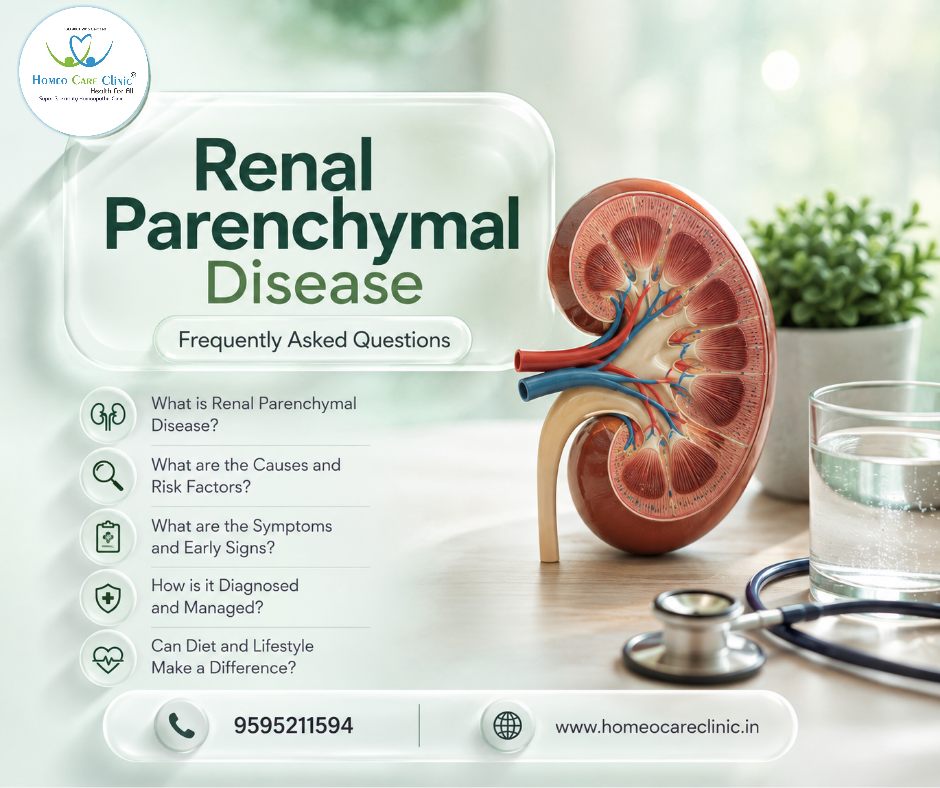
What is renal parenchymal disease?
Renal parenchymal disease refers to damage or inflammation involving the functional tissue of the kidneys—the tissue responsible for filtering blood and helping produce urine.
The term may appear on an ultrasound or other imaging report when changes in the kidney tissue are seen. However, an imaging finding by itself does not always tell you how well the kidneys are functioning or exactly what caused the abnormality.
Possible causes include:
- Diabetes
- High blood pressure
- Kidney infections
- Glomerular diseases
- Autoimmune disorders
- Certain medications or substances that can injure the kidneys
- Kidney stones with complications
- Genetic or structural kidney disorders
- Acute kidney injury
Diabetes and high blood pressure are among the most common causes of chronic kidney disease in adults.
Therefore, when someone is told that they have renal parenchymal disease, the next step should be finding the underlying cause and assessing kidney function.
What does renal parenchymal disease mean?
Renal parenchymal disease means that the tissue of one or both kidneys may show structural or functional abnormalities.
It does not automatically mean kidney failure.
A person may have relatively preserved kidney function despite changes seen on imaging, while another person may have significant kidney impairment. Blood and urine testing, medical history, blood pressure, and imaging findings are considered together to understand the condition.
Important tests may include:
- Serum creatinine
- Estimated glomerular filtration rate (eGFR)
- Urine routine examination
- Urine albumin-to-creatinine ratio (UACR)
- Blood urea nitrogen
- Electrolytes
- Blood glucose
- Blood pressure measurement
- Kidney ultrasound or other imaging when indicated
eGFR and urine albumin are important markers used to detect and monitor chronic kidney disease.
What is bilateral renal parenchymal disease?
Bilateral renal parenchymal disease means that abnormalities involving the kidney tissue are present in both kidneys.
The word bilateral simply means both sides.
Bilateral renal parenchymal disease causes may include conditions that affect both kidneys, such as:
- Long-standing diabetes
- High blood pressure
- Certain autoimmune kidney diseases
- Chronic kidney inflammation
- Some hereditary kidney disorders
- Recurrent or severe kidney infections
- Certain medications or substances that can damage the kidneys
However, the presence of bilateral changes on an ultrasound does not by itself establish the exact diagnosis or severity.
The actual kidney function needs to be assessed using blood and urine tests and, when necessary, further investigations.
What causes renal parenchymal disease?
The causes can vary considerably from one person to another.
1. Can diabetes cause renal parenchymal disease?
Yes. Long-standing high blood glucose can damage the kidney’s filtering structures. This is known as diabetic kidney disease and is an important cause of chronic kidney disease.
2. Can high blood pressure cause renal parenchymal disease?
Yes. Persistent high blood pressure can damage blood vessels and filtering structures within the kidneys. Uncontrolled hypertension can contribute to progressive kidney damage.
3. Can infections cause renal parenchymal disease?
Certain kidney infections can damage kidney tissue, particularly when infections are severe, recurrent, or inadequately treated.
4. Can autoimmune diseases affect the kidney tissue?
Yes. Conditions in which the immune system attacks the body’s own tissues can cause kidney inflammation and damage. Examples include lupus and certain glomerular diseases.
5. Can medicines damage the kidneys?
Certain medicines and substances can be harmful to the kidneys, particularly in susceptible individuals or when used inappropriately. People with kidney disease should always discuss over-the-counter medicines, supplements, and herbal products with their healthcare professional.
What are the symptoms of renal parenchymal disease?
The renal parenchymal disease symptoms depend on the underlying cause and the degree of kidney impairment.
Early kidney disease may cause no noticeable symptoms at all. Testing may therefore be the only way to identify kidney problems at an early stage.
Possible symptoms in more advanced disease include:
- Swelling of the feet, ankles, legs, hands, or face
- Changes in urine frequency
- Foamy urine
- Blood in urine
- Fatigue
- Loss of appetite
- Nausea or vomiting
- Itching
- Muscle cramps
- Sleep problems
- Difficulty concentrating
- Breathlessness
- Chest discomfort in severe cases
These symptoms are not specific to renal parenchymal disease, so proper medical evaluation is important.
Is renal parenchymal disease dangerous?
Is renal parenchymal disease dangerous? It can be, particularly when significant kidney damage is present, kidney function is declining, or the underlying cause remains untreated.
However, an ultrasound report mentioning renal parenchymal changes does not automatically mean that the condition is severe.
The important questions are:
- What is the eGFR?
- Is creatinine elevated?
- Is protein or albumin present in urine?
- Is blood pressure controlled?
- Is diabetes present?
- Are the kidney changes stable or progressing?
- Is there an identifiable underlying disease?
Advanced chronic kidney disease can lead to complications and, in some cases, kidney failure. Early diagnosis and appropriate treatment can help slow progression.
Is renal parenchymal disease curable?
Is renal parenchymal disease curable? There is no single answer because it depends on the underlying cause.
Some kidney problems may improve considerably when the underlying cause is identified and treated early. However, established chronic kidney damage may not be completely reversible.
The treatment goal in chronic kidney disease is often to:
- Identify and treat the underlying cause
- Protect remaining kidney function
- Control blood pressure
- Control blood glucose when diabetes is present
- Reduce complications
- Monitor kidney function regularly
- Slow further progression
Advanced, long-standing chronic kidney disease generally cannot simply be reversed, making early evaluation particularly important.
How is renal parenchymal disease diagnosed?
Diagnosis involves more than an ultrasound report.
A doctor may evaluate:
Blood Tests
- Serum creatinine
- eGFR
- Blood urea nitrogen
- Electrolytes
- Blood glucose
Urine Tests
- Routine urine examination
- Urine albumin
- Urine albumin-to-creatinine ratio
- Protein in urine
- Blood in urine
Imaging
- Ultrasound of the kidneys
- CT or MRI when clinically required
Other Tests
Depending on the suspected cause, a doctor may recommend additional blood tests, autoimmune testing, infection testing, or occasionally a kidney biopsy.
Blood and urine testing is particularly important because early kidney disease may have few or no symptoms.
What is the conventional renal parenchymal disease treatment?
There is no single renal parenchymal disease treatment suitable for every patient. Treatment is directed toward the underlying disease and the degree of kidney impairment.
If high blood pressure is responsible
Controlling blood pressure is one of the most important ways of protecting kidney function. Certain blood-pressure medicines, including ACE inhibitors or ARBs, may be used in appropriate patients, particularly when albumin is present in urine.
If diabetes is contributing
Good blood glucose control and appropriate diabetes treatment are important for reducing further kidney damage.
If an infection is present
The infection needs appropriate medical treatment based on its cause.
If an autoimmune kidney disease is present
A nephrologist may recommend specific treatment depending on the exact diagnosis.
If kidney function becomes severely impaired
Advanced kidney disease may require specialist management and, in kidney failure, options can include dialysis or kidney transplantation.
Can homeopathy help in renal parenchymal disease?
Patients frequently ask about homeopathy for renal parenchymal disease because they are looking for complementary or holistic approaches.
Homeopathy may be used by some practitioners as a complementary approach for symptom support and general well-being, but there is currently insufficient high-quality evidence to conclude that homeopathic medicines can reverse structural kidney damage, restore lost kidney function, or cure chronic kidney disease.
A systematic review of homeopathy in urological disorders found that available controlled evidence was scarce and inconclusive, with methodological limitations in the available studies.
Therefore, homeopathy should not be used instead of nephrology care when renal parenchymal disease has been diagnosed.
A responsible homeopathic approach should include appropriate medical investigations and should never encourage a patient to discontinue prescribed kidney, blood-pressure, diabetes, or other essential medicines without medical supervision.
Which homeopathic medicines are commonly considered for renal complaints?
Homeopathic practitioners may select remedies based on the patient’s individual symptom pattern rather than simply prescribing a medicine because an ultrasound shows renal parenchymal disease.
Some remedies traditionally discussed in homeopathic practice for urinary or kidney-related complaints include:
Berberis Vulgaris
Traditionally considered when kidney or urinary complaints are associated with radiating pain, particularly pain extending from the kidney region toward the bladder or thighs.
Cantharis
Traditionally considered for intense burning sensations associated with urination and marked urinary irritation.
Apis Mellifica
Traditionally considered when urinary complaints are accompanied by puffiness, sensitivity, or edema-like symptoms.
Sarsaparilla
Traditionally used in homeopathic practice for urinary discomfort, particularly when there is difficulty or pain toward the end of urination.
Solidago
Traditionally considered in some homeopathic approaches for kidney and urinary complaints, particularly when there is sensitivity in the kidney region.
Equisetum
Traditionally used for certain urinary symptoms, including frequent urination and bladder discomfort.
Important: These are traditional homeopathic indications, not proven treatments for renal parenchymal disease itself. A person with abnormal kidney function should not self-medicate with these or any other homeopathic, herbal, or nutritional products.
When may a homeopathic consultation be considered?
A homeopathic consultation may be considered as a complementary wellness approach when:
- The patient wants individualized lifestyle guidance.
- General symptoms need supportive management.
- Stress, sleep, diet, and lifestyle require attention.
- The patient wants complementary care alongside appropriate medical treatment.
However, worsening kidney function, significant protein in urine, severe swelling, uncontrolled blood pressure, reduced urine output, or other concerning findings require medical evaluation rather than relying on complementary treatment alone.
What lifestyle changes can help protect the kidneys?
Lifestyle management is an important part of renal parenchymal disease treatment and kidney protection.
Can controlling blood pressure help?
Yes. Blood-pressure control is one of the most important measures for protecting kidney function.
Can controlling diabetes help?
Yes. Maintaining blood glucose within the target range can help reduce further kidney damage in people with diabetes.
Should salt intake be reduced?
For many people with kidney disease or high blood pressure, reducing excessive sodium intake is beneficial. The exact dietary target should be individualized.
Should physical activity be continued?
Appropriate physical activity can help with weight, blood pressure, blood glucose, and overall health. The type and intensity should be adjusted according to the person’s medical condition.
Should smoking be stopped?
Yes. Smoking can worsen kidney damage and increase cardiovascular risk.
What diet is suitable for renal parenchymal disease?
There is no single kidney diet suitable for everyone.
Dietary requirements depend on:
- eGFR
- Protein in urine
- Blood potassium
- Blood phosphorus
- Blood pressure
- Diabetes
- Body weight
- Stage of kidney disease
A kidney-friendly diet may involve controlling sodium and adjusting protein or other nutrients depending on the individual’s condition. NIDDK recommends working with a healthcare professional or kidney-specialized dietitian to develop an individualized meal plan.
Generally:
- Prefer fresh, minimally processed foods.
- Reduce excessive salt and packaged foods.
- Avoid unnecessary high-protein diets unless specifically recommended.
- Avoid unverified herbal kidney cleanses.
- Maintain appropriate fluid intake according to your doctor’s advice.
- Do not make major potassium or phosphorus restrictions without professional guidance.
What should be avoided in renal parenchymal disease?
Patients should be cautious about:
- Excessive salt
- Highly processed foods
- Unnecessary painkillers or other potentially kidney-harming medicines
- Unregulated herbal remedies
- Unsupervised supplements
- Crash diets
- Excessive protein supplements
- Smoking
- Poorly controlled blood pressure
- Poorly controlled diabetes
Some medicines can accumulate in the body as kidney function declines, while others can directly harm the kidneys. Medication doses may therefore need adjustment by a healthcare professional.
Why is regular kidney monitoring important?
Regular monitoring helps determine whether kidney function is stable or changing.
Depending on the patient’s condition, doctors may periodically monitor:
- Creatinine
- eGFR
- Urine albumin
- Blood pressure
- Blood glucose
- Electrolytes
- Symptoms and fluid status
Tracking these measurements over time provides much more useful information than relying on a single ultrasound report.
Why choose Homeo Care Clinic for renal parenchymal disease?
At Homeo Care Clinic, patients seeking complementary renal parenchymal disease treatment can receive individualized consultation focused on their symptoms, lifestyle, diet, medical history, and overall health.
The approach may include:
- Detailed case-taking
- Review of available medical reports
- Individualized homeopathic assessment
- Diet and lifestyle guidance
- Stress and sleep management
- Regular follow-up
- Encouragement to continue appropriate conventional medical care
For a condition involving kidney function, responsible care should always prioritize appropriate investigations and specialist referral when required.
Homeo Care Clinic’s complementary approach should therefore be viewed as supportive care rather than a replacement for nephrologist-led treatment.
Frequently Asked Questions About Renal Parenchymal Disease
Is renal parenchymal disease dangerous?
It can be serious if it reflects significant or progressive kidney damage. However, the phrase on an imaging report alone does not determine severity. Kidney function should be assessed using eGFR, creatinine, urine albumin, blood pressure, and other appropriate tests.
Is renal parenchymal disease curable?
It depends on the underlying cause. Some causes can be treated or controlled, while established chronic kidney damage may not be completely reversible. Early diagnosis and treatment can help protect remaining kidney function.
What is bilateral renal parenchymal disease?
Bilateral renal parenchymal disease means that changes involving the kidney tissue are present in both kidneys. It does not automatically mean that both kidneys have failed. Further evaluation is needed to determine the cause and severity.
What are the main bilateral renal parenchymal disease causes?
Possible bilateral renal parenchymal disease causes include diabetes, hypertension, autoimmune kidney diseases, chronic inflammation, certain infections, hereditary conditions, and some medications or substances that can damage the kidneys.
What are the common renal parenchymal disease symptoms?
Early disease may have no symptoms. More advanced kidney impairment may cause swelling, fatigue, changes in urination, foamy urine, itching, nausea, poor appetite, muscle cramps, breathlessness, or difficulty concentrating.
Does renal parenchymal disease always mean kidney failure?
No. Renal parenchymal disease does not automatically mean kidney failure. Kidney failure is associated with severely reduced kidney function. Testing such as eGFR is necessary to understand kidney function.
Can renal parenchymal disease be detected early?
Yes, but early kidney disease often causes no symptoms. Blood and urine testing is therefore particularly important in people at increased risk, including those with diabetes or high blood pressure.
Can homeopathy cure renal parenchymal disease?
There is currently insufficient high-quality evidence that homeopathy can cure or reverse structural renal parenchymal disease or chronic kidney disease. Homeopathy should not replace evidence-based kidney treatment. A systematic review of homeopathy in urological disorders concluded that the available controlled evidence was insufficient to establish efficacy.
Can I take homeopathic medicine along with my kidney medicines?
Do not assume that any complementary medicine is automatically safe because it is labelled natural or homeopathic. Discuss all medicines, supplements, and remedies with your treating physician, particularly when kidney function is reduced.
When should someone with renal parenchymal disease see a nephrologist?
A nephrologist may be particularly important when there is:
- Reduced or declining eGFR
- Significant protein/albumin in urine
- Persistent blood in urine
- Difficult-to-control hypertension
- Recurrent kidney problems
- Significant electrolyte abnormalities
- Unexplained kidney dysfunction
- Suspected autoimmune or complex kidney disease
CKD management often benefits from coordinated care involving appropriate healthcare professionals, including nephrologists when needed.
What is the key takeaway about renal parenchymal disease?
Renal parenchymal disease is not one single condition. It describes abnormalities affecting kidney tissue, and the underlying cause and kidney function determine how serious it is.
The most important steps are:
- Understand the cause.
- Check creatinine and eGFR.
- Check urine for albumin/protein.
- Control blood pressure.
- Control diabetes if present.
- Follow an individualized kidney-friendly diet.
- Avoid unnecessary kidney-harming medicines and supplements.
- Maintain healthy weight and physical activity as appropriate.
- Attend regular medical follow-ups.
- Consult a nephrologist when indicated.
Homeopathy may be considered only as complementary supportive care, not as a replacement for appropriate medical treatment of kidney disease.
“Your health deserves more than temporary relief. Choose homeopathy for lasting results.”
Start your journey towards better focus today.
About the Author Bio:
Dr. Vaseem Choudhary M.D is a seasoned classical homeopath with over 16+ years of experience, dedicated to treating patients with compassion, precision and holistic care. Mainly in Pune & Mumbai, serving both national and international patients from UK, USA, Germany, France, Canada, Bhutan, Dubai and China. With a wide range of acute and chronic conditions—from skin disorders, hormonal issues, and digestive problems to autoimmune diseases and mental health concerns.
Dr. Vaseem is widely respected for his unique approach that combines classical homeopathy, personalized diet planning, lifestyle guidance, and a spiritual perspective on healing. He is known for his detailed and empathetic case-taking process, which focuses on treating the root cause rather than just symptoms.
In recognition of his dedication and clinical excellence, Dr. Vaseem Choudhary MD has been honored with the Best Homeopathic Doctor in Pune award by leading platforms such as:
- Best Homeopathy Doctor in Pune – National Healthcare Service Excellence Awards 2024
- Most Trusted Centre for Autism and ADHD in India 2025 – Healthcare Excellence & Leadership Awards
- Best Homeopathy Doctor in Pune – Dr. Vaseem Choudhary Shines at Ayush 2nd International Conference, Dubai
- Recognized for spearheading homeopathic treatment protocols, improving patient satisfaction, and healthcare advancements.
He is also a contributing author to the International Journal of Homeopathy and Natural Medicines (IJHNM), where he shares his research and clinical experiences with the global medical community.
With a passion to take homeopathy to new heights, Dr. Vaseem continues to guide patients towards natural, safe, and sustainable healing.
Homeo Care Clinic offers a holistic approach to treating the disease. The remedies mentioned above can treat the underlying causes of the condition and offer relief from the discomfort. However, it is important to consult a qualified homeopathic practitioner for the correct dosage and duration of treatment. Homeo Care Clinic provides comprehensive care for various ailments, and offers customized treatment plans based on individual requirements.
To schedule an appointment or learn more about our treatment, please visit our website or give us a call +91 9595211594 our best homeopathy doctor will be here to help.
Follow us on Facebook, Twitter and Instagram for valuable insights into the world of homeopathy and holistic health.
- Facebook– https://www.facebook.com/homeocareclinicpune
- Instagram– https://www.instagram.com/homeocareclinic_in
- Website– https://linktr.ee/homeocareclinic
- Success Stories of Patients –https://www.homeocareclinic.in/category/case-study/
- Patient Testimonials – https://www.homeocareclinic.in/testimonial/
Chat with a best homeopathic doctor privately:
If you have any queries regarding your disease or any symptoms, click to send a What‘s App message. Our best homeopathy doctor will be happy to answer you. About Us Click
Book an Appointment:
If you want to visit our clinic, click to book an appointment.
Online treatment:
If you are a busy professional, or you are living in a remote town or city, with no best homeopathic doctor near you, Click to start an online homeopathic treatment with the world’s exclusive, most experienced and best homeopathic clinic, managed by Dr. Vaseem Choudhary world-renowned homeopathic doctor expert
- About Us – https://www.homeocareclinic.in/about-us/
Our Doctors –https://www.homeocareclinic.in/team/