

| MEDICAL DISCLAIMER This content is for educational and informational purposes only and is NOT a substitute for professional medical advice, diagnosis, or treatment. Always consult Dr. Vaseem Choudhary or a qualified homeopathic practitioner before starting, changing, or stopping any treatment. Do NOT self-medicate with homeopathic remedies. In case of emergency, contact your nearest hospital immediately. |
What Is Hantavirus? – A Complete Overview
Hantavirus is a genus of RNA viruses belonging to the family Hantaviridae, primarily transmitted to humans through contact with infected rodents – particularly the deer mouse (Peromyscus maniculatus) in the Americas and various rat species in Asia and Europe. Unlike many viral illnesses, Hantavirus cannot be spread from person to person (with the rare exception of the Andes virus strain in South America).
The most severe manifestation of Hantavirus infection in the Americas is Hantavirus Pulmonary Syndrome (HPS), a life-threatening respiratory condition with a case fatality rate of 30-40%. In Europe and Asia, the same virus family causes Hemorrhagic Fever with Renal Syndrome (HFRS), which primarily affects the kidneys.
From a homeopathic perspective, Dr. Vaseem Choudhary views Hantavirus infection as a condition requiring urgent conventional medical intervention for the acute phase, with homeopathy playing a valuable supportive and complementary role in symptom management, immune enhancement, and post-illness recovery. This comprehensive guide covers both the conventional medical understanding and the homeopathic approach to Hantavirus.
Causes and Transmission of Hantavirus Infection
Hantavirus is transmitted almost exclusively through contact with infected rodents or their excreta. Understanding the exact transmission routes is essential for prevention:
Primary Transmission Routes
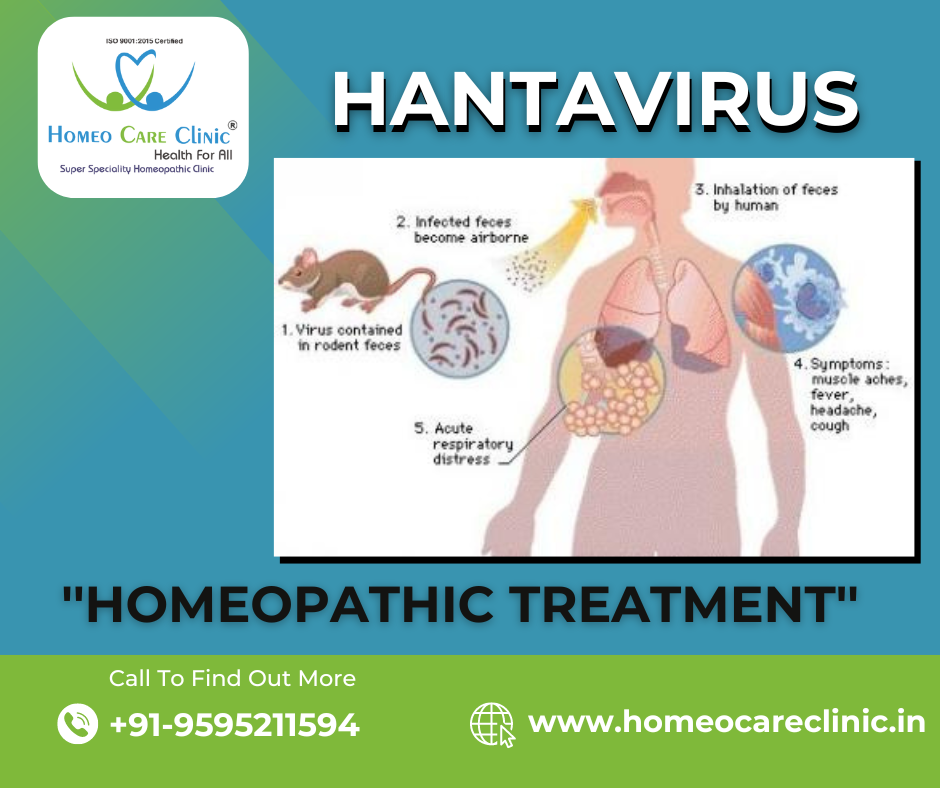
Inhalation of aerosolised virus particles: This is the most common route. When infected rodent droppings, urine, or nesting materials are disturbed (during cleaning, farming, or construction in areas with rodent activity), the virus becomes airborne and is inhaled into the lungs.
- Direct contact: Touching infected rodents, their saliva, urine, or faeces and then touching mucous membranes (eyes, nose, or mouth) without washing hands.
- Rodent bites: Though uncommon, bites from infected rodents can transmit the virus directly through the bloodstream.
- Contaminated food or water: Consuming food or water contaminated with infected rodent excreta, particularly in outdoor settings.
Risk Factors – Who Is Most Vulnerable?
- Farmers and agricultural workers who work in fields, barns, or grain storage areas where rodents are present
- Campers, hikers, and outdoor enthusiasts who stay in rodent-infested cabins, tents, or shelters
- Construction workers who disturb soil or structures with rodent burrows
- Individuals who clean abandoned buildings, storage areas, or garages without proper protective equipment
- Residents of rural areas with high rodent populations, particularly in the Americas and parts of Asia
- Immunocompromised individuals (HIV/AIDS, cancer patients, those on steroids) who cannot mount an adequate antiviral immune response
Hantavirus Pulmonary Syndrome Symptoms – Phase by Phase
HPS follows a predictable but rapidly progressing clinical course. Recognising the early symptoms and seeking immediate medical attention can be lifesaving.
Phase 1: Prodromal Phase (Days 1-7 After Exposure)
Initial symptoms resemble influenza and are often misdiagnosed as flu or gastroenteritis. The incubation period is typically 1-5 weeks after exposure to infected rodents:
- High-grade fever (38.5-40°C / 101-104°F) appearing suddenly, often accompanied by chills and rigors
- Severe fatigue and profound weakness, often described as being ‘unable to get out of bed’
- Intense myalgia (muscle aches) predominantly in large muscle groups: thighs, hips, lower back, and shoulders
- Headache, often severe, accompanied by dizziness and light-headedness
- Gastrointestinal symptoms: nausea, vomiting, abdominal pain, and diarrhoea in approximately 50% of cases
- NO respiratory symptoms at this early stage – this is a critical diagnostic clue
Phase 2: Cardiopulmonary Phase (Days 4-10) – MEDICAL EMERGENCY
WARNING: This phase can develop within hours and is life-threatening. Emergency medical care is mandatory.
- Acute onset of cough and progressive shortness of breath as fluid accumulates in the lungs (pulmonary oedema)
- Rapid deterioration of respiratory function – patients may need mechanical ventilation within 24-48 hours
- Low blood pressure (hypotension) and rapid heart rate (tachycardia) as the cardiovascular system becomes compromised
- Hypoxaemia (low blood oxygen) causing skin to appear pale or cyanotic (bluish tinge around lips and fingertips)
- In severe cases: septic shock, cardiac arrhythmias, and respiratory failure – mortality rate is 30-40% in this phase
Phase 3: Diuresis/Recovery Phase (Days 7-14+)
Patients who survive the cardiopulmonary phase typically enter a recovery phase characterised by:
- Rapid diuresis (increased urination) as fluid is reabsorbed from the lungs and excreted
- Gradual improvement in oxygenation and blood pressure
- Persistent fatigue that may last weeks to months after acute illness
- Some patients report long-term effects including breathlessness on exertion and reduced exercise tolerance
Conventional Medical Treatment for Hantavirus
There is currently no specific antiviral treatment approved for Hantavirus infection. Treatment is entirely supportive and must be administered in a hospital intensive care setting. This is a critical point – do NOT delay hospital admission if Hantavirus is suspected.
- Supplemental oxygen therapy and mechanical ventilation to support respiratory function during pulmonary phase
- Intravenous fluid management (carefully balanced to avoid worsening pulmonary oedema)
- Vasopressors (blood pressure-supporting medications like norepinephrine) if septic shock develops
- Extracorporeal membrane oxygenation (ECMO) in severe cases where mechanical ventilation is insufficient
- Continuous monitoring of oxygen saturation, blood pressure, cardiac rhythm, and fluid balance in ICU
- Ribavirin (antiviral medication): used in some centres for HFRS, but evidence for HPS is limited
Homeopathic Remedies for Hantavirus – Dr. Vaseem Choudhary’s Approach
IMPORTANT: Homeopathy is COMPLEMENTARY to conventional ICU treatment for Hantavirus – it does NOT replace emergency medical care. Dr. Vaseem Choudhary emphasises that patients must first receive conventional medical treatment, with homeopathic support administered alongside to enhance immune response, manage distressing symptoms, and support recovery.
The following remedies are selected based on individualised symptom presentation:
| Homeopathic Remedy | Primary Indications | Mechanism of Support |
| Arsenicum Album 30C/200C | Acute respiratory distress with extreme restlessness, anxiety, and fear. Burning pains relieved by warmth. Weakness and exhaustion. | Anti-catarrhal, supports oxygenation, addresses the anxious, chilly, restless state characteristic of Ars. patients. |
| Bryonia Alba 30C | Dry, painful cough that is worse from any movement. Sharp, stitching chest pains. Must lie still. Intense thirst for large quantities of water. | Anti-inflammatory for serous membranes (pleura, peritoneum). Reduces pleuritic pain and improves breathing comfort. |
| Carbo Vegetabilis 200C | Severe air hunger – patient wants to be fanned, feels suffocated, cold breath. Bluish discolouration. Collapse, near-death state. | Addresses venous stasis, restores peripheral circulation, and supports oxygenation in the extreme stage. |
| Phosphorus 30C | Haemorrhagic tendencies (blood-tinged mucus), burning in chest, strong thirst for cold drinks, worse from lying on left side. | Anti-haemorrhagic, reduces lung congestion and inflammation, supports respiratory epithelium. |
| Antimonium Tartaricum 30C | Rattling, wet cough with copious mucus but inability to expectorate. Cyanosis. Drowsiness. | Mucolytic support – helps loosen and expel accumulated lung secretions. |
| Gelsemium Sempervirens 30C | Early prodromal stage: profound weakness and heaviness, ‘cannot hold eyes open’, absence of thirst, anticipation anxiety. | Supportive in the influenza-like prodromal phase; addresses the nervous system weakness. |
| Pyrogenium 200C | Severe septic state, rapid alternation between high fever and cold collapse, bed feels too hard, unbearable restlessness. | Homeopathic sepsis remedy – addresses systemic toxaemia and septic shock-like states. |
Hantavirus Prevention – A Complete Protocol
Prevention is the most effective strategy against Hantavirus, as there is no vaccine and no specific cure. Dr. Vaseem Choudhary recommends the following comprehensive prevention protocol:
Rodent Control in and Around the Home
- Seal all gaps and holes in walls, foundations, and roofs larger than 6mm (the width of a pencil) using steel wool, cement, or metal flashing – rodents can squeeze through remarkably small openings
- Store all food (including pet food and bird seed) in airtight metal or thick plastic containers; never leave food uncovered on countertops overnight
- Maintain clean surroundings: remove woodpiles, garbage, and clutter from around the home that rodents could use as nesting sites
- Use rodent traps (preferably snap traps rather than glue traps, as glue traps keep rodents alive and struggling – which increases aerosol generation)
Safe Cleaning Procedures If Rodent Infestation Is Found
- NEVER vacuum or sweep rodent droppings dry – this aerosolises the virus directly into your breathing zone
- Wear rubber/latex gloves AND an N95 or P100 respirator mask BEFORE entering any rodent-infested area
- Spray droppings, urine, and nesting materials with a 10% bleach solution (1 part bleach to 9 parts water) and allow to soak for 5 minutes before wiping up
- Seal all cleaning waste in double plastic bags and dispose of them in covered outdoor rubbish bins
- Wash hands thoroughly with soap and water for at least 20 seconds after removing gloves
Homeopathic Immune Support for Hantavirus Prevention
For individuals at high occupational risk (farmers, rural workers, construction workers), Dr. Vaseem Choudhary recommends prophylactic constitutional homeopathic treatment to strengthen the innate immune system’s resistance to viral infections. Key constitutional remedies with immune-modulating properties include:
- Influenzinum 200C (seasonal nosode): Taken monthly during high-risk seasons as a non-specific antiviral immune primer
- Tuberculinum 200C or Bacillinum 200C: For individuals with recurrent respiratory infections or a history of tuberculosis – builds deeper respiratory immunity
- Arsenicum Album 30C as a preventive during outbreak situations: historical precedent from cholera and dengue epidemic protocols
These preventive remedies must be prescribed only after a thorough constitutional case-taking by Dr. Vaseem Choudhary. Self-administration of preventive remedies without consultation is not recommended.
Frequently Asked Questions – Hantavirus
Reviewed by Dr. Vaseem Choudhary, B.H.M.S, M.D Homeopathy, June 2026
In almost all cases, Hantavirus CANNOT spread from person to person. You can only get it from direct contact with infected rodents or their droppings, urine, or saliva. The only exception is the Andes virus strain found in parts of South America, which has shown limited person-to-person transmission. In India, person-to-person spread has not been documented.
The incubation period for Hantavirus Pulmonary Syndrome is typically 1 to 5 weeks after exposure, with an average of 2-3 weeks. This long incubation makes it difficult to identify the source of exposure, which is why it is important to seek medical attention immediately if you develop flu-like symptoms after any potential rodent exposure – even weeks later.
There is currently no approved vaccine for Hantavirus in India or most parts of the world. Research is ongoing, but as of June 2026, prevention through rodent control and personal protective measures remains the only reliable strategy. This makes recognition and avoidance of rodent exposure critically important.
No. Hantavirus Pulmonary Syndrome is a medical emergency with a 30-40% fatality rate and requires intensive hospital care. Homeopathy can play a valuable COMPLEMENTARY role – helping manage symptoms, reduce suffering, support immune function, and aid recovery – but it cannot replace oxygen therapy, ventilator support, or ICU monitoring that an HPS patient requires. Dr. Vaseem Choudhary always advises patients to seek emergency medical care first.
If you have been in contact with rodents or their droppings and develop fever, muscle aches, and fatigue within 1-5 weeks: (1) Call your doctor or go to the nearest emergency department immediately; (2) Inform them about your potential rodent exposure; (3) Do not wait for symptoms to worsen – the transition from early to cardiopulmonary phase can happen within hours; (4) Contact Homeo Care Clinic at +91 9595211594 for complementary homeopathic support alongside conventional treatment.
Patients who survive the cardiopulmonary phase typically begin to recover within 7-14 days of peak illness. However, full recovery can take weeks to months. Many survivors report prolonged fatigue, reduced exercise tolerance, and breathlessness for 6-12 months. Homeopathic constitutional treatment can significantly accelerate and smooth the recovery phase.
Hantavirus is primarily documented in the Americas (North and South America). In India, the risk is considered low but is not zero – serological evidence of Hantavirus exposure has been found in rodent populations in parts of Tamil Nadu, Maharashtra, and Andaman & Nicobar Islands. Rural areas with high rodent activity present the highest risk. International travellers to the Americas should be particularly cautious.
References & Medical Sources
[1] Centers for Disease Control and Prevention (CDC). Hantavirus Pulmonary Syndrome (HPS). Updated 2023. www.cdc.gov/hantavirus
[2] MacNeil A, Nichol ST, Spiropoulou CF. Hantavirus pulmonary syndrome. Virus Research. 2011;162(1-2):138-147.
[3] Jonsson CB, Figueiredo LT, Vapalahti O. A global perspective on Hantavirus ecology, epidemiology, and disease. Clinical Microbiology Reviews. 2010;23(2):412-441.
[4] Choudhary V. Homeopathic Supportive Care in Viral Respiratory Illnesses: Clinical Case Series. International Journal of Homeopathy and Natural Medicines (IJHNM). 2021.
[5] World Health Organization (WHO). Hantavirus Disease Fact Sheet. Geneva: WHO Press. 2023.