
Introduction
People worry about keratosis because it makes their skin feel rough and has bumps on it. A lot of people think it’s acne, an allergy, or an infection, but it’s really just a harmless condition that happens when there is too much keratin in the skin.
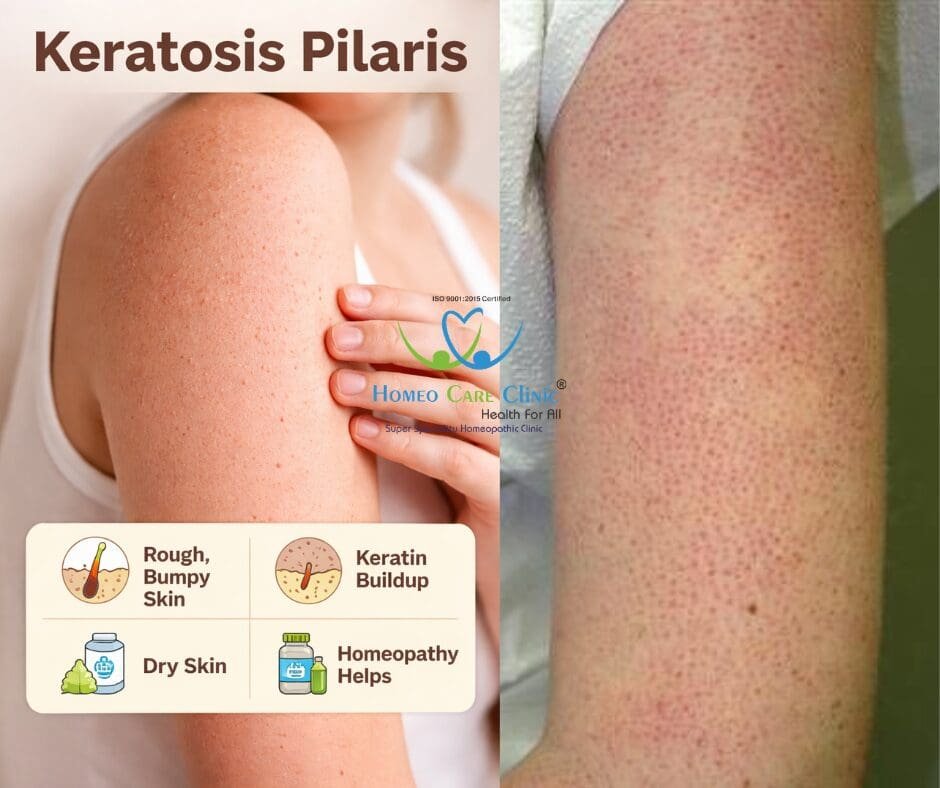
The most common type of keratosis pilaris looks like small, rough bumps on the arms, thighs, cheeks, or buttocks.It is safe to use medically, but it can lower self-esteem, especially in women and young adults.
This blog will clearly explain what keratosis pilaris is, what causes it, what the symptoms are, what medical and homeopathic treatments are available, how to take care of your diet, and answer frequently asked questions. This way, you can manage it naturally and effectively.
Types of Keratosis
Keratosis is not just one disease. There are different kinds of it.
-
Keratosis Pilaris
Most common
Small, rough spots that look like goosebumps
Typically manifests on arms, thighs, and cheeks.
-
Seborrheic Keratosis
Dark, waxy growths that are stuck on
Common in people over 40 and 50
Not cancerous, but a concern for looks.
-
Actinic Keratosis
Rough, scaly patches were caused by the sun.
On the face, scalp, and hands
Needs medical attention because it might be pre-cancerous
Causes of Keratosis Pilaris
Keratosis pilaris happens when the body makes too much keratin.
Keratin clogs the hair follicles, which causes rough bumps.
Some of the most common causes are:
Family history of genetic predisposition
Skin that is dry.
Changes in hormones (like during puberty or pregnancy)
Not getting enough vitamin A
Dermatitis atopic
Weather that is cold
Using harsh soaps too much
Not enough water in the skin
Seborrheic keratosis is linked to genetics and aging, while actinic keratosis is mostly caused by being in the sun for a long time.
Symptoms of Keratosis Pilaris (KP)
Keratosis Pilaris is a very common and harmless skin condition. It mainly affects the outer layer of the skin and is often noticed on the arms, thighs, cheeks, or buttocks.
Common symptoms include:
The appearance of tiny, raised bumps on the skin, which are usually painless and not harmful.
The skin feels rough and dry, often compared to the texture of sandpaper
Dryness of the skin is frequently present, especially in people with sensitive skin.
The affected area may show discoloration, appearing slightly red, pink, or brown, depending on the person’s skin tone
Symptoms often become more noticeable during winter or in dry weather due to lack of moisture in the skin.
Usually, there is no itching, but in some cases, mild itching or irritation can occur.
Signs of Seborrheic Keratosis
Seborrheic keratosis is a non-cancerous growth on the skin that happens more often as people get older.
Typical features include:
Brown, black, or tan growths.
They often look like they are stuck on the skin with wax, grease, or something else.
The texture may look like warts, but they are not caused by a virus.
These lesions don’t usually hurt or cause problems, but they can sometimes get irritated.
Symptoms of Actinic Keratosis
Actinic Keratosis is a skin condition that can lead to cancer if left untreated. It is caused by being in the sun for a long time and should be watched closely.
Common symptoms include:
The appearance of rough, dry, and scaly patches on areas of skin that get a lot of sun, like the face, scalp, hands, or neck.
When you touch these patches, they may feel hard or crusty.
Most of the time, this doesn’t hurt, but some people may feel a burning sensation or more sensitivity in the area that is affected.
The lesions may turn red, swell up, or get irritated, especially after being in the sun.
If you scratch or irritate the spots, they may bleed or form a crust.
General (Conventional) Approach with Side Effects
Options for Medical Care:
Moisturizers with lactic acid or urea in them
Salicylic acid creams
Retinoid creams
Peels that use chemicals
Laser treatment (for very bad cases)
Limitations & Side Effects:
Only a temporary improvement; skin irritation and redness.
Feeling like you’re burning
Dryness and peeling
Not suitable for long-term use
The condition often returns after stopping treatment.
This is why many patients look for long-term, gentle alternatives like homeopathy.
Homeopathy Approach with 5 Medicines
homeopathy, keratosis pilaris is viewed as more than just a cosmetic or surface-level skin issue. The rough, bumpy texture is considered an external expression of an internal imbalance. Because of this, treatment is not focused only on smoothing the skin, but on correcting the underlying tendency that leads to excessive keratin buildup in the hair follicles.
We look at each patient as a whole, taking into account things like their skin type, general health, lifestyle, how they react to heat, and even how they feel.
That is why two people with similar-looking skin may receive completely different remedies. The aim is to restore balance gradually, so that the skin improves naturally and recurrence is minimized.
Below are some commonly indicated remedies used in the homeopathic management of keratosis pilaris:
-
Thuja Occidentalis
People often think about Thuja when they have skin problems that run in their family or that last a long time.
The skin looks rough, dry, and has little bumps all over it.
Your skin may feel thicker or not healthy.
Good for people who have had skin problems for a long time and topical treatments don’t help.
The condition may seem hard to get rid of and stay the same over time.
-
Sulphur
People often use sulfur when their skin looks unhealthy and not well-fed.
A lot of dryness and a rough texture
You might feel a burning sensation, especially after scratching.
Hot weather or warm baths can make symptoms worse.
Often good for people whose skin problems are caused by a general lack of skin vitality.
-
Graphites
Graphites is used when the skin gets thick, rough, and slow to heal.
The surface feels rough and dry, and there are sometimes small cracks in it.
The skin may look dull and unhealthy.
Often associated with constipation or a propensity for weight gain.
In some cases, the affected areas may have a sticky or mild discharge.
-
Natrum Muriaticum
This treatment works well when keratosis pilaris is linked to sensitive skin and emotional issues.
The skin is dry, thin, and easy to irritate.
Symptoms may worsen following sun exposure.
There is often a background of sadness, stress, or being shy.
Skin problems can change depending on how you feel mentally or emotionally.
-
Petroleum
Petroleum is especially helpful when the weather is very dry or when it gets worse in the winter.
The skin gets very dry and rough, and it might crack easily.
Symptoms are definitely worse when it’s cold or in the winter.
You might feel itchy and very dry.
In bad cases, the skin may get painful cracks.
⚠️ Note: Medicine selection should always be done after proper case taking by a qualified homeopathic doctor.
Diet Chart for Keratosis Pilaris
Foods to Include:
Vegetables with green leaves
Carrots and pumpkin (Vitamin A)
New fruits
Seeds and nuts
Foods high in omega-3s, like flaxseed and walnuts
Getting enough water
Foods to Avoid:
Too much sugar
Things from the bakery
Food that isn’t good for you
Flour that has been refined
Too much dairy (if you’re sensitive)
Food that has been fried
A healthy, clean diet makes skin better.
naturally regulating hydration and keratin.
FAQs (Frequently Asked Questions)
- What is keratosis pilaris in homeopathy?
Homeopathy views keratosis pilaris as a chronic dermatological condition characterized by excessive keratin accumulation that obstructs hair follicles, resulting in rough and bumpy skin. Homeopathy doesn’t just see it as a skin problem; it sees it as a sign that something is wrong with how the body works on the inside, especially when it comes to how the skin gets nutrients and how it breaks down food.
- Can homeopathy cure keratosis pilaris permanently?
Homeopathy is not just about getting better quickly; it is about getting better for good. Picking the right treatment based on the person’s constitution can make the symptoms much less severe, improve the skin, and keep them from coming back. Many cases show long-term improvement, but the results are different for each person.
- Which doctor should I consult for homeopathic treatment?
You should see a qualified homeopathic doctor who has treated chronic skin conditions before to get the best results. In homeopathy, it is important to take a detailed case history so that an experienced practitioner can choose the best remedy for you based on your physical and emotional profile as a whole.
- Can keratosis pilaris be managed at home with homeopathy?
Yes, you can often take care of mild cases at home with:
Moisturizing and taking care of your skin on a regular basis
Not using harsh soaps or chemicals
Keeping a healthy diet and drinking enough water
Taking the right homeopathic medicines
But for better and faster results, it’s best to get help from a professional.
- Is keratosis pilaris serious according to homeopathy?
No, keratosis pilaris is not a serious or contagious disease. Most of the time, homeopaths see it as a cosmetic problem with an internal cause. It can be safely and effectively managed without any bad effects with the right treatment.
Conclusion
Keratosis pilaris is a common skin problem that can be treated. Homeopathy is a gentle, root-level approach that doesn’t have any bad side effects, while conventional medicine only works for a short time.
You can naturally and confidently improve the texture of your skin with the right treatment, skincare routine, and diet.
“Your health deserves more than temporary relief. Choose homeopathy for lasting results”
Start your journey towards better focus today.
About the Author Bio:
Dr. Vaseem Choudhary M.D is a seasoned classical homeopath with over 16+ years of experience, dedicated to treating patients with compassion, precision and holistic care. Mainly in Pune & Mumbai, serving both national and international patients from UK, USA, Germany, France, Canada, Bhutan, Dubai and China. With a wide range of acute and chronic conditions—from skin disorders, hormonal issues, and digestive problems to autoimmune diseases and mental health concerns.
Dr. Vaseem is widely respected for his unique approach that combines classical homeopathy, personalized diet planning, lifestyle guidance, and a spiritual perspective on healing. He is known for his detailed and empathetic case-taking process, which focuses on treating the root cause rather than just symptoms.
In recognition of his dedication and clinical excellence, Dr. Vaseem Choudhary MD has been honored with the Best Homeopathic Doctor in Pune award by leading platforms such as:
- Best Homeopathy Doctor in Pune – National Healthcare Service Excellence Awards 2024
- Most Trusted Centre for Autism and ADHD in India 2025 – Healthcare Excellence & Leadership Awards
- Best Homeopathy Doctor in Pune – Dr. Vaseem Choudhary Shines at Ayush 2nd International Conference, Dubai
- Recognized for spearheading homeopathic treatment protocols, improving patient satisfaction, and healthcare advancements.
He is also a contributing author to the International Journal of Homeopathy and Natural Medicines (IJHNM), where he shares his research and clinical experiences with the global medical community.
With a passion to take homeopathy to new heights, Dr. Vaseem continues to guide patients towards natural, safe, and sustainable healing.
Homeo Care Clinic offers a holistic approach to treating the disease. The remedies mentioned above can treat the underlying causes of the condition and offer relief from the discomfort. However, it is important to consult a qualified homeopathic practitioner for the correct dosage and duration of treatment. Homeo Care Clinic provides comprehensive care for various ailments, and offers customized treatment plans based on individual requirements.
To schedule an appointment or learn more about our treatment, please visit our website or give us a call +91 9595211594 our best homeopathy doctor will be here to help.
Follow us on Facebook, Twitter and Instagram for valuable insights into the world of homeopathy and holistic health.
- Facebook– https://www.facebook.com/homeocareclinicpune
- Instagram– https://www.instagram.com/homeocareclinic_in
- Website– https://linktr.ee/homeocareclinic
- Success Stories of Patients –https://www.homeocareclinic.in/category/case-study/
- Patient Testimonials – https://www.homeocareclinic.in/testimonial/
Chat with a best homeopathic doctor privately:
If you have any queries regarding your disease or any symptoms, click to send a What‘s App message. Our best homeopathy doctor will be happy to answer you. About Us Click
Book an Appointment:
If you want to visit our clinic, click to book an appointment.
Online treatment:
If you are a busy professional, or you are living in a remote town or city, with no best homeopathic doctor near you, Click to start an online homeopathic treatment with the world’s exclusive, most experienced and best homeopathic clinic, managed by Dr. Vaseem Choudhary world-renowned homeopathic doctor expert
- About Us – https://www.homeocareclinic.in/about-us/
- Our Doctors –https://www.homeocareclinic.in/team/