
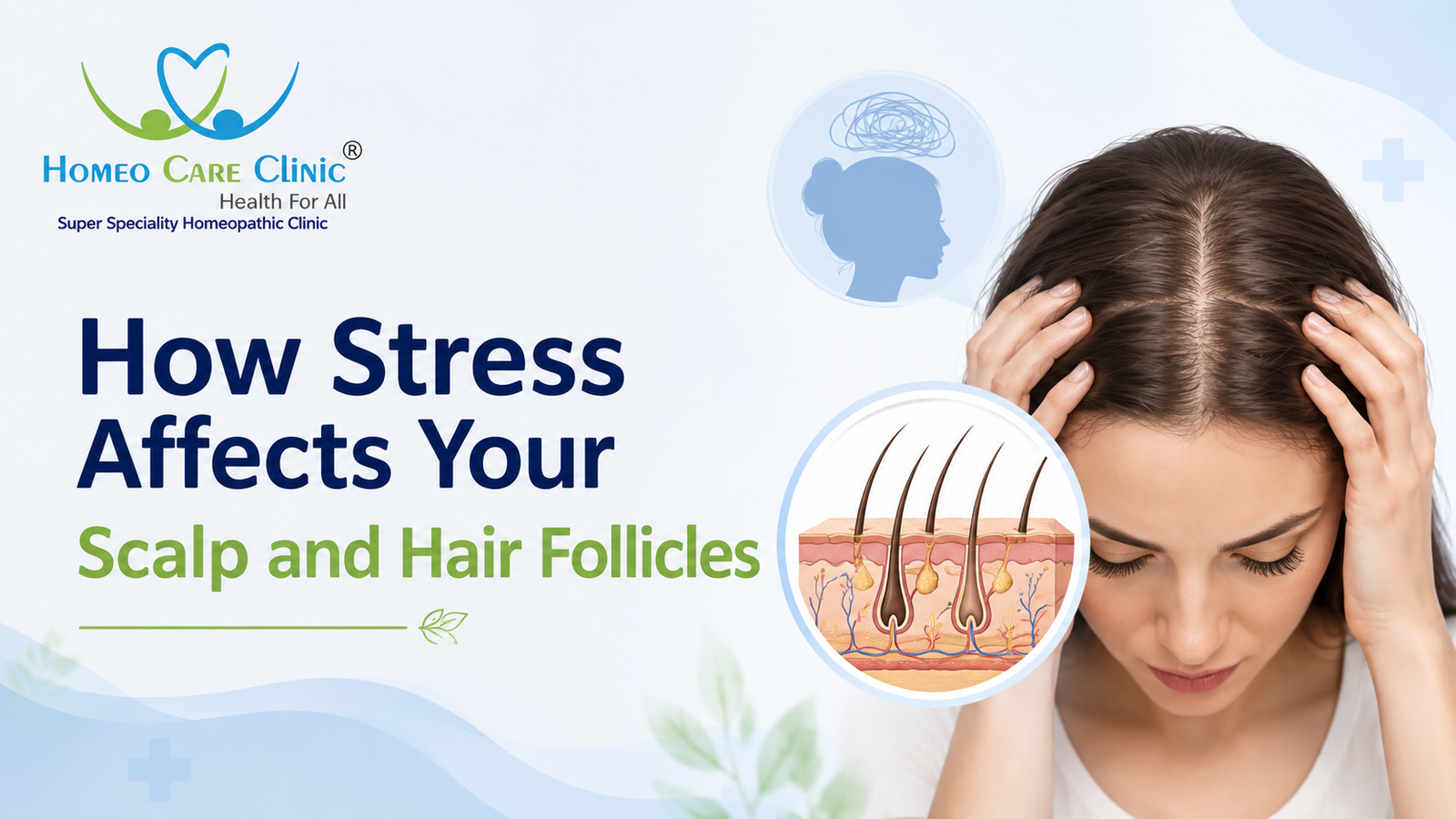
Stress can affect more than your mood and sleep—it can also influence your scalp and hair growth cycle. Prolonged physical or emotional stress may disrupt the normal hair growth cycle and trigger excessive shedding, particularly a condition called telogen effluvium. Understanding the connection between stress and hair loss can help you identify the cause early and seek appropriate hair care or professional treatment.
At Homeo Care Clinic, Pune, hair concerns are evaluated with attention to the possible causes of hair fall, scalp health, lifestyle factors, and individual needs.
What Is Stress-Related Hair Loss?
Stress-related hair loss refers to increased hair shedding or thinning that occurs after significant physical or emotional stress. One common form is telogen effluvium, in which more hair follicles than usual prematurely enter the resting phase of the hair growth cycle.
The connection is not always immediate. Hair shedding can become noticeable a few months after the triggering event, which means the stressful period may have already passed by the time increased hair fall appears.
How Does Stress Affect Your Hair Follicles?
Hair follicles continuously move through different stages of growth, transition, and shedding. Significant stress can interfere with this normal cycle.
The Hair Growth Cycle
| Hair Growth Phase | What Happens | Effect of Stress |
| Anagen | Active hair growth | Stress may cause some follicles to leave this phase prematurely |
| Catagen | Short transition phase | Follicle activity changes as the hair prepares for rest |
| Telogen | Resting and shedding phase | A larger number of hairs may enter this phase, increasing shedding |
Under normal conditions, most scalp hair remains in the active growth phase. With telogen effluvium, a larger proportion of follicles can shift prematurely into the resting phase, resulting in increased shedding.
Can Stress Cause Hair Loss?
Yes, significant physical or psychological stress can contribute to hair loss, particularly telogen effluvium. Stress is one of several possible triggers of excessive shedding and is not necessarily the only cause.
Stress-related hair loss may follow:
- Prolonged emotional stress
- Major life changes
- Severe illness or infection
- High fever
- Surgery
- Significant weight loss
- Restrictive dieting
- Hormonal changes
- Poor sleep and prolonged lifestyle strain
Because hair loss has many possible causes, persistent shedding should not automatically be attributed to stress. Conditions such as thyroid problems, nutritional deficiencies, hereditary hair loss, medications, and scalp disorders may also contribute.
What Is Telogen Effluvium?
Telogen effluvium is a type of temporary hair loss characterized by increased shedding after a significant physical or emotional stressor or another change affecting the body. It commonly causes diffuse thinning rather than clearly defined bald patches and may become noticeable several months after the trigger.
Common Signs of Telogen Effluvium
You may notice:
- More hair than usual on your pillow
- Increased hair fall while shampooing
- Hair accumulating in your comb or brush
- Overall thinning of the scalp hair
- Reduced hair density
- Sudden or noticeable shedding
Unlike some scalp conditions, telogen effluvium typically does not cause symptoms such as scalp pain, burning, rash, or significant flaking.
Why Does Hair Fall After Stress Instead of Immediately?
One of the confusing aspects of stress-induced hair loss is the delay between the stressful event and visible shedding.
A significant stressor can disrupt the hair growth cycle, but the affected hairs may not fall immediately. Instead, they can move into the resting phase and shed later. This is why someone may experience noticeable hair fall weeks or months after an illness, stressful period, major lifestyle change, or other trigger.
For this reason, when assessing hair loss, it is useful to consider what happened in the previous few months rather than focusing only on the days immediately before shedding began.
How Can Chronic Stress Affect Scalp Health?
Chronic stress can influence overall wellbeing and may indirectly affect hair health through changes in sleep, nutrition, daily habits, and the body’s response to ongoing stress.
People experiencing prolonged stress may also:
- Sleep poorly
- Skip balanced meals
- Follow restrictive diets
- Experience changes in appetite
- Neglect regular scalp care
- Use excessive heat or chemical treatments
- Develop habits that may contribute to hair breakage
These factors can overlap, making it important to look at the complete picture rather than treating stress as the sole explanation for hair loss.
Stress-Related Hair Loss vs Other Types of Hair Loss
Not all hair loss is caused by stress. Understanding the differences can help you know when professional assessment may be necessary.
| Type of Hair Loss | Typical Pattern | Possible Connection With Stress |
| Telogen Effluvium | Increased shedding and diffuse thinning | Strong association with significant stressors |
| Male/Female Pattern Hair Loss | Gradual thinning in characteristic areas | Stress may worsen the perception or shedding but is not the primary cause |
| Alopecia Areata | Smooth, defined patches of hair loss | Stress may be a potential trigger in some people, but it is an autoimmune condition |
| Traction Alopecia | Hair loss in areas repeatedly pulled by tight hairstyles | Primarily related to mechanical tension |
| Anagen Effluvium | Rapid hair loss during disruption of active growth | Usually associated with certain medical treatments or toxic exposures |
Different causes require different approaches. A proper evaluation can help distinguish temporary stress-related shedding from other forms of hair loss.
How Can You Reduce Stress-Related Hair Fall?
Reducing the underlying stressor can be an important part of managing stress-related shedding. At the same time, maintaining healthy lifestyle and hair-care habits can support the normal hair growth cycle.
1. Prioritize Adequate Sleep
Poor sleep can add to physical and emotional stress. Establishing a consistent sleep schedule may support overall wellbeing.
2. Eat a Balanced Diet
Hair growth requires adequate nutrition. Include sufficient protein, iron-rich foods, fruits, vegetables, whole grains, and healthy fats in your diet.
Avoid extreme or restrictive diets because inadequate nutrition can itself contribute to hair shedding.
3. Manage Daily Stress
Stress-management techniques may include:
- Regular physical activity
- Breathing exercises
- Meditation
- Yoga
- Spending time outdoors
- Maintaining social connections
- Speaking with a mental-health professional when needed
4. Follow Gentle Hair-Care Practices
Avoid unnecessary hair damage while your scalp and hair are recovering.
Consider:
- Avoiding very tight hairstyles
- Limiting excessive heat styling
- Using gentle hair products
- Avoiding aggressive brushing
- Maintaining regular scalp hygiene
5. Identify the Underlying Cause
If hair shedding continues, do not assume that stress is the only cause. A healthcare professional can assess your hair-loss pattern and medical history and determine whether additional evaluation is appropriate.
When Should You See a Hair Specialist?
Consider professional evaluation if you experience:
- Sudden or severe hair shedding
- Hair loss that continues for several months
- Noticeable scalp thinning
- Receding hairline
- Bald patches
- Eyebrow or body-hair loss
- Scalp itching, redness, pain, or scaling
- Hair loss associated with other unexplained symptoms
Persistent hair loss may have multiple contributing factors, and identifying the underlying cause is important before choosing a treatment.
Can PRP Hair Treatment Help With Hair Loss?
PRP (Platelet-Rich Plasma) Hair Treatment is a minimally invasive hair-restoration procedure that uses platelet-rich plasma prepared from the patient’s own blood and injects it into targeted areas of the scalp. PRP is used as a treatment option for certain types of hair loss and may help support hair growth in appropriately selected patients.
At Homeo Care Clinic, PRP hair treatment is offered as part of the clinic’s hair-restoration services in Pune. The clinic describes its PRP process as involving blood collection, separation of platelet-rich plasma, and targeted scalp injections.
Is PRP Suitable for Stress-Related Hair Loss?
PRP is not automatically required for every person experiencing stress-related shedding. If the hair loss is related to temporary telogen effluvium, addressing the trigger and allowing the hair cycle to recover may be sufficient in many cases.
However, if hair loss persists or another form of hair thinning is present, a hair specialist may evaluate whether treatments such as PRP are appropriate.
This is why hair-loss diagnosis should come before treatment selection.
PRP Hair Treatment in Pune at Homeo Care Clinic
If stress-related hair fall has progressed into persistent thinning, professional assessment can help identify the most suitable approach.
Homeo Care Clinic provides hair-focused services in Pune, including:
- Hair PRP Treatment
- Hair Fall Treatment
- Alopecia Areata Treatment
- Anti-Hair Loss Treatment
- Hair Transplant Treatment
- Mesotherapy for Hair
The clinic states that its hair-treatment approach includes consultation, scalp assessment, and personalized treatment planning.
For patients considering PRP Hair Treatment in Pune, the appropriate treatment plan depends on factors such as the type and extent of hair loss, follicle health, medical history, and individual treatment goals.
Internal linking opportunities: Link the phrase PRP Hair Treatment in Pune to the clinic’s Hair PRP Treatment page, and link Hair Fall Treatment to the corresponding hair-fall service page.
Frequently Asked Questions
Does stress cause hair loss?
Yes. Significant physical or emotional stress can contribute to excessive hair shedding, particularly telogen effluvium. However, stress is only one possible cause of hair loss, so persistent shedding should be professionally evaluated.
How does stress affect hair follicles?
Stress can disrupt the normal hair growth cycle and cause a greater number of hair follicles to enter the resting phase prematurely. This can result in increased shedding after a delay.
Can stress cause sudden hair shedding?
Yes. Significant stress can trigger increased shedding, but the hair loss may not appear immediately. Stress-related shedding often becomes noticeable several weeks or months after the triggering event.
What is telogen effluvium?
Telogen effluvium is a type of temporary hair loss associated with stressors or changes affecting the body. It typically causes increased shedding and diffuse thinning rather than permanent baldness.
Will hair grow back after stress-related hair loss?
In many cases of acute telogen effluvium, hair gradually grows back after the underlying trigger has resolved. The recovery period varies between individuals, and continued or unexplained hair loss should be evaluated by a healthcare professional.
Can lack of sleep cause hair loss?
Poor sleep can contribute to overall physical stress and may negatively affect healthy lifestyle habits. However, hair loss has many possible causes, so persistent shedding should not automatically be attributed to sleep problems alone.
Can PRP help with hair loss?
PRP may be considered for certain types of hair loss and is used to support hair growth in appropriate patients. Whether it is suitable depends on the cause and pattern of hair loss and should be determined following professional assessment.
When should I see a doctor for hair loss?
Seek professional advice if hair loss is sudden, severe, persistent, associated with bald patches, or accompanied by scalp symptoms such as redness, pain, itching, or scaling.