

I was at a neighborhood park a few weeks ago, just watching the absolute chaos that happens when you put twenty toddlers on a single playground.
Two little boys, both around four years old, were playing near the sandbox. One of them had a bright red plastic dump truck. The other boy walked over, didn’t say a single word, and just ripped the truck right out of the first boy’s hands.
Now, normally, you know exactly how this story ends. It ends in tears, a physical wrestling match, a bitten shoulder, and two embarrassed parents apologizing to each other.
But that is not what happened.
The boy who lost his truck stood up. His face turned bright red. You could see his little fists clench. He took a huge, ragged breath, looked at the kid who stole his toy, and yelled, “I am so mad at you! That is my truck and I was playing with it!”
He didn’t hit. He didn’t bite. He used his words. He named his feeling.
His mom walked over, knelt down, and said, “You are feeling really angry because he took your truck. You did a great job using your words.”
I wanted to stand up and give that kid a standing ovation. Because what I just witnessed was a masterclass in Emotional intelligence development in early childhood. It wasn’t an accident. That child was not magically born with the ability to pause his rage and articulate his feelings. That is a learned skill. It is a neurological pathway that was carefully built by parents who did the hard, exhausting work of teaching him how to handle his own brain.
Parents sit in my clinic all the time and obsess over their child’s IQ. They want to know if their kid is reading early, or doing math, or memorizing flashcards. And look, academics are great. But if your child is a certified genius who throws a chair through a window every time they get frustrated, their IQ is completely useless.
The single greatest predictor of a child’s future success, happiness, and mental health is their emotional intelligence (EQ). It dictates how they will handle a bad boss in twenty years. It dictates how they will handle a fight with their future spouse. The foundation of lifelong emotional intelligence personal development is laid down before the child even turns seven years old.
But parents are struggling. They see their kids completely dysregulated, throwing massive tantrums, entirely unable to cope with the word “no,” and they frantically ask me, how do you develop emotional intelligence? They want the roadmap. They want the actual, working strategies for developing emotional intelligence in a world that is highly distracting and constantly overwhelming.
So let’s just lay out the entire blueprint. We are going to look at why some kids are completely locked out of their own emotions, what a lack of EQ actually looks like in your living room, the massive limitations of conventional behavioral charts, and how we use deep constitutional homeopathy at Homeo Care Clinic to physically calm the nervous system down so the child can actually learn to manage their mind. Grab a huge cup of coffee. We are going deep.
The Causes: Why Do Kids Struggle with Emotional Regulation?
Why is one child able to say “I’m frustrated” while another child simply bites their sibling? We have to stop looking at emotional outbursts as moral failings. A tantrum is not a kid trying to manipulate you. A lack of emotional intelligence is usually a symptom of a nervous system that is misfiring, combined with an environment that hasn’t provided the right scaffolding.
Here is what is actually causing the disconnect.
The Biological Brain Gap First, you have to understand neuroanatomy. The human brain is essentially a house built from the bottom up. The bottom part of the brain—the amygdala—is the primitive alarm system. It controls fear, rage, and the fight-or-flight response. A toddler’s amygdala is fully formed and highly active. The upstairs part of the brain—the prefrontal cortex—is responsible for logic, reason, empathy, and impulse control. This part of the brain is basically under construction until the age of twenty-five.
So, expecting a four-year-old to naturally possess flawless emotional intelligence is like expecting a house with no roof to keep the rain out. Biologically, they are driven by impulse. They need an adult to act as their external prefrontal cortex until their own grows in.
The Digital Pacifier Epidemic This is the modern tragedy of developing emotional intelligence. Emotional regulation is learned through human friction. It is learned by experiencing a negative emotion and having an adult help you process it.
Today, the second a child whines in a grocery store, or cries in a restaurant, we hand them a glowing rectangle. We hand them an iPad. The screen provides an instant, massive dump of cheap dopamine. It instantly stops the crying. It acts as a digital pacifier. But the child never actually learned how to soothe themselves. They never sat in the uncomfortable feeling of boredom or frustration and processed it. If a child’s brain is constantly numbed by screens, the neural pathways for emotional regulation physically atrophy.
Emotional Suppression Parenting How were you raised? Most adults today were raised by a generation that did not tolerate big feelings. If we cried, we were told, “Stop crying or I’ll give you something to cry about.” If we were angry, we were sent to our rooms alone.
We were taught that negative emotions are “bad” and must be hidden. If you suppress a child’s emotion, they don’t stop feeling it. They just learn that their feelings are dangerous and shameful. A child who is not allowed to safely express anger will never learn how to manage anger. They will just bottle it up until it turns into crippling anxiety or explosive, destructive rage.
The Parental Mirror Kids are not good at listening to what you say, but they are absolutely phenomenal at copying what you do. If a mother screams at the top of her lungs when she spills her coffee, or a father punches the steering wheel and swears when he gets cut off in Pune traffic, the child is taking notes. You cannot expect a child to have high emotional intelligence if the adults in the house are constantly having their own adult tantrums. They mirror your nervous system. If you are chaotic, they will be chaotic.
The Signs and Symptoms: What a Lack of EQ Looks Like
So how do you know if your child is struggling? You don’t need a psychological evaluation to spot a child who lacks emotional intelligence. The symptoms are loud, messy, and usually happen in the most inconvenient public places possible.
But you have to look deeper than just the crying. You have to look at the patterns of their emotional responses.
- The Inability to Name the Feeling: This is the most glaring symptom. If you ask the child what is wrong, they literally cannot tell you. They do not have the vocabulary. To them, every negative feeling is just a massive, terrifying wave of physical discomfort. They cannot differentiate between feeling disappointed, feeling tired, feeling lonely, or feeling embarrassed. It all just comes out as screaming.
- Zero Frustration Tolerance: They are trying to put their shoes on. The velcro gets stuck. Instead of asking for help or trying a second time, they rip the shoe off, throw it across the hallway, and collapse on the floor weeping. They give up the second they encounter any real-world friction.
- A Complete Lack of Empathy: Now, toddlers are naturally egocentric, but by age four or five, a child should begin to understand that other people have feelings. A child lacking EQ will hit their sibling, watch their sibling cry, and show absolutely zero remorse. They cannot put themselves in another person’s shoes.
- The Victim Mentality: Nothing is ever their fault. If they knock a glass of milk off the table because they were running in the house, they will scream and blame the table, or blame their sister, or blame you. They cannot take ownership of their own actions because it threatens their fragile ego too much.
- Aggression as a Default: Because they do not have words, their body does the talking. They bite. They kick. They pinch. Their emotional bucket overflows so quickly that it instantly bypasses logic and goes straight to physical violence.
Conventional Treatment: The Limits of Behavior Modification
So you realize your household is a warzone. You are exhausted, your child is exhausted, and you take them to a pediatrician or a school counselor. What is the standard advice?
Usually, they give you behavior modification tools.
They tell you to use sticker charts. They tell you to put the child in a “time-out” chair for five minutes. They tell you to reward the good behavior and punish the bad behavior.
And look, I understand why this happens. It is a very old, very entrenched way of looking at child psychology. But it is fundamentally flawed when it comes to true Emotional intelligence development in early childhood.
A sticker chart does not teach a child how to regulate their nervous system. A sticker chart is essentially a bribe. It requires the child to use logic (“If I stay quiet, I will get a shiny star”). But remember what we talked about earlier? When a child is in the middle of an emotional meltdown, their amygdala has hijacked the brain. Their logic center is completely offline. They literally cannot care about the sticker in that moment.
And time-outs? Forced isolation is incredibly damaging to an anxious, dysregulated child. When you send a screaming kid to their room alone, you are telling them, “I only love you and want to be around you when you are happy. Your difficult emotions are too much for me.” They sit in their room feeling abandoned and terrified of their own big feelings. They might eventually stop crying, but they didn’t learn emotional intelligence. They just learned how to suppress their feelings out of fear of abandonment.
Conventional therapy often tries to treat the behavior without treating the underlying nervous system. And that is why parents feel like they are constantly putting out fires instead of preventing them.
Homeopathy Treatment: Resetting the Nervous System
This is exactly where the medical paradigm needs to shift, and this is why desperate parents eventually find their way to my clinic.
You cannot teach a drowning person how to swim.
If a child’s nervous system is vibrating with tension, if their gut is inflamed, if they are physically exhausted from poor sleep, you cannot sit them down and expect them to calmly process their feelings. Their biology is screaming.
Homeopathy does not magically teach a child the word “frustrated.” It is not a replacement for good parenting. What homeopathy does is treat the biological static on the radio station. We use incredibly safe, highly diluted nanomedicines to physically calm the central nervous system. We take the raw, jagged edge off their emotional reactivity so that when you do try to coach them, they actually have the bandwidth to listen.
We look at the child’s entire constitution. How do they sweat? What do they crave to eat? Are they terrified of the dark? Their physical quirks tell me exactly which remedy their nervous system needs to find balance.
Here are 5 medicines from our clinical cabinet that we use constantly to support kids who are emotionally stuck.
1. Chamomilla
- Indicated for: The highly sensitive, unpleasable, raging child.
- Best suited for: You know this child. They are the ones whose tantrums defy all logic. They are incredibly sensitive to physical pain—a tiny scratch is treated like a mortal wound. They demand a toy, and the literal second you hand it to them, they swat it out of your hand and scream. They are never satisfied. They act like they hate everything, but they usually demand to be carried around. They run extremely hot and might have one red cheek and one pale cheek.
- Key actions: Chamomilla is the ultimate remedy for hypersensitive, raw nerve endings. It acts immediately to cool down an overheated, irrational pediatric nervous system. It drops the aggressive, unpleasable irritability so the child can actually tolerate minor physical and emotional discomfort without exploding into violence.
2. Staphysagria
- Indicated for: Suppressed anger and the “good kid” explosion.
- Best suited for: The child who masks their feelings to survive. This is the kid who is an absolute angel at preschool. The teachers praise them. But the minute they get into your car to go home, they unleash hell. They scream, they kick your seat, they throw their shoes. They swallow all their stress and anger all day long because they are terrified of getting in trouble in public, and then they explode on the safest target. You. They often suffer from stomach aches or urinary tract issues because the suppressed emotion physically damages their body.
- Key actions: Staphysagria acts as a massive emotional release valve. It helps the child’s nervous system process everyday stress in real-time, so they stop bottling it all up. It gives them the internal courage to actually express displeasure calmly in the moment, rather than acting like an emotional pressure cooker.
3. Pulsatilla Nigricans
- Indicated for: The weeping, incredibly clingy, dependent child.
- Best suited for: Not every lack of emotional intelligence looks like anger. Sometimes it looks like pure panic. The Pulsatilla child’s mood changes like the wind. They are happy one minute, and sobbing uncontrollably the next. They are terrified of being abandoned. If you drop them off at school, they cling to your leg and cry like the world is ending. They want constant, physical reassurance. They are usually thirstless, they hate stuffy rooms, and they whine instead of speaking clearly.
- Key actions: It deeply grounds them. It takes away that desperate, needy panic and helps build a sense of internal security. It allows the child to self-soothe so they do not fall apart completely every time their mother walks out of the room.
4. Nux Vomica
- Indicated for: The highly competitive, type-A, angry little boss.
- Best suited for: This is the kid who acts like a tiny, angry CEO. They want things done now. If they are playing a board game and they start losing, they will flip the board over and scream. They are incredibly impatient. If they are trying to build a Lego set and it doesn’t work on the first try, they throw the pieces. They usually suffer from severe constipation and disrupted sleep because their nervous system is so tightly wound.
- Key actions: Nux Vomica detoxifies an overworked, highly strung nervous system. It cuts through the extreme impatience and bossiness. It gives the child the neurological flexibility to actually fail at a task without having a complete nervous breakdown, allowing them to learn resilience.
5. Ignatia Amara
- Indicated for: The child experiencing acute grief, emotional shock, or silent brooding.
- Best suited for: This remedy is crucial for a child who has just gone through a massive emotional upheaval. Maybe their parents just got divorced. Maybe a beloved grandparent passed away. Or maybe they just moved to a new city. They are holding back tears so hard you can see their jaw clench. They sigh heavily. They get a literal lump in their throat. They try to just force their emotions down into a tiny box, but it results in hysterical, unpredictable messes of laughing and crying at the same time.
- Key actions: Ignatia stabilizes acute emotional suppression. It helps the nervous system process sudden grief and stress, allowing the child to actually cry and release the trauma rather than trapping it in their physical body as tension.
Why Choose Homeo Care Clinic
You cannot build emotional intelligence in your child if you are constantly guessing about their health. Reading a few parenting blogs is not going to fix a nervous system that is fundamentally out of balance.
This is exactly why families bring their struggling, screaming kids into Homeo Care Clinic to see Dr. Vaseem Choudhary.
- Decades of Real Clinical Experience: Dr. Vaseem Choudhary has been practicing right here in Pune for nearly twenty years. He has seen the worst, most explosive tantrums you can imagine. He knows that developing emotional intelligence starts with a healthy biology. He doesn’t judge you for your child’s behavior. He looks past the screaming to find the actual pathology.
- We Treat the Gut-Brain Connection: You cannot separate the stomach from the mind. Kids who cannot regulate their emotions almost always have terrible digestion. They complain of tummy aches before school. They are chronically constipated. We fix the gut health at the exact same time we treat the emotional dysregulation, because the gut produces the vast majority of the serotonin the brain needs to feel calm.
- Accessible and Convenient Locations: When you are dealing with a child who hates transitions and screams in the car, you don’t want a long commute to a doctor. With established, fully staffed clinics in Viman Nagar, Hadapsar, and Magarpatta, you can actually get your consultation done quickly and get back to your safe space.
- No Toxic Sedatives: We are not going to put your four-year-old on a heavy psychiatric drug just to make them easier to manage in public. Our constitutional nanomedicines are incredibly safe. They do not numb the child. They do not stunt their growth. They simply help the brain clear the static.
The Benefits of Homeopathy for Personal Development
Why try this gentle approach instead of just forcing the child to behave?
- You Protect Their Personality: We don’t want to turn a vibrant, energetic kid into a silent, compliant robot. Your child will still get angry. They will still be loud. But they won’t lose control so completely that they hurt people or destroy relationships.
- It Fixes the Root Cause: If you just use timeouts, you are managing the symptom. Homeopathy aims to actually heal the jittery nervous system so the urge to hit or scream just fades away naturally.
- It Supports Lifelong Resilience: By balancing the nervous system early, you are laying down the absolute best foundation for their long-term emotional intelligence personal development. You are giving them a brain that can actually handle stress in high school and beyond.
- Boosts Baseline Immunity: An anxious, screaming child is usually a sick child, because chronic stress destroys the immune system. When we treat the emotional regulation, parents almost always notice the child stops catching every single cold that passes through their preschool.
Lifestyle Adjustments: Actual Strategies for developing emotional intelligence
Medicine provides the spark. It calms the nerves so the child can listen. But you, the parent, have to actually build the fire.
If you are wondering how do you develop emotional intelligence on a Tuesday night when your child is screaming about their dinner, here are the actual, practical strategies for developing emotional intelligence that you need to implement in your house immediately.
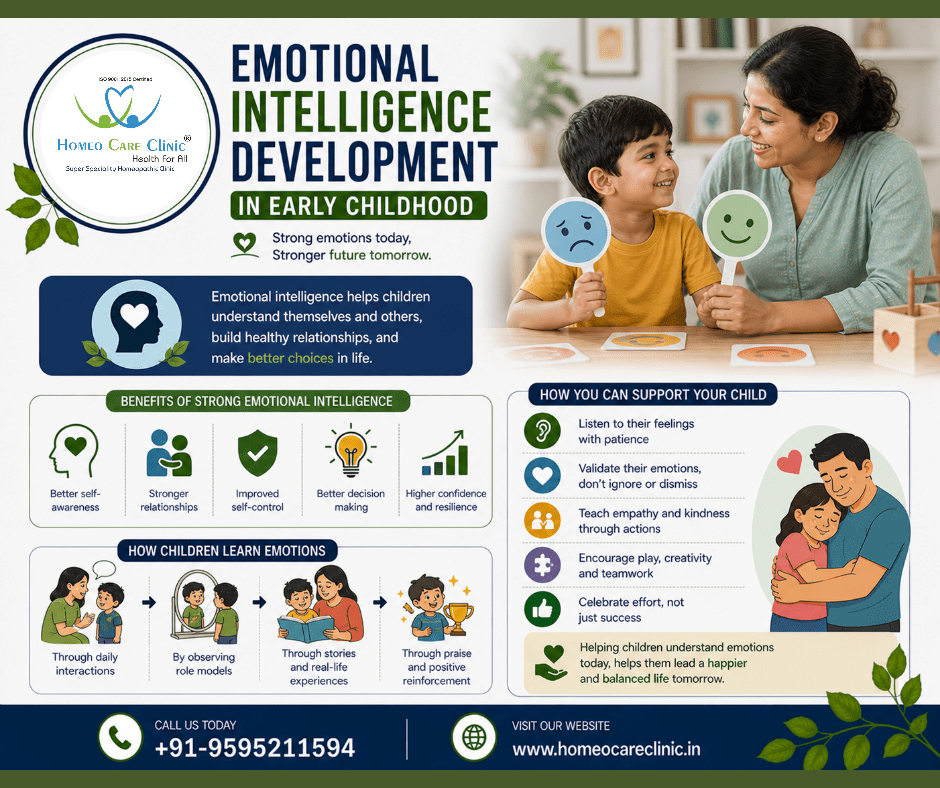
- Name It to Tame It: This is the golden rule. When your child is upset, you have to give them the vocabulary. Say out loud, “You are so angry right now. Your face is red. Your fists are tight. You are angry.” When a child hears you identify the feeling, their brain actually relaxes a tiny bit because they feel understood. You are loaning them your prefrontal cortex.
- Validate the Feeling, Limit the Behavior: You must separate the emotion from the action. All feelings are okay. All behaviors are not okay. You say, “It is perfectly okay to be incredibly angry that it is bedtime. It is not okay to kick me. I will not let you kick me.” Hold the boundary like a brick wall, but offer them a hug while they cry about the boundary.
- The “Time-In” Protocol: Throw away the time-out chair. When your child loses control, they need connection, not isolation. Sit on the floor with them. Say, “You are having a really hard time. I am going to sit right here with you until your body feels calm.” Be a calm anchor in their stormy ocean.
- Role-Play When They Are Calm: You cannot teach a drowning person how to swim. Do not try to teach deep breathing while your kid is screaming on the floor. Teach it when you are reading a book before bed. Take their stuffed animals and make the animals have a fight. Ask your child, “Oh no, the bear is so mad! What should the bear do to calm down?” Make it a game.
- Apologize When You Mess Up: You are going to yell. You are human. But when you do, you must go back to your child later and say, “I lost my temper earlier. I was feeling very frustrated, and I yelled. I should not have yelled at you. I am sorry.” That apology teaches them more about taking responsibility for their emotions than a hundred perfect days ever could.
Diet Adjustments for a Calm Brain
A child’s brain runs entirely on the fuel you provide. You cannot feed them garbage and expect them to act like a tiny, zen philosopher.
- Stop the Sugar Rollercoaster: If a child eats a bowl of sweet, processed cereal for breakfast, their blood sugar spikes massively. Two hours later, it crashes. A blood sugar crash feels like a literal panic attack to a little body. They get shaky, irritable, and aggressive. Feed them heavy protein in the morning. Eggs. Peanut butter. Keep the blood sugar perfectly flat.
- Cut the Artificial Dyes: Red 40, Yellow 5. I will say this until I lose my voice. These petroleum-based food dyes act like neurotoxins in sensitive children. They cause the nervous system to vibrate with manic, uncontrollable energy. Throw out the brightly colored snacks and the cheap blue drinks. Read every single label.
- Omega-3 Fatty Acids: The part of the brain that controls impulses—the prefrontal cortex—is largely built out of fat. Give them a high-quality, heavy-metal-free liquid fish oil supplement every single day. It physically insulates the neural pathways.
- Magnesium for the Meltdowns: A child who is constantly having tantrums is burning through their body’s magnesium reserves at an alarming rate. Magnesium is the body’s natural muscle and nerve relaxer. Feed them pumpkin seeds, almonds, or use a safe pediatric magnesium spray on the soles of their feet right before bed.
5 Commonly Asked FAQs
1. Is it too late to teach my child emotional intelligence if they are already six years old?
- Absolutely not.
- The brain is incredibly plastic. While the foundation is laid in early childhood, the prefrontal cortex continues to develop into their twenties. You can start naming feelings and holding calm boundaries at any age. It might just take a little more patience to rewire the older habits.
2. Should I just ignore the tantrums so they don’t get attention?
- Ignore the aggressive behavior, but do not ignore the child.
- If they are throwing things, move them to a safe space and physically stop their hands. But do not just walk out of the room and leave them alone. Sit near them. Be a calm presence. Let the storm pass while showing them they are still safe.
3. Did my anxiety cause my child’s emotional dysregulation?
- Children are highly attuned to their parents’ energy.
- If you are constantly vibrating with stress, your child’s nervous system will match yours. You cannot pour from an empty cup. You have to fix your own mental health and regulate your own stress if you want your child to learn how to be calm. It is a package deal.
4. How long does the homeopathic medicine take to work for behavioral issues?
- For acute, crazy tantrums (like giving Chamomilla in the middle of a rage fit), it can actually help calm them down in minutes.
- For the overall, chronic crankiness, aggression, and inability to self-soothe, give it a few weeks of consistent dosing. You will slowly notice the meltdowns are shorter, less violent, and further apart.
5. Are boys naturally worse at emotional regulation than girls?
- Biologically, there are minor differences in how brains develop, but the real issue is societal.
- Society often allows boys to be more physically aggressive, and we tend to talk about feelings more with little girls. Boys are absolutely capable of high emotional intelligence; we just have to deliberately teach them the vocabulary instead of just dismissing it as “boys being boys.”
Conclusion: Building the House
So here is the bottom line.
Raising a child is not just about keeping them physically alive. It is about building a human being who can actually survive the psychological weight of the world.
When you start digging into the reality of Emotional intelligence development in early childhood, you realize that you hold an immense amount of power. You aren’t just managing their bad behavior; you are literally wiring their brain. Understanding that developing emotional intelligence is a physical, neurological process takes the guilt and the anger out of parenting. When your child screams at you in the grocery store, they are not trying to ruin your day. They are just a tiny person whose alarm system is ringing, and they don’t know how to turn it off.
It is exhausting work. Trying to figure out exactly how do you develop emotional intelligence when you are running on three hours of sleep and cold coffee feels impossible. But you have to do the work. The strategies for developing emotional intelligence—naming the feelings, holding the boundaries, and apologizing when you mess up—are the tools you use to build the roof on their mental house.
And you don’t have to do it alone. You don’t have to suffer through the daily, violent meltdowns while you wait for their brain to mature. By changing the diet, shifting how you talk to them, and bringing them into Homeo Care Clinic for a solid, constitutional reset with Dr. Vaseem Choudhary, you can actually give their nervous system the help it desperately needs.
It is the greatest investment in their lifelong emotional intelligence personal development that you will ever make. They will still get mad. They will still cry. But they will learn how to handle the storm without burning the house down. So take a deep breath, buy the fish oil, and let’s get to work on building a resilient brain. You’ve got this.
“Your health deserves more than temporary relief. Choose homeopathy for lasting results”
Start your journey towards better focus today.
About the Author Bio:
Dr. Vaseem Choudhary M.D is a seasoned classical homeopath with over 16+ years of experience, dedicated to treating patients with compassion, precision and holistic care. Mainly in Pune & Mumbai, serving both national and international patients from UK, USA, Germany, France, Canada, Bhutan, Dubai and China. With a wide range of acute and chronic conditions—from skin disorders, hormonal issues, and digestive problems to autoimmune diseases and mental health concerns.
Dr. Vaseem is widely respected for his unique approach that combines classical homeopathy, personalized diet planning, lifestyle guidance, and a spiritual perspective on healing. He is known for his detailed and empathetic case-taking process, which focuses on treating the root cause rather than just symptoms.
In recognition of his dedication and clinical excellence, Dr. Vaseem Choudhary MD has been honored with the Best Homeopathic Doctor in Pune award by leading platforms such as:
- Awarded for International Excellence in Autism & ADHD Treatment 2026 in UK Parliament, London
- Dr. Vaseem Choudhary honoured at the UK Parliament, receiving International recognition PG from the London College of Homeopathy 2026
- Dr. Vaseem Choudhary, MD, was further acknowledged in Dubai in 2026 for his expertise in Autism and ADHD, reinforcing his growing international recognition in this field
- Best Homeopathy Doctor in Pune – National Healthcare Service Excellence Awards 2024
- Most Trusted Centre for Autism and ADHD in India 2025 – Healthcare Excellence & Leadership Awards
- Best Homeopathy Doctor in Pune – Dr. Vaseem Choudhary Shines at Ayush 2nd International Conference, Dubai
- Recognized for spearheading homeopathic treatment protocols, improving patient satisfaction, and healthcare advancements.
He is also a contributing author to the International Journal of Homeopathy and Natural Medicines (IJHNM), where he shares his research and clinical experiences with the global medical community.
With a passion to take homeopathy to new heights, Dr. Vaseem continues to guide patients towards natural, safe, and sustainable healing.
Homeo Care Clinic offers a holistic approach to treating the disease. The remedies mentioned above can treat the underlying causes of the condition and offer relief from the discomfort. However, it is important to consult a qualified homeopathic practitioner for the correct dosage and duration of treatment. Homeo Care Clinic provides comprehensive care for various ailments, and offers customized treatment plans based on individual requirements.
To schedule an appointment or learn more about our treatment, please visit our website or give us a call +91 9595211594 our best homeopathy doctor will be here to help.
Follow us on Facebook, Twitter and Instagram for valuable insights into the world of homeopathy and holistic health.
- Facebook– https://www.facebook.com/homeocareclinicpune
- Instagram– https://www.instagram.com/homeocareclinic_in
- Website– https://linktr.ee/homeocareclinic
- Success Stories of Patients –https://www.homeocareclinic.in/category/case-study/
- Patient Testimonials – https://www.homeocareclinic.in/testimonial/
Chat with a best homeopathic doctor privately:
If you have any queries regarding your disease or any symptoms, click to send a What‘s App message. Our best homeopathy doctor will be happy to answer you. About Us Click
Book an Appointment:
If you want to visit our clinic, click to book an appointment.
Online treatment:
If you are a busy professional, or you are living in a remote town or city, with no best homeopathic doctor near you, Click to start an online homeopathic treatment with the world’s exclusive, most experienced and best homeopathic clinic, managed by Dr. Vaseem Choudhary world-renowned homeopathic doctor expert
- About Us – https://www.homeocareclinic.in/about-us/
- Our Doctors –https://www.homeocareclinic.in/team/