

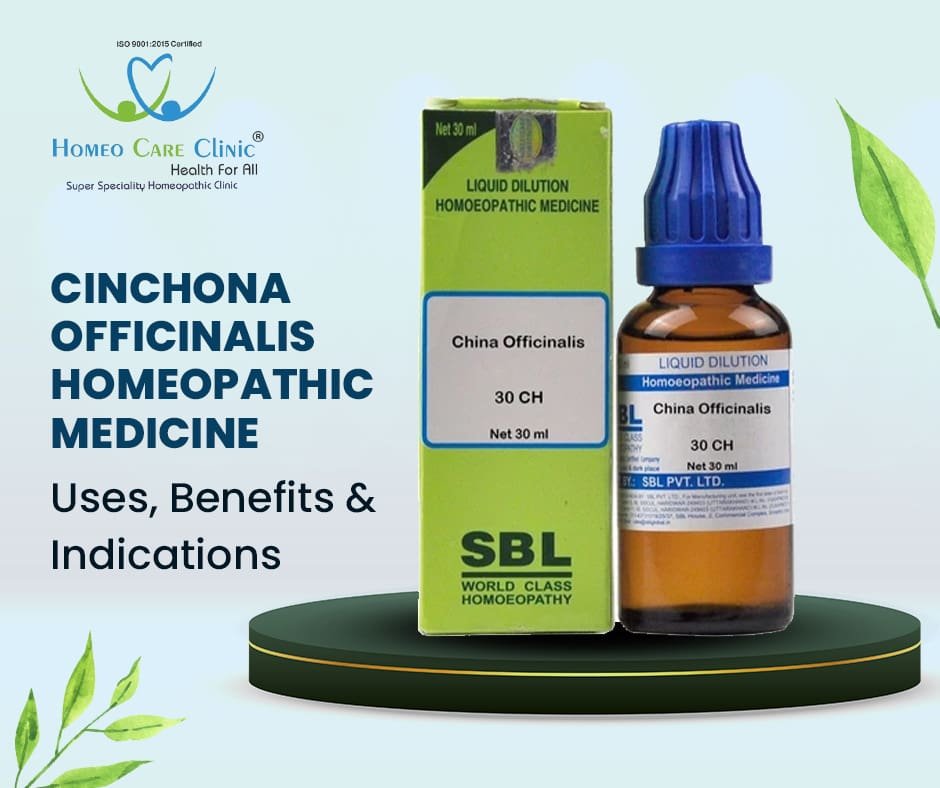
Cinchona Officinalis, previously known as Jesuit’s bark, Peruvian bark, Loxa bark, or China, is a classic homeopathic remedy derived from the dried bark of the Cinchona tree. The origin of the name “cinchona” refers to the bark of the plants found naturally in the Andean region of South America, traditionally used in the treatment of fever and weakness. However, in homeopathy, the bark has been subjected to potentization, a form of serial dilution with succussion, in order to make successful preparations of Cinchona Officinalis 200 or other potencies for treating a variety of ailments.
What is Cinchona Officinalis?
Cinchona Officinalis is a homeopathic remedy derived from a natural plant source that comes under the Rubiaceae family of plants. The homeopathic remedy is also commonly referred to as China in traditional homeopathic medicinal practices. It is effective in treating a weakness in the body, along with digestive imbalance and food sensitivities that may arise because of loss of vital fluids.
Cinchona:
The common names for this species include Jesuit’s bark, Peruvian bark, quinine bark, and China
Medicinal Action and Mechanism
The Homeopathic Preparation Cinchona Officinalis is primarily famous for its restorative properties with regard to digestion and overall health. It is particularly effective for conditions where there has been too much loss of bodily fluids, like diarrhoea, vomiting, bleeding, or perspiration. In homeopathy, a remedy is prescribed according to the totality of symptoms, not only based on its name associated with the disease.
Major Areas for Cinchona Homeopathic Uses
-
Digestive & Gastric Weak
The most common of the Cinchona officinalis uses is in digestion when there has been fluid loss. The medicine assists in the case where gas, swelling, flatus, and diarrhoea are key, especially if coupled with marked weakness and anorexia. The main symptoms include:
- Abdominal fullness and distension post-eating.
- Diarrhoea with undigested food particles.
- Offensive stools with gas.
- Loss of appetite or aversion to food.
These marks can develop after eating fruits, milk, and/or impure water and can be easily treated if the person is suffering from food poisoning.
-
Weakness & Debility
The uses of Cinchona are specifically required for physical debility resulting from the loss of vital fluids due to diarrhoea, menorrhagia, haemorrhage, and perspiration. In these situations, it works to regain strength by treating the condition of debility, which often persists even after the symptoms are relieved.
-
Symptoms Relating to the Liver
Cinchona Officinalis is also employed in homeopathy in the treatment of liver and gall bladder disorders, including those with liver/gall bladder enlargement, inflammation, along with gall stone colic.
-
Systemic & Periodic Symptoms
In some instances, the remedy works for those patients who experience intervals with sensations of chills or intermittent fever, which could be appropriately related to its traditional use in treating malarial diseases.
Cinchona Officinalis 200 Uses
The uses of Cinchona Officinalis 200 may differ from person to person, though 200C potency, among others, can be considered when using the homeopathic medicine for:
- Intermittent or periodic symptoms
- Extreme weakness that is not relieved by lower potencies
- Cyclical digestive imbalances
- Chronic debility and loss of appetite
Potencies in regard to these diseases are chosen by healthcare professionals based on a comprehensive understanding of symptoms.
Cinchona Officinalis Homeopathic Uses – Summary
Here is a brief overview of some common clinical conditions in which homeopathic Cinchona can be prescribed:
Condition & Typical Features
- Weakness following fluid loss: Exhaustion, Prostration, Pale Face
- Gastric Problems: Gas, bloating, Offensive Stools.
- Diarrhoea with debility: Weak, loose stools with gas
- Liver/gallbladder: Pain, inflammation, enlargement
- Gas pain following surgery: Abdominal distention following surgery
- Periodic complaints: Cyclic fevers, chills, weakness.
Recommended Dosage & Usage
The Homeopathic Formulation for Cinchona Officinalis can also vary in strengths such as 6C, 30C, 200C, and even higher potencies. The proper dosage, for example, using a solution containing 3-5 drops in water, taking pellets under the tongue, or as an intermittent schedule, has to be followed as advised by a professional homeopathic physician in conformity with one’s symptoms and levels of sensitivity. The frequency can range from multiple doses a day to less frequent, depending on whether it’s acute or chronic, respectively.
Safety & Precautions
A homeopathic medicine such as Cinchona Officinalis is highly diluted and quite safe if given in the right dosage. It is always advised to consult competent homeopaths before consuming any medicine, especially when pregnant, breastfeeding, or suffering from major health ailments.