
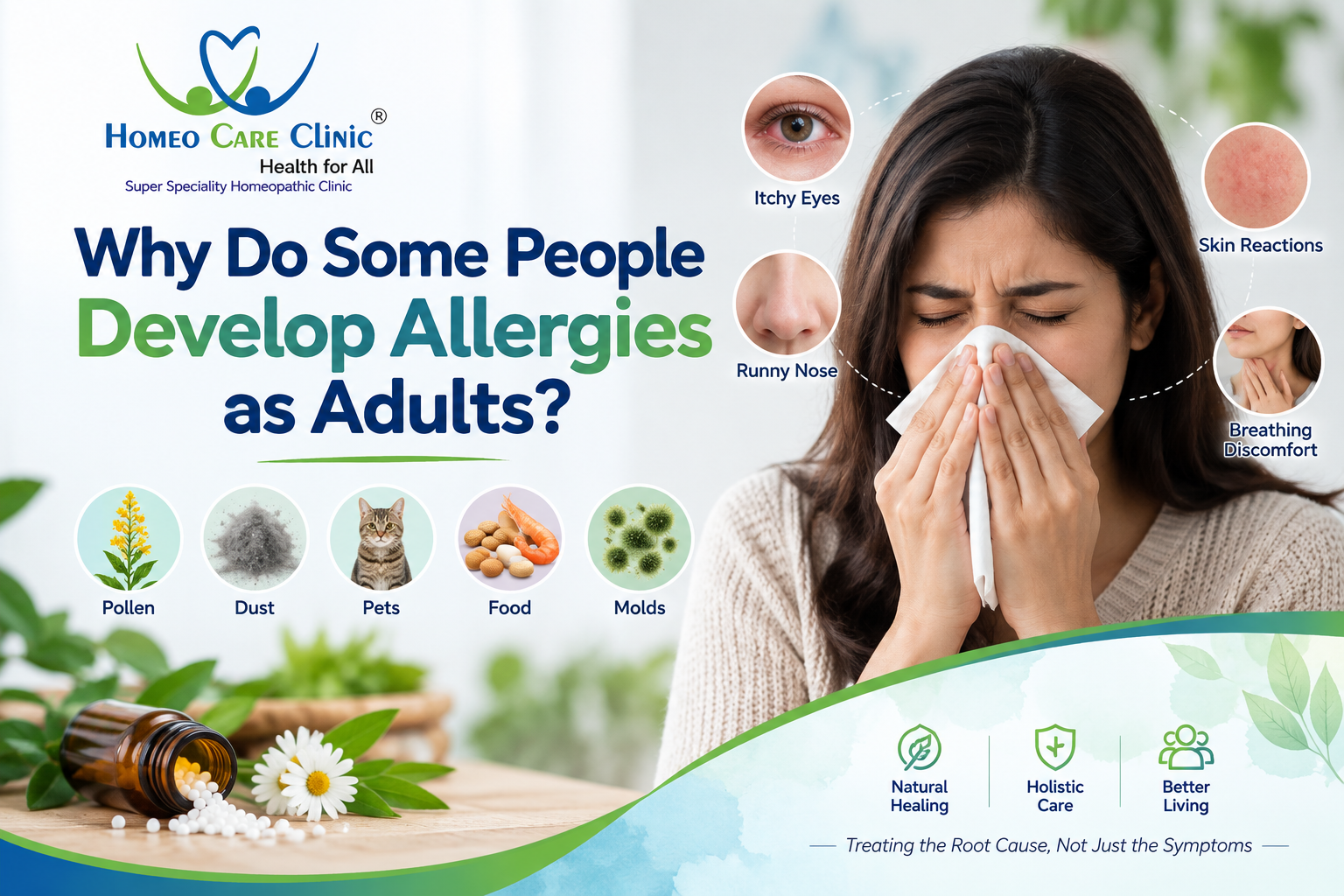
Have you suddenly started sneezing every morning, experiencing itchy eyes, developing skin reactions or feeling uncomfortable around certain foods—even though you never had allergies as a child?
Yes, allergies can develop during adulthood.
Although many allergies begin during childhood, some people develop new allergic reactions later in life. Adult-onset allergies can be related to changes in the immune system, repeated exposure to allergens, environmental changes, hormonal changes and other individual factors.
At Homeo Care, we believe understanding your symptoms and potential triggers is an important first step toward making informed decisions about your health.
What Are Adult-Onset Allergies?
Adult-onset allergies are allergic reactions that first appear during adulthood in someone who may not have experienced the same allergy during childhood.
An allergy occurs when the immune system reacts excessively to a substance that is generally harmless to most people. Common allergens include pollen, dust mites, mold, pet dander, certain foods, medications and insect stings.
Allergies can occur at different ages, so not having allergies as a child does not necessarily mean you will never develop them.
Can You Develop Allergies Later in Life?
Yes. Adults can develop new allergies later in life.
Adult-onset allergies may appear in the 30s or 40s, although they can occur at other ages as well. Recent clinical information also highlights repeated exposure, environmental changes and hormonal changes as possible factors involved in developing allergies later in life.
For example, someone may move to a new city and become exposed to different pollens, molds or environmental allergens. Similarly, getting a new pet or changing work environments can introduce new exposures.
What Causes Allergies to Develop in Adults?
There isn’t always one specific reason why an allergy suddenly appears. Several factors may contribute.
1. Repeated Exposure to Allergens
Your immune system can become sensitized after repeated exposure to a particular substance.
For example, you may have been exposed to pollen for years without noticeable symptoms, but eventually develop an allergic response.
2. Changes in Your Environment
Moving to a different location can expose you to allergens that your body has not encountered as frequently before.
Potential environmental triggers include:
- New types of pollen
- Dust mites
- Mold
- Pet dander
- Air pollution
- Workplace allergens
Environmental changes are recognized as one possible factor in adult-onset allergies.
3. Hormonal Changes
Changes in hormones can influence how the immune system behaves.
Allergy symptoms may change around significant hormonal periods such as pregnancy, puberty and menopause.
However, hormonal changes are only one possible factor, and individual experiences vary.
4. Family History and Genetics
Your genetic background can influence your tendency to develop allergies.
People with a family history of allergic conditions may have a greater likelihood of developing allergies themselves.
However, having no family history does not guarantee that you won’t develop an allergy.
5. Existing Allergic Conditions
People who have conditions such as asthma or eczema may be more prone to developing other allergic conditions.
6. Stress and Changes in the Body
Stress itself should not be considered a direct cause of allergies. However, physical stressors and changes in the body’s overall state can influence how strongly some people experience allergic reactions.
What Are the Symptoms of Adult-Onset Allergies?
The symptoms depend on the type of allergy and the allergen involved.
Common symptoms include:
- Sneezing
- Runny or blocked nose
- Itchy nose or throat
- Watery or itchy eyes
- Coughing
- Skin itching
- Hives or rash
- Swelling
- Wheezing
- Digestive symptoms such as nausea or vomiting
Some allergic reactions can be serious and may involve difficulty breathing or swelling of the throat, face or tongue.
If you experience severe difficulty breathing, throat swelling, fainting or other signs of a severe allergic reaction, seek emergency medical care immediately.
Common Types of Allergies in Adults
Seasonal Allergies
Seasonal allergies can be triggered by outdoor allergens such as tree, grass and weed pollen.
Typical symptoms include sneezing, nasal congestion, runny nose and itchy or watery eyes.
Environmental Allergies
Indoor and outdoor environmental allergens can include:
- Dust mites
- Mold
- Pollen
- Pet dander
These can cause recurring nasal and eye symptoms in sensitive individuals.
Food Allergies
Adults can also develop food allergies. Common food allergens include peanuts, tree nuts and shellfish, although many other foods can cause allergic reactions.
Food allergy symptoms can include hives, swelling, vomiting and breathing difficulties.
Medication Allergies
Some people can develop allergic reactions to medications they have previously taken or to medications they encounter later in life. Certain antibiotics and other medications can cause allergic reactions.
How Do You Know If You Have an Allergy?
Not every runny nose, cough, rash or digestive problem is caused by an allergy.
Some non-allergic conditions can produce symptoms that look similar to allergies. That’s why identifying the underlying cause is important.
A healthcare professional may consider:
- Your symptoms
- When the symptoms occur
- Possible triggers
- Your medical and family history
- Allergy testing, when appropriate
Allergy testing may involve skin testing or blood testing, depending on the individual’s situation.
How Are Adult-Onset Allergies Managed?
Management depends on the type and severity of the allergy.
Common approaches can include:
Identify and Reduce Triggers
Understanding what causes your symptoms can help you reduce exposure where practical.
Manage Symptoms
Depending on the allergy, healthcare professionals may recommend appropriate medicines or other measures.
Consider Allergy-Specific Treatment
For some allergies, specialist treatments such as immunotherapy may be considered.
Maintain a Healthy Routine
Adequate sleep, regular physical activity and a balanced lifestyle can support overall health, although there is no specific diet, exercise routine or supplement proven to prevent allergies from developing.
Can Homeo Care Help With Adult-Onset Allergies?
At Homeo Care, we focus on understanding your individual symptoms, health history and possible triggers before discussing appropriate care options.
If you are experiencing recurrent sneezing, nasal congestion, itchy eyes, skin reactions or other allergy-like symptoms, professional evaluation can help determine whether an allergy may be involved.
Our approach is centered on individualized consultation and informed care, rather than assuming that every recurring symptom is an allergy.
Why Choose Homeo Care Clinic?
- Personalized consultation
- Detailed discussion of symptoms and triggers
- Individual-focused care
- Guidance based on your health history
- Focus on long-term health and wellbeing
Book a consultation with Homeo Care to discuss your symptoms and understand your available care options.
Frequently Asked Questions
Can adults suddenly develop allergies?
Yes. Allergies can develop during adulthood even if you did not experience them as a child. Environmental exposure, repeated allergen exposure, hormonal changes and individual susceptibility can all play a role.
What are the most common adult allergy symptoms?
Common symptoms include sneezing, runny or blocked nose, itchy or watery eyes, coughing, skin rashes and hives. More serious reactions can cause swelling or breathing difficulties.
Can stress cause allergies?
Stress is not considered a direct cause of allergies. However, physical stressors can affect how strongly some allergic reactions are experienced.
Can you develop food allergies as an adult?
Yes. Food allergies can develop during adulthood. Peanuts, tree nuts and seafood are among commonly reported triggers.
How can adult allergies be diagnosed?
A healthcare professional may evaluate your symptoms and history and may recommend allergy testing, such as skin or blood testing, when appropriate.
Are all runny noses and sneezing caused by allergies?
No. Several non-allergic conditions can produce similar symptoms. Proper evaluation can help distinguish allergies from other causes.