
Introduction
A young couple sat in my Pune clinic last Monday. They brought their three-year-old son. The father works in IT in Hinjewadi and speaks primarily Telugu. The mother grew up in Mumbai and speaks Marathi. The nanny speaks Hindi. The child’s preschool communicates exclusively in English.
The parents were exhausted and deeply panicked. The mother handed me a stack of pediatric evaluation forms.
She looked at her son, who was quietly stacking wooden blocks on the floor, and said, “He doesn’t speak. He knows perhaps five words total. When he wants water, he just screams and pulls my shirt. If a stranger talks to him at the park, he freezes and hides behind my legs. His preschool teacher told us he is severely delayed and recommended we test him for autism. We are terrified. Did we break his brain by speaking too many languages at home?”
I watched the boy. When the mother accidentally dropped her pen, he looked right at it, picked it up, and handed it to her. His receptive language—his ability to understand what was happening—was perfectly intact. His expressive language was trapped behind a massive neurological traffic jam.
I told the parents what I tell hundreds of families raising children in the highly diverse, multicultural environment of modern India. You did not break your child. Your child is not defective. Your child is executing one of the most metabolically demanding, complex neurological tasks a human being can undertake.
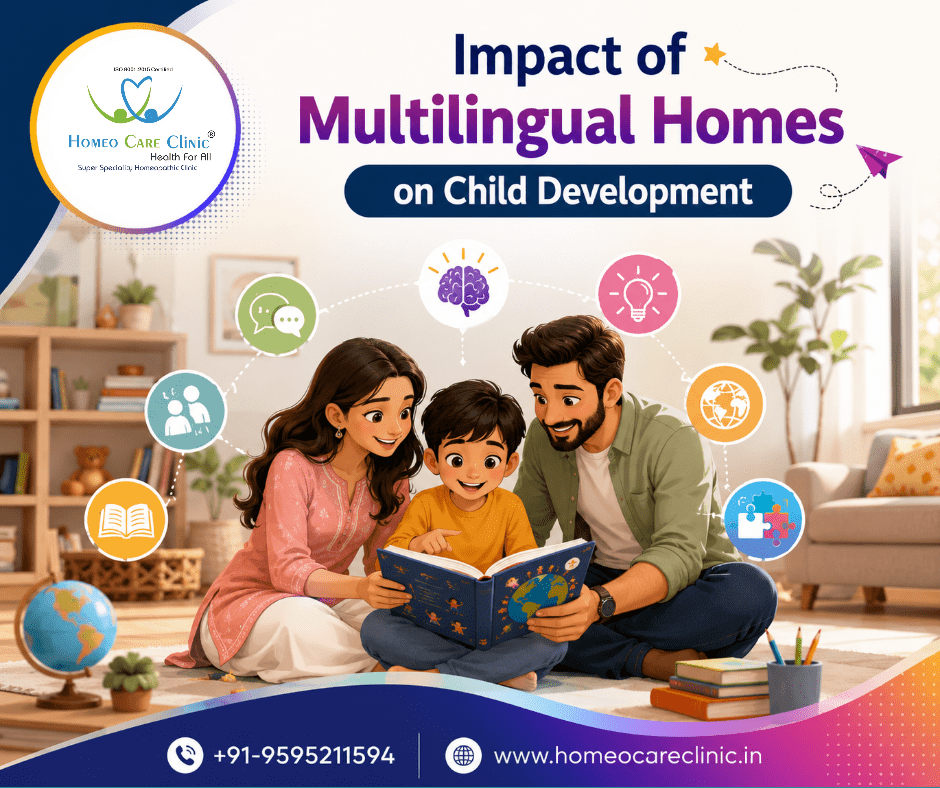
We need to have a direct, entirely unsentimental conversation about the biological reality of the Impact of multilingual homes on child development.
Society views raising a child with three or four languages as a simple, automatic process. You expose the child to the words, and they magically absorb them like a sponge. This is a severe underestimation of human neurology. Building a single linguistic mapping system in the brain requires massive cellular energy. Building three separate linguistic systems simultaneously requires a complete reorganization of the child’s developing prefrontal cortex.
Parents panic. They rush to speech therapists. They force their children to use flashcards. They abandon their native languages because a school counselor tells them the child is confused. They medicate the resulting anxiety, entirely failing to understand the mechanics of the machine they are dealing with.
We are going to dissect the physical mechanics of toddler language acquisition. We will outline the specific clinical symptoms of cognitive overload, expose the severe limitations of standard pediatric interventions, and explain how constitutional homeopathy repairs the nervous system to allow speech to flow.
Causes
Children do not experience speech delays or communication anxiety in diverse households by accident. The biological and environmental causes driving the friction in the Impact of multilingual homes on child development are highly specific.
- The Neurological Processing Bottleneck: A monolingual child learns one word for “water.” A multilingual child must learn that “water,” “paani,” and “neelu” all represent the exact same physical object. The brain has to build a complex, three-dimensional filing system. Before the child speaks, their brain must identify the object, scan three different dictionaries, select the correct word based on which adult they are looking at, and then send the mechanical signal to the vocal cords. This takes time. The delay is not a defect; it is a processing bottleneck.
- Input Inconsistency (Code-Mixing): The human brain requires patterns to build neural pathways. Modern parents frequently speak in hybrid sentences. They say, “Beta, come here and sit on the kursi.” The child’s brain cannot map the grammar rules of English or Hindi because the parent is actively destroying the structural integrity of both languages in the same breath. The child receives corrupted data.
- The Sibling Override: In many homes, an older sibling acts as a translator. If the three-year-old grunts and points at a toy, the six-year-old immediately hands it to them. The younger child has absolutely no biological necessity to speak. The brain conserves energy by remaining silent because the physical environment does not demand vocalization for survival.
- Environmental Pressure and Cortisol: Grandparents, neighbors, and teachers constantly demand that the child perform. “Say your name. Tell uncle how old you are.” The child senses the tension. The amygdala perceives this pressure as a threat, triggering a cortisol release. High cortisol physically paralyzes the language centers in the brain. The child freezes.
Types of Multilingual Acquisition
The development of language in these environments does not follow a straight line. It manifests in very specific, predictable phases.
1. The Silent Period
This usually occurs between ages two and three. The child completely stops trying to speak. They listen intently. They follow complex physical instructions (“Go get your red shoes from the bedroom”), but they refuse to vocalize. The brain is entirely focused on absorbing and categorizing the massive influx of phonetic data. The output system shuts down to conserve energy for the input system.
2. The Code-Switching Phase
The child begins to speak, but they use vocabulary from three different languages in a single sentence. They apply the grammar rules of their mother tongue to English vocabulary. This terrifies parents, who believe the child is permanently confused. Biologically, the child is perfectly aware of the different languages; they simply lack the complete vocabulary in one specific language to finish the thought, so they borrow a word from another file.
3. The Dominant Language Shift
Usually occurring when the child enters formal schooling. The child realizes that English is the currency of their external environment. They rapidly acquire English and begin refusing to respond in their mother tongue at home. They understand the native language perfectly, but the brain prioritizes the language required for external social survival.
Signs and Symptoms
You cannot support a developing nervous system if you misread the physical warning signs. When the cognitive load of mapping multiple languages becomes too heavy, the child’s body will manifest the stress physically.
- Expressive Frustration (Physical Aggression): The child knows exactly what they want to say, but the vocal cords will not cooperate. The frustration builds instantly. Because they cannot use words to negotiate, they use the only tools available. They bite, hit, or throw objects. This is not a behavioral disorder. This is trapped kinetic energy resulting from a communication blockade.
- Sudden-Onset Stuttering: Around age three or four, the child suddenly begins repeating the first syllables of words. The brain is moving much faster than the mechanical muscles of the mouth. The child is trying to sequence a complex, multilingual thought, and the vocal apparatus physically stutters under the processing load.
- Social Withdrawal (The Freeze Response): In a loud, monolingual environment like a preschool classroom, the child becomes entirely mute. They do not interact with other children. They sit in the corner and observe. The sensory input of twenty other children speaking a dominant language overwhelms their processing capacity, forcing a neurological shutdown.
- Night Terrors: The child wakes up at 2:00 AM screaming, thrashing, and entirely inconsolable. They look awake but do not recognize their parents. The brain uses deep sleep to process and file the day’s cognitive data. When the language data load is too massive, the nervous system misfires during sleep transitions.
- Regression in Milestones: A child who was fully potty-trained suddenly begins having accidents when introduced to a new language environment (like starting a new school). The brain diverts all available metabolic energy to language processing, dropping control of secondary physical functions.
Conventional Treatment
When a three-year-old is not speaking or is acting aggressively, parents run to pediatricians. The conventional medical and therapeutic response is often heavily mechanized and ignores the child’s internal anxiety.
- The “Drop a Language” Directive: Pediatricians and old-school speech therapists frequently command parents to immediately stop speaking their native languages and use only English at home. This is terrible advice. It strips the child of their cultural foundation and forces parents to speak to their child in a language they themselves may not be fluent in, removing all emotional warmth and natural rhythm from the home environment.
- Mechanized Speech Therapy: The child is placed in a sterile room and forced to look at flashcards and repeat sounds. If the child is silent due to anxiety and processing overload, demanding that they perform under bright lights only spikes their cortisol further. They learn to hate therapy.
- The Autism Misdiagnosis: Because the child exhibits a speech delay, poor eye contact with strangers, and social withdrawal, rushed pediatricians quickly label the child as on the Autism Spectrum. This causes immense, permanent trauma to the family, leading to years of unnecessary behavioral therapies for a child who simply needed more time to map their linguistic hard drive.
Homeopathy Treatment
Exhausted parents bring their toddlers to Homeo Care Clinic because the conventional system has terrified them. They want to help their child speak and reduce their anxiety without forcing them into rigid, stressful therapies or medicating them.
Homeopathy provides a structural, cellular reset for a developing nervous system battered by the heavy cognitive load of a multicultural environment. We do not use medicine to mechanically force the vocal cords to work. We use incredibly safe, highly diluted, constitutional nanomedicines to treat the specific physiological and psychological blockades preventing expression.
We observe the child. We look at their physical build. We watch how they cling to the mother. We observe their reaction to a stranger in the room. We ask about their sleep architecture and their digestion. By matching the child’s specific physical and psychological pathology to the exact energetic frequency of the remedy, we prompt the central nervous system to exit the fight-or-flight state. When the anxiety drops, the speech flows.
Homeopathy Medicine
Here are 5 medicines from my clinical cabinet utilized to resolve delays and anxiety in children managing multiple languages.
1. Calcarea Phosphorica
- Indicated for: Delayed milestones, slow language acquisition, and physical restlessness in growing children.
- Best suited for: The child who is growing very rapidly. They are tall, thin, and suffer from physical growing pains in their legs, especially at night. They are highly dissatisfied; they ask for a toy, and the moment you hand it to them, they throw it away and demand something else. The brain is developing, but the physical nervous system lacks the specific mineral foundation to support the cognitive load of speech.
- Key actions: Acts as a profound structural builder. It provides the energetic framework for cellular nutrition. It calms the frantic, dissatisfied restlessness and provides the biological grounding required for the child to actually sit still and formulate words.
2. Baryta Carbonica
- Indicated for: Severe expressive delays, extreme shyness, and a generalized slowness in cognitive processing.
- Best suited for: The child who is terrified of strangers. If someone enters the room, this child immediately hides behind their mother’s legs and physically covers their face. They are slow to walk and slow to talk. They act much younger than their chronological age. They may suffer from chronic, massive swelling of the tonsils and frequent colds. The brain processing speed is simply moving at a much slower RPM than their peers.
- Key actions: Baryta Carb is the premier remedy for delayed development. It gently stimulates the cognitive processing centers. It safely removes the paralyzing, backward shyness, giving the child the internal confidence to step out from behind their parent and attempt communication.
3. Natrum Muriaticum
- Indicated for: The child who understands everything perfectly but refuses to speak out of stubbornness, grief, or emotional sensitivity.
- Best suited for: The highly sensitive, serious child. This child knows exactly how to speak but physically refuses to do so. They may have stopped speaking after a major emotional event, such as the birth of a new sibling or the mother returning to work. They despise being laughed at. If they mispronounce a word and an adult chuckles, they will never say that word again. They hate being comforted when they are crying and will push the parent away.
- Key actions: Safely dismantles the defensive emotional wall. It helps the child process the perceived slight or grief. It removes the rigid, stubborn refusal to vocalize and allows the child to make mistakes without feeling completely humiliated.
4. Stramonium
- Indicated for: Sudden-onset stuttering, severe night terrors, and intense, violent frustration due to an inability to communicate.
- Best suited for: The child whose nervous system is entirely overwhelmed. They suffer from severe night terrors, waking up screaming and terrified of the dark. During the day, their frustration over not being understood translates into violent physical behavior—biting, hitting, or breaking toys. When they do try to speak under pressure, their face contorts and they stutter violently.
- Key actions: Acts as a massive reset for a hyper-aroused amygdala. It extinguishes the severe neurological fear, stops the night terrors, and calms the motor neurons controlling the vocal cords, eliminating the sudden-onset stutter.
5. Lycopodium Clavatum
- Indicated for: Performance anxiety, language mixing accompanied by deep insecurity, and a dual personality (bossy at home, timid at school).
- Best suited for: The child with profound imposter syndrome. At home, they are dictatorial. They order their parents around and demand things in a loud voice. The exact second they step into preschool, they become completely silent, insecure, and refuse to participate. They are terrified of failing or looking stupid in front of peers. They often suffer from digestive gas and bloating, and their mood crashes heavily in the late afternoon.
- Key actions: Heals the gut-brain connection. It resolves the digestive discomfort. Most importantly, it builds true, quiet internal confidence, removing the need to act arrogant at home while giving them the courage to speak up in the classroom.
Why Choose Homeo Care Clinic
You cannot treat a developing nervous system by reading parenting forums and guessing which remedy to buy. Pediatric biology is too delicate for trial and error.
Parents bring their children to Homeo Care Clinic to consult with Dr. Vaseem Choudhary for these specific reasons:
- Mastery of Pediatric Pathology: Dr. Vaseem Choudhary has practiced in Pune for two decades. He understands the exact linguistic pressures of Indian households—managing mother tongues, Hindi, and English simultaneously. He observes the child in the clinic environment, assessing their physical tension and behavioral responses to find the exact root of the delay.
- No Forced Performance: We do not force your child to sit in a chair and recite flashcards. We understand that pressure destroys progress.
- Accessible Clinics: With fully staffed clinics located in Viman Nagar, Hadapsar, and Magarpatta, families access constitutional care in a highly professional environment that accommodates unpredictable toddler schedules.
Benefits of Homeopathy
Why choose this route instead of forcing the child into intensive, stressful therapies?
- Zero Toxicity: Homeopathic nanomedicines contain zero gross chemicals. They are entirely safe for toddlers and infants. There are no side effects, no drowsiness, and no suppression of the child’s natural personality.
- Treats the Anxiety, Not Just the Vocal Cords: Conventional therapy treats the mechanical output. Homeopathy treats the neurological static preventing the output. When the brain feels safe, the child will speak.
- Systemic Treatment: Remedies like Calcarea Phos and Lycopodium address the entire physical ecosystem. They resolve the frequent colds, the night terrors, and the chronic constipation simultaneously while addressing the speech delay.
- Permanent Structural Resilience: The treatment builds a stronger baseline nervous system, allowing the child to process complex environments without melting down.
Lifestyle and Diet
Homeopathic medicine provides the biological spark, but parents must architect the recovery environment. Managing the cognitive load requires strict boundaries in the home.
- OPOL Method (One Parent, One Language): Stop mixing languages in the same sentence. If the mother speaks Marathi, she must speak exclusively Marathi. If the father speaks Telugu, he must speak exclusively Telugu. This provides the child’s brain with clean, uncorrupted data sets to build their neurological dictionaries.
- Eradicate Passive Screen Time: Handing an iPad to a two-year-old does not teach them language. Screen time is passive, one-way audio. Language acquisition requires active, two-way facial mapping and mechanical mimicry. Remove the screens completely. You must look the child in the eye and speak slowly.
- The Wait Time Rule: When you ask your child a question, you must count to seven silently in your head before speaking again. You are speaking at 100 miles per hour. Their brain is processing at 10 miles per hour. Give their neurological system the physical time it needs to scan its files, retrieve the word, and fire the vocal cords. Stop jumping in and answering for them.
- Massive Omega-3 and Fat Intake: The human brain is composed of 60% fat. The rapid development of neural pathways requires premium construction materials. Feed the child high-quality fats. Pure grass-fed ghee, avocados, and high-quality fish oil (DHA) are absolute biological requirements for cognitive development and speech formulation.
5 Commonly Asked FAQs
1. Does exposing a child to multiple languages cause autism? No. This is a complete myth. Exposure to multiple languages causes a temporary processing delay because the brain is building a more complex architecture. Autism is a neurodevelopmental disorder characterized by severe deficits in social communication, repetitive behaviors, and sensory processing issues. Multilingualism does not alter the fundamental neurology of the child to cause autism.
2. Should we stop speaking our mother tongue so the child learns English faster? Absolutely not. The foundation of all language acquisition is the mother tongue. If a child builds a strong, robust vocabulary in their native language, the brain easily transfers that architectural framework to English later. Abandoning your native language removes the emotional rhythm of the home and damages the child’s cultural identity.
3. My child mixes Hindi and English in the same sentence. Are they permanently confused? No. Code-mixing is a highly sophisticated sign of cognitive flexibility. The child knows exactly what they want to say. If they lack the specific word in English, their brain rapidly scans the Hindi file, grabs the correct word, and inserts it to complete the communication. It demonstrates high-level problem-solving, not confusion. This phase passes as their vocabulary expands.
4. When should I genuinely worry about a speech delay? A temporary delay is normal. However, if a child is 18 months old and does not point to objects, does not respond to their own name, makes zero eye contact, and shows no interest in communicating their basic needs through gestures, you must seek a professional evaluation. The concern is the lack of intent to communicate, not just the lack of words.
5. Can homeopathy fix anatomical issues preventing speech? No. If the child has a severe physical tongue-tie (ankyloglossia), a cleft palate, or profound hearing loss due to fluid in the ears, they require mechanical or surgical intervention. Homeopathy treats functional delays caused by neurological immaturity, processing bottlenecks, and communication anxiety.
Conclusion
Watching your child struggle to communicate is a uniquely terrifying experience for any parent. It is deeply unsettling to sit in a preschool classroom, watch other children chatter effortlessly, and look at your own child standing silently in the corner. You face judgment from grandparents, dire warnings from teachers, and a heavy, crushing sense of failure.
When professionals rush to label your child or tell you to abandon your family’s language, the cognitive dissonance is immense. You feel entirely unsupported.
Your child is not defective. The struggle is real, but it is rooted in the immense complexity of the task they are undertaking.
When you understand the biological mechanics of a multilingual brain, the chaos makes sense. The sudden tantrums, the stuttering, the silent periods, and the code-mixing are not reflections of a low IQ. They are the physical, external hallmarks of a prefrontal cortex managing a massive, demanding flow of data in a complex environment.
You do not have to panic. You do not have to subject your toddler to sterile, high-pressure therapies that spike their cortisol. You do not have to erase your cultural heritage to satisfy a preschool teacher.
Draw a hard boundary on screen time. Enforce the One Parent, One Language rule. Provide the brain with high-quality fats. Bring your child to Homeo Care Clinic for a constitutional reset with Dr. Vaseem Choudhary. Give their developing nervous system the biological foundation it requires to process their world.
Your child possesses a brilliant, capable mind. Clear the chemical static, turn off the anxiety alarm bells, and give their brain the time and safety it needs to map the data. Build your boundaries, trust the holistic process, and watch what happens when your child finally feels secure enough to find their voice.
“Your health deserves more than temporary relief. Choose homeopathy for lasting results”
Start your journey towards better focus today.
About the Author Bio:
Dr. Vaseem Choudhary M.D is a seasoned classical homeopath with over 16+ years of experience, dedicated to treating patients with compassion, precision and holistic care. Mainly in Pune & Mumbai, serving both national and international patients from UK, USA, Germany, France, Canada, Bhutan, Dubai and China. With a wide range of acute and chronic conditions—from skin disorders, hormonal issues, and digestive problems to autoimmune diseases and mental health concerns.
Dr. Vaseem is widely respected for his unique approach that combines classical homeopathy, personalized diet planning, lifestyle guidance, and a spiritual perspective on healing. He is known for his detailed and empathetic case-taking process, which focuses on treating the root cause rather than just symptoms.
In recognition of his dedication and clinical excellence, Dr. Vaseem Choudhary MD has been honored with the Best Homeopathic Doctor in Pune award by leading platforms such as:
- Awarded for International Excellence in Autism & ADHD Treatment 2026 in UK Parliament, London
- Dr. Vaseem Choudhary honoured at the UK Parliament, receiving International recognition PG from the London College of Homeopathy 2026
- Dr. Vaseem Choudhary, MD, was further acknowledged in Dubai in 2026 for his expertise in Autism and ADHD, reinforcing his growing international recognition in this field
- Best Homeopathy Doctor in Pune – National Healthcare Service Excellence Awards 2024
- Most Trusted Centre for Autism and ADHD in India 2025 – Healthcare Excellence & Leadership Awards
- Best Homeopathy Doctor in Pune – Dr. Vaseem Choudhary Shines at Ayush 2nd International Conference, Dubai
- Recognized for spearheading homeopathic treatment protocols, improving patient satisfaction, and healthcare advancements.
He is also a contributing author to the International Journal of Homeopathy and Natural Medicines (IJHNM), where he shares his research and clinical experiences with the global medical community.
With a passion to take homeopathy to new heights, Dr. Vaseem continues to guide patients towards natural, safe, and sustainable healing.
Homeo Care Clinic offers a holistic approach to treating the disease. The remedies mentioned above can treat the underlying causes of the condition and offer relief from the discomfort. However, it is important to consult a qualified homeopathic practitioner for the correct dosage and duration of treatment. Homeo Care Clinic provides comprehensive care for various ailments, and offers customized treatment plans based on individual requirements.
To schedule an appointment or learn more about our treatment, please visit our website or give us a call +91 9595211594 our best homeopathy doctor will be here to help.
Follow us on Facebook, Twitter and Instagram for valuable insights into the world of homeopathy and holistic health.
- Facebook– https://www.facebook.com/homeocareclinicpune
- Instagram– https://www.instagram.com/homeocareclinic_in
- Website– https://linktr.ee/homeocareclinic
- Success Stories of Patients –https://www.homeocareclinic.in/category/case-study/
- Patient Testimonials – https://www.homeocareclinic.in/testimonial/
Chat with a best homeopathic doctor privately:
If you have any queries regarding your disease or any symptoms, click to send a What‘s App message. Our best homeopathy doctor will be happy to answer you. About Us Click
Book an Appointment:
If you want to visit our clinic, click to book an appointment.
Online treatment:
If you are a busy professional, or you are living in a remote town or city, with no best homeopathic doctor near you, Click to start an online homeopathic treatment with the world’s exclusive, most experienced and best homeopathic clinic, managed by Dr. Vaseem Choudhary world-renowned homeopathic doctor expert
- About Us – https://www.homeocareclinic.in/about-us/
- Our Doctors –https://www.homeocareclinic.in/team/