

I was at a kid’s birthday party last weekend. You know the kind. A rented hall, a tired guy in a Spider-Man suit, and thirty screaming children hopped up on cheap icing.
I was standing near the snack table when this little boy—he had just turned five—completely lost his mind. I mean a full, terrifying, red-in-the-face meltdown. Why? Because his mom handed him a blue paper cup instead of a green one.
He didn’t just cry. He threw the cup across the room, kicked his mom in the shins, and collapsed on the floor shrieking. The mom looked mortified. She was whispering, “Use your words, use your words,” but the kid was gone. His brain was completely offline.
I felt so bad for her. Because right around age five, society suddenly expects kids to act like tiny, rational adults. Preschool teachers expect them to sit still. Grandparents expect them to say thank you. But the reality? A huge chunk of these kids are walking around with nervous systems that are just constantly on fire.
Parents sit in my office all the time and ask me about the Emotional regulation skills every child should learn by age 5. They read a blog post that terrified them, and now they think their kid is destined for a life of crime because they threw a toy car at their sister.
It isn’t that simple.
You can’t just hand a five-year-old a manual on how to calm down. You have to understand why their brain is short-circuiting in the first place, what the actual symptoms of a dysregulated nervous system look like, and how we can physically help their bodies handle stress without just putting them in endless time-outs. Let’s just break the whole thing down.
So what are we actually talking about here?
Emotional regulation isn’t about being happy all the time. That is a myth. It is just the ability to feel a massive, uncomfortable emotion—like raging anger or crushing disappointment—and not let it completely destroy your behavior.
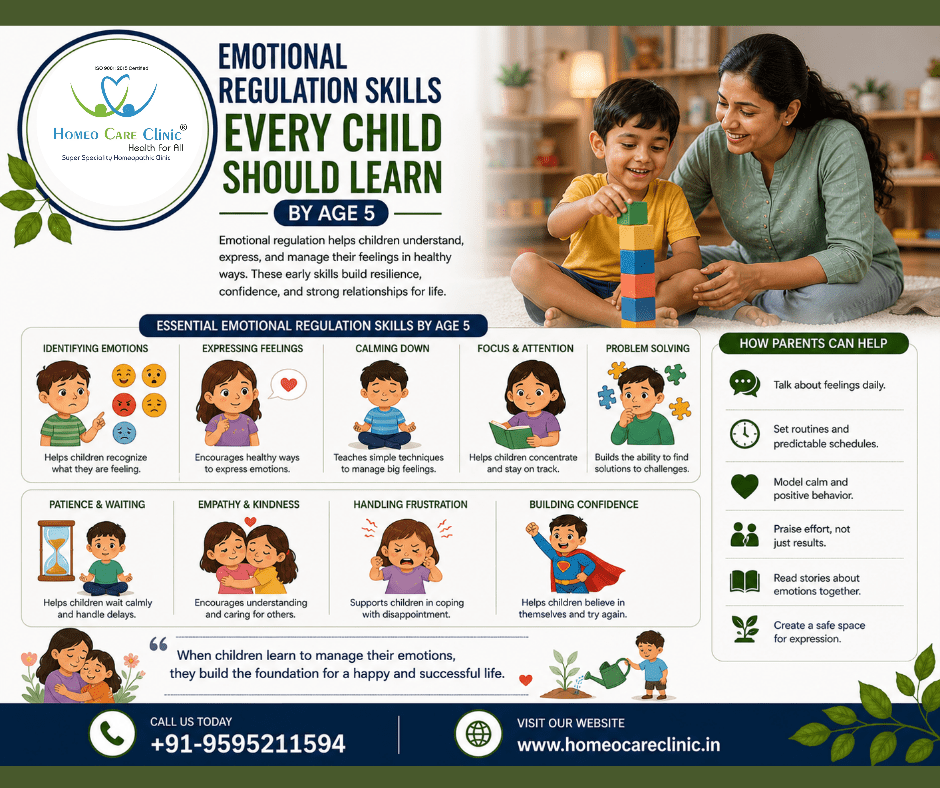
If you are looking for the exact Emotional regulation skills every child should learn by age 5, it boils down to three things:
- Naming it. Being able to say “I am mad” instead of just biting someone.
- The Pause. Feeling the urge to hit, and managing to freeze for one second before the hand actually swings.
- Seeking safety. When the emotion gets too big, running to a parent for a hug instead of hiding under a bed or destroying a room.
That’s it. We aren’t expecting zen monks. We just want them to stop biting people when they lose at Candyland.
The Causes: Why Are They Missing the Brakes?
Why do some kids naturally take a deep breath, while others throw chairs?
The causes are messy. Really messy.
First off, you have to look at the brain. The prefrontal cortex—the part of the brain right behind the forehead that acts like the brakes on a car—is basically mush at age five. It isn’t fully developed until you are twenty-five. So biologically, expecting perfect self-control from a kindergartener is insane.
But there is more to it. We have an entire generation of kids who are wildly overstimulated. They watch fast-paced cartoons on iPads where the scene cuts every three seconds. That constant, digital dopamine drip completely fries their ability to handle boredom or frustration in the real world. You take the iPad away, and their brain literally panics.
And then there is the environment. Kids are sponges. If a mom screams when she spills her coffee, or a dad punches the steering wheel in traffic, the kid watches that. They internalize it. You can’t teach a kid to stay calm if you are constantly having your own adult tantrums.
Sometimes, there is hidden physical stress. Chronic ear infections. Food allergies. Terrible sleep. If a kid’s body physically hurts or is exhausted, their emotional fuse is about two millimeters long.
The Symptoms of a Dysregulated Kid
You don’t need a medical degree to spot a kid who lacks these skills. It is usually loud, physical, and incredibly embarrassing in public.
But you have to look past the crying. You have to look at the pattern.
- Zero Frustration Tolerance: They are trying to build a Lego tower. It falls over. Instead of trying again, they sweep all the Legos off the table, scream, and refuse to play for the rest of the day.
- The Transition Meltdown: Leaving the park. Getting into the bathtub. Getting out of the bathtub. Every single change in activity requires a hostage negotiation. They cannot shift gears without a screaming match.
- Physical Aggression is the Default: A two-year-old hitting is normal. A five-year-old who still punches, bites, or kicks you every time they hear the word “no” is waving a massive red flag. They haven’t learned to put the emotion into words.
- The Hangover: Normal kids have a tantrum and bounce back ten minutes later. Dysregulated kids have a tantrum and the entire morning is ruined. They stay cranky, touchy, and miserable for hours. They can’t find their way out of the dark mood.
Conventional Treatment: The Usual Advice
If you take your five-year-old to a regular doctor and say you are losing your mind, what happens?
They usually give you a printed sheet on behavior modification. They tell you to use sticker charts.
I hate sticker charts.
If a kid is in the middle of an amygdala hijack—meaning their brain’s fear center has completely taken over and shut down their logic—a sticker chart is useless. They don’t care about a shiny star on a piece of paper when their body feels like it is on fire.
Or the doctor tells you to do “time-outs.” You put the screaming kid in a chair alone. But for an anxious, dysregulated kid, forced isolation just makes the panic worse. They feel abandoned on top of feeling angry.
If the kid hits enough people at preschool, sometimes a doctor will float the idea of an ADHD evaluation. They see a kid who can’t control their impulses and they immediately think about chemical stimulants. But drugging a five-year-old because they haven’t figured out how to handle big feelings yet? That just feels incredibly heavy-handed to me.
Homeopathy Treatment
This is why tired, bruised parents end up in my office. They want to help their kid, but they don’t want to use heavy psychiatric drugs, and the sticker charts are officially in the trash.
We approach it completely differently. We look at the kid’s whole system.
You can’t teach the Emotional regulation skills every child should learn by age 5 if the child’s nervous system is vibrating with physical tension. You have to calm the biology down first. We use specific, highly diluted nanomedicines to hit the reset button on their nerves. We fix their digestion. We fix their sleep. We take the raw, jagged edge off their moods so they can actually hear you when you try to coach them.
Here are 5 remedies I pull from my cabinet almost every single day for these kids.
1. Chamomilla
- Indicated for: The angry, hypersensitive, unpleasable kid.
- Best suited for: The kid who demands a toy, and the second you hand it to them, they throw it at your head. They are never happy. They are incredibly sensitive to pain—a tiny scratch is a medical emergency. They whine constantly, and the only thing that stops the crying is being carried around, but even then, they are grumpy.
- Key actions: It immediately cools down raw, hypersensitive nerve endings. It drops the irrational anger and stops the violent outbursts, helping the kid actually tolerate minor physical and emotional discomfort.
2. Cina
- Indicated for: The twitchy, hitting, boundary-pushing terror.
- Best suited for: The kid who looks you dead in the eye and slowly knocks a glass off the table. They hate being touched. If you try to hug them when they are mad, they push you away aggressively. They usually have physical quirks—picking their nose constantly, grinding their teeth in their sleep, or having a really weird, ravenous appetite.
- Key actions: It settles an intensely irritated central nervous system. It stops the physical twitchiness and the bizarre, hostile urge to strike out at the people trying to help them.
3. Pulsatilla Nigricans
- Indicated for: The weeping, incredibly clingy meltdown.
- Best suited for: Not every tantrum is violent. Sometimes it is just a puddle of tears. This kid’s mood changes like the wind. They are happy one minute, and sobbing uncontrollably the next. They are terrified of being abandoned. If you drop them off at preschool, they cling to your leg and cry like the world is ending. They just want constant, physical reassurance.
- Key actions: It grounds them. It takes away that desperate, needy panic. It helps the child feel internally secure so they don’t fall apart every time you walk out of the room.
4. Staphysagria
- Indicated for: The quiet kid who suppresses everything and then explodes.
- Best suited for: The kid who is an absolute angel at preschool. The teacher loves them. They never cause trouble. But the minute they get into your car to go home, they unleash hell. They scream, they kick your seat, they are awful. They swallow all their stress all day long to be “good,” and then they explode on the safest target. You.
- Key actions: It is a massive emotional release valve. It helps the child process everyday stress in real-time, so they stop bottling it all up and treating their parents like emotional punching bags at the end of the day.
5. Nux Vomica
- Indicated for: The bossy, impatient, type-A five-year-old.
- Best suited for: The kid who acts like a tiny, angry CEO. They want things done now. If they are trying to tie their shoe and it doesn’t work on the first try, they scream and throw the shoe across the room. They are incredibly competitive, usually suffer from constipation, and they hate it when things don’t go exactly according to their plan.
- Key actions: It detoxes an overworked, highly strung nervous system. It cuts through the extreme impatience and bossiness, giving the kid the ability to actually fail at a task without having a complete nervous breakdown.
Why Choose Homeo Care Clinic
You can’t fix a struggling kid by reading advice from Instagram influencers. You need someone who actually does this for a living.
And that is exactly why people drag their screaming kids into the clinic to see Dr. Vaseem Choudhary.
- He Doesn’t Blame the Parents: A lot of doctors look at a misbehaving kid and silently judge the mom. Dr. Vaseem Choudhary has been doing this in Pune for almost twenty years. He knows you are trying your best. He just looks at the pathology.
- We Treat the Gut: Kids who can’t control their emotions almost always have terrible digestion. They complain of tummy aches. They don’t poop for three days. We fix the gut health at the exact same time we treat the tantrums, because the gut makes most of the brain’s serotonin. It is all connected.
- Actually Convenient Locations: When your kid is having a meltdown, the last thing you want is an hour-long drive in traffic. With clinics established right in Viman Nagar, Hadapsar, and Magarpatta, you can get in, get the prescription, and get home fast.
- Totally Safe: We aren’t drugging your child. These are safe, constitutional nanomedicines. They won’t make your kid sleepy. They won’t stunt their growth. They just take the edge off.
The Benefits of Homeopathy for Kids
Why avoid the standard route if you can?
- It Fixes the Root: If you just use timeouts, you are just managing the symptom. Homeopathy aims to actually heal the jittery nervous system so the urge to hit or scream just fades away naturally.
- No Rebound Effect: If you put a kid on a psychiatric drug and then stop it, the behavior usually comes back twice as bad. With homeopathy, once the nervous system balances out, you stop the medicine and the healing stays.
- They Still Act Like Kids: We don’t want to turn them into robots. Your five-year-old will still be loud. They will still get mad. But they won’t lose control so completely that they hurt people.
- Boosts Immunity: An anxious kid is usually a sick kid because stress ruins the immune system. When we treat the emotional regulation, parents almost always notice the kid stops catching every single cold at preschool.
Lifestyle Adjustments: You Have to Do the Work
Medicine is the spark. But you have to change how you talk to them. You can’t just give a kid a sweet pill and then yell at them all day. You have to actively teach the Emotional regulation skills every child should learn by age 5 at home.
- Practice When They Are Calm: You cannot teach a drowning person how to swim. Do not try to teach deep breathing while your kid is screaming on the floor. Teach it when you are reading a book before bed. “Hey, let’s practice smelling a flower and blowing out a candle.” Make it a game.
- The Turtle Shell Trick: When they get overwhelmed, teach them to cross their arms tight over their chest and squeeze their own shoulders. Deep physical pressure calms the nervous system down incredibly fast.
- Name It to Tame It: When they are mad, you have to give them the vocabulary. Say, “You are so angry right now. Your face is red. Your fists are tight. You are angry.” When a kid hears you identify the feeling, their brain actually relaxes a tiny bit because they feel understood.
- Get Outside: Fluorescent lights, loud TVs, and cramped apartments make kids crazy. Take them outside. Let them run in the dirt. Natural sunlight and physical exhaustion are the best mood stabilizers on earth.
Diet Adjustments
A kid’s brain runs on the fuel you give it. You cannot feed them garbage and expect them to act like gentlemen.
- Protein is Mandatory: If a kid eats a waffle and syrup for breakfast, their blood sugar spikes. Two hours later, it crashes. A blood sugar crash feels like a panic attack to a little body. They get shaky, irritable, and aggressive. Feed them eggs. Feed them nuts. Keep the blood sugar flat.
- Check for Red 40: I say this to every single parent. Artificial food dyes—especially red and yellow—act like literal neurotoxins in sensitive kids. It makes their brains vibrate. Throw out the brightly colored snacks. Read the labels.
- Omega-3 Heavy: The part of the brain that controls impulses needs fat to grow. Give them high-quality fish oil every single day.
- Magnesium at Night: If your kid fights sleep and has restless legs, they need magnesium. It is the body’s natural muscle relaxer. Use a pediatric magnesium spray on their feet before bed.
5 Commonly Asked FAQs
1. Is my kid broken if they still bite at age five?
- Broken? No.
- But it is definitely a warning sign that their nervous system is totally overwhelmed and they don’t have the language to deal with it. You need to intervene now before they get to first grade.
2. Should I just ignore the tantrums?
- Ignore the behavior, don’t ignore the kid.
- If they are throwing things, move them to a safe space. But don’t just lock them in a room. Sit near them. Be a calm presence. Let the storm pass.
3. Did my anxiety cause my kid’s anxiety?
- Kids pick up on our energy, absolutely.
- If you are constantly stressed, your kid will be stressed. You have to fix your own mental health if you want your kid to calm down. It is a package deal.
4. How long does the homeopathic medicine take to work?
- For acute stuff, like handing them Chamomilla in the middle of a rage fit, it can work in minutes.
- For the overall, chronic crankiness and aggression, give it a few weeks. You will slowly notice the meltdowns are shorter and further apart.
5. Are boys worse at this than girls?
- Generally, society allows boys to be more physically aggressive, so we see it more.
- But little girls struggle just as much; they usually just internalize it more, turning it into stomach aches or crying fits instead of punching.
A Few Final Thoughts…
So yeah. Parenting a five-year-old is no joke.
You look around and it feels like everyone else’s kid is sitting perfectly at the restaurant while yours is under the table barking like a dog and throwing french fries. It makes you feel like a terrible parent.
But you aren’t.
Understanding the actual biology of this stuff changes everything. When you realize that the Emotional regulation skills every child should learn by age 5 aren’t just polite manners, but actual, physical neural pathways that have to be built, you can stop taking the tantrums so personally.
You don’t have to just white-knuckle your way through the next five years. You don’t have to use heavy psychiatric drugs, and you can definitely throw those sticker charts in the garbage. By changing the diet, shifting how you talk to them, and bringing them into Homeo Care Clinic for a solid, constitutional reset with Dr. Vaseem Choudhary, you can actually give their nervous system the help it needs.
They will still get mad. They will still cry. But they will learn how to handle it without burning the house down. So take a deep breath. Drink some coffee. And let’s get to work.
“Your health deserves more than temporary relief. Choose homeopathy for lasting results”
Start your journey towards better focus today.
About the Author Bio:
Dr. Vaseem Choudhary M.D is a seasoned classical homeopath with over 16+ years of experience, dedicated to treating patients with compassion, precision and holistic care. Mainly in Pune & Mumbai, serving both national and international patients from UK, USA, Germany, France, Canada, Bhutan, Dubai and China. With a wide range of acute and chronic conditions—from skin disorders, hormonal issues, and digestive problems to autoimmune diseases and mental health concerns.
Dr. Vaseem is widely respected for his unique approach that combines classical homeopathy, personalized diet planning, lifestyle guidance, and a spiritual perspective on healing. He is known for his detailed and empathetic case-taking process, which focuses on treating the root cause rather than just symptoms.
In recognition of his dedication and clinical excellence, Dr. Vaseem Choudhary MD has been honored with the Best Homeopathic Doctor in Pune award by leading platforms such as:
- Awarded for International Excellence in Autism & ADHD Treatment 2026 in UK Parliament, London
- Dr. Vaseem Choudhary honoured at the UK Parliament, receiving International recognition PG from the London College of Homeopathy 2026
- Dr. Vaseem Choudhary, MD, was further acknowledged in Dubai in 2026 for his expertise in Autism and ADHD, reinforcing his growing international recognition in this field
- Best Homeopathy Doctor in Pune – National Healthcare Service Excellence Awards 2024
- Most Trusted Centre for Autism and ADHD in India 2025 – Healthcare Excellence & Leadership Awards
- Best Homeopathy Doctor in Pune – Dr. Vaseem Choudhary Shines at Ayush 2nd International Conference, Dubai
- Recognized for spearheading homeopathic treatment protocols, improving patient satisfaction, and healthcare advancements.
He is also a contributing author to the International Journal of Homeopathy and Natural Medicines (IJHNM), where he shares his research and clinical experiences with the global medical community.
With a passion to take homeopathy to new heights, Dr. Vaseem continues to guide patients towards natural, safe, and sustainable healing.
Homeo Care Clinic offers a holistic approach to treating the disease. The remedies mentioned above can treat the underlying causes of the condition and offer relief from the discomfort. However, it is important to consult a qualified homeopathic practitioner for the correct dosage and duration of treatment. Homeo Care Clinic provides comprehensive care for various ailments, and offers customized treatment plans based on individual requirements.
To schedule an appointment or learn more about our treatment, please visit our website or give us a call +91 9595211594 our best homeopathy doctor will be here to help.
Follow us on Facebook, Twitter and Instagram for valuable insights into the world of homeopathy and holistic health.
- Facebook– https://www.facebook.com/homeocareclinicpune
- Instagram– https://www.instagram.com/homeocareclinic_in
- Website– https://linktr.ee/homeocareclinic
- Success Stories of Patients –https://www.homeocareclinic.in/category/case-study/
- Patient Testimonials – https://www.homeocareclinic.in/testimonial/
Chat with a best homeopathic doctor privately:
If you have any queries regarding your disease or any symptoms, click to send a What‘s App message. Our best homeopathy doctor will be happy to answer you. About Us Click
Book an Appointment:
If you want to visit our clinic, click to book an appointment.
Online treatment:
If you are a busy professional, or you are living in a remote town or city, with no best homeopathic doctor near you, Click to start an online homeopathic treatment with the world’s exclusive, most experienced and best homeopathic clinic, managed by Dr. Vaseem Choudhary world-renowned homeopathic doctor expert
- About Us – https://www.homeocareclinic.in/about-us/
- Our Doctors –https://www.homeocareclinic.in/team/