
Bloom syndrome is a rare genetic disorder that runs in families and makes it harder for people to grow, fight off infections, and get cancer at a young age. Though uncommon, it is a serious condition because it impacts multiple body systems and significantly reduces life expectancy if not monitored carefully. The disorder is named after dermatologist Dr. David Bloom, who first described it in 1954.
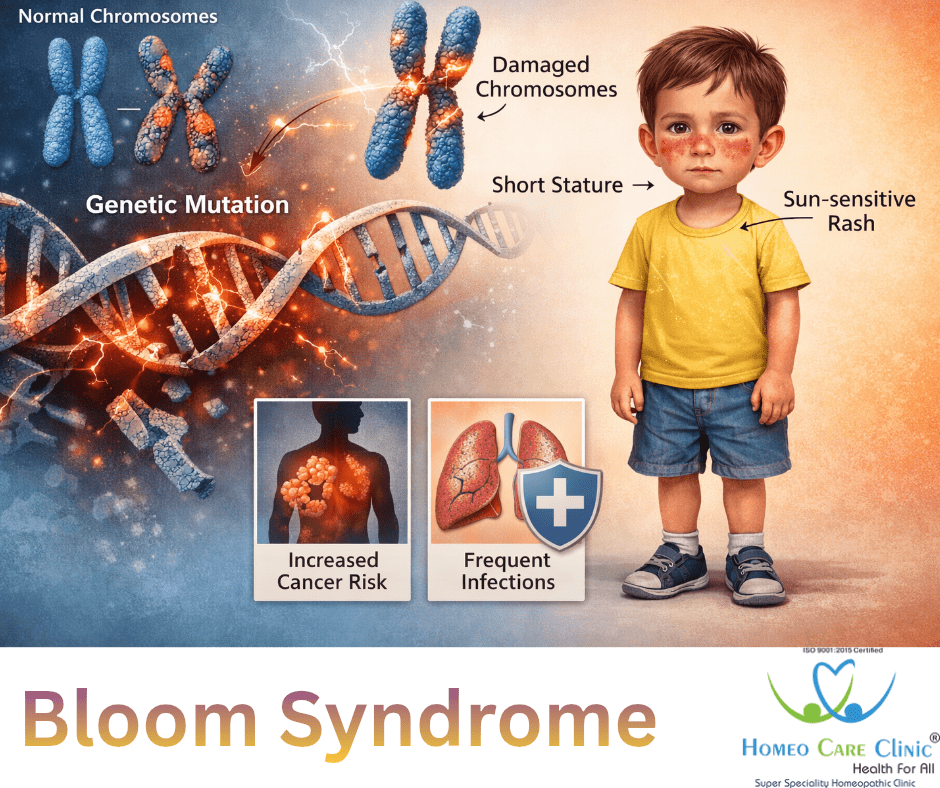
People with Bloom syndrome are usually short in height, have a distinctive facial appearance, experience frequent infections, and develop sun-sensitive skin rashes. Chromosomes are very unstable in people with Bloom syndrome, which is one of the most worrying things about the disease. This means that they are more likely to get different types of cancer at a young age.
This blog explains what Bloom syndrome is, its chromosomal cause, symptoms, life expectancy, modern medical management, and also discusses a supportive homeopathic approach along with diet and FAQs.
What is Bloom Syndrome?
Bloom syndrome is an uncommon autosomal recessive genetic disorder resulting from a mutation in the BLM gene, which is essential for preserving DNA stability. This mutation makes it hard for cells to fix DNA damage, which causes chromosomes to break and rearrange themselves often.
This condition affects men and women equally, but it is more common in people of Ashkenazi Jewish descent. It can happen in any group of people, though.
Bloom Syndrome Chromosome Defect
The primary problem in Bloom syndrome lies in chromosome instability.
The BLM gene can be found on chromosome 15.
It makes a protein called DNA helicase. During cell division, this protein fixes DNA that has been damaged.
In Bloom syndrome:
DNA repair is faulty
Sister chromatid exchange occurs excessively
Chromosomes break easily
Cells mutate rapidly
This chromosomal instability is the main reason for:
Growth failure
Immune system weakness
Early development of cancers
Types of Bloom Syndrome
Bloom syndrome does not have multiple clinical types, but it can be classified based on severity and associated complications:
-
Classic Bloom Syndrome
Severe growth retardation
Typical facial features
High cancer risk
Frequent infections
-
Milder Variant
Less severe growth delay
Later onset of complications
Cancer risk still present but slightly delayed
Causes of Bloom Syndrome
Bloom syndrome is caused by:
Inherited mutation in the BLM gene
Passed in an autosomal recessive pattern
Both parents are usually carriers without symptoms
Risk Factors:
Family history of Bloom syndrome
Consanguineous marriages
Ashkenazi Jewish ancestry
The condition is not contagious and not caused by lifestyle or environmental factors.
Bloom Syndrome Symptoms
Symptoms usually appear in infancy or early childhood and may worsen with age.
Physical Symptoms
Short stature and low body weights
Narrow face with prominent nose and ears
Sun-sensitive skin rash (butterfly rash on face)
Thin hair and delicate skin
Immune System Problems
Frequent respiratory infections
Recurrent ear and lung infections
Poor wound healing
Developmental Issues
Delayed growth
Normal intelligence in most cases
Learning difficulties in some individuals
Reproductive Issues
Infertility in males
Reduced fertility in females
Cancer Risk
Leukemia
Lymphoma
Gastrointestinal cancers
Skin cancers
Breast and other solid tumors
Bloom Syndrome Life Expectancy
Life expectancy in Bloom syndrome is significantly reduced, mainly due to early-onset cancers and infections.
Average life expectancy: 20–30 years
Some individuals live longer with early cancer screening and medical care.
Advances in medical monitoring have improved survival rates in recent years
Early diagnosis, regular cancer screening, and infection control are crucial for improving quality of life.
General (Conventional) Treatment Approach & Side Effects
There is supportive cure for Bloom syndrome. Treatment focuses on management and prevention of complications.
General Medical Management
Regular cancer screening
Avoidance of excessive sun exposure
Prompt treatment of infections
Immunoglobulin therapy in severe
immune deficiency
Nutritional support for growth failure
Chemotherapy & Radiation
Used cautiously because Bloom
syndrome patients are highly sensitive
Increased risk of severe side effects
Possible Side Effects of Conventional Treatment
Severe drug toxicity
Poor tolerance to chemotherapy
Increased DNA damage from radiation
Fatigue, hair loss, immune suppression
Because of these limitations, many families look for supportive therapies alongside standard care.
Homeopathy Approach (Supportive Role)
⚠️ Homeopathy does approach to improve immunity, vitality, and symptom management.
-
Phosphorus
Weak immune system
Respiratory infections that happen a lot
Failure to grow
Constitution that is sensitive and fragile.
-
Calcarea Phosphorica
Slow growth and development
Bones and muscles that are weak
Lack of nutrients
-
Silicea
Infections that happen again
Poor healing
Weak resistance
-
Arsenicum Album
Very weak Worry about health Feeling like you’re on fire Help for people with chronic illnesses
-
Thuja Occidentalis
Weakness in genes Infections that happen again and again, Skin signs.
👉 A qualified homeopathic doctor should always choose the right remedy for each person.
Diet Chart for Bloom Syndrome
A nutritious, immunity-boosting diet is essential.
Recommended Foods
Fresh fruits (apple, papaya, berries)
Green vegetables (spinach, broccoli)
Protein-rich foods (lentils, eggs, paneer)
Whole grains (brown rice, oats)
Healthy fats (nuts, seeds, olive oil)
Probiotic foods (curd)
Foods to Avoid
Processed foods
Excess sugar
Artificial additives
Junk food
Excessive sun-sensitizing foods if rash worsens
Hydration
Adequate water intake
Fresh homemade juices
FAQs about Bloom Syndrome
- Is Bloom syndrome curable?
Bloom syndrome is a condition that can be managed. People can have better health stability and a better quality of life if they get diagnosed quickly, are regularly monitored, and get a full range of treatments that focus on controlling symptoms and preventing complications.
- Is Bloom syndrome inherited?
Yes, it is inherited in an autosomal recessive pattern.
- How does homeopathy help in inherited conditions like Bloom syndrome?
Homeopathy is based on the idea that it strengthens the person’s constitution. Even in inherited conditions, homeopathic remedies are chosen to enhance immune function, diminish infection susceptibility, promote growth, and restore overall health, rather than merely addressing specific symptoms.
- Can homeopathy reduce the risk of complications in Bloom syndrome?
Homeopathic treatment aims to enhance immunity, bolster resistance, and sustain internal equilibrium, potentially aiding in the reduction of recurrent infections and the support of the body’s innate defense mechanisms. But regular checkups and cancer screenings are still very important.
- Can homeopathy cure Bloom syndrome?
Bloom syndrome is a genetic condition, but constitutional homeopathic treatment tries to fix the body’s internal imbalance, boost the immune system, and support the body’s natural healing powers. This helps patients live a healthier and more stable life.
Version:1.0 StartHTML:0000000156 EndHTML:0000091297 StartFragment:0000000469 EndFragment:0000091289
“Your health deserves more than temporary relief. Choose homeopathy for lasting results”
Start your journey towards better focus today.
About the Author Bio:
Dr. Vaseem Choudhary M.D is a seasoned classical homeopath with over 16+ years of experience, dedicated to treating patients with compassion, precision and holistic care. Mainly in Pune & Mumbai, serving both national and international patients from UK, USA, Germany, France, Canada, Bhutan, Dubai and China. With a wide range of acute and chronic conditions—from skin disorders, hormonal issues, and digestive problems to autoimmune diseases and mental health concerns.
Dr. Vaseem is widely respected for his unique approach that combines classical homeopathy, personalized diet planning, lifestyle guidance, and a spiritual perspective on healing. He is known for his detailed and empathetic case-taking process, which focuses on treating the root cause rather than just symptoms.
In recognition of his dedication and clinical excellence, Dr. Vaseem Choudhary MD has been honored with the Best Homeopathic Doctor in Pune award by leading platforms such as:
Best Homeopathy Doctor in Pune – National Healthcare Service Excellence Awards 2024
Most Trusted Centre for Autism and ADHD in India 2025 – Healthcare Excellence & Leadership Awards
Best Homeopathy Doctor in Pune – Dr. Vaseem Choudhary Shines at Ayush 2nd International Conference, Dubai
Recognized for spearheading homeopathic treatment protocols, improving patient satisfaction, and healthcare advancements.
He is also a contributing author to the International Journal of Homeopathy and Natural Medicines (IJHNM), where he shares his research and clinical experiences with the global medical community.
With a passion to take homeopathy to new heights, Dr. Vaseem continues to guide patients towards natural, safe, and sustainable healing.
Homeo Care Clinic offers a holistic approach to treating the disease. The remedies mentioned above can treat the underlying causes of the condition and offer relief from the discomfort. However, it is important to consult a qualified homeopathic practitioner for the correct dosage and duration of treatment. Homeo Care Clinic provides comprehensive care for various ailments, and offers customized treatment plans based on individual requirements.
To schedule an appointment or learn more about our treatment, please visit our website or give us a call +91 9595211594 our best homeopathy doctor will be here to help.
Follow us on Facebook, Twitter and Instagram for valuable insights into the world of homeopathy and holistic health.
Facebook– https://www.facebook.com/homeocareclinicpune
Instagram– https://www.instagram.com/homeocareclinic_in
Website– https://linktr.ee/homeocareclinic
Success Stories of Patients –https://www.homeocareclinic.in/category/case-study/
Patient Testimonials – https://www.homeocareclinic.in/testimonial/
Chat with a best homeopathic doctor privately:
If you have any queries regarding your disease or any symptoms, click to send a What‘s App message. Our best homeopathy doctor will be happy to answer you. About Us Click
Book an Appointment:
If you want to visit our clinic, click to book an appointment.
Online treatment:
If you are a busy professional, or you are living in a remote town or city, with no best homeopathic doctor near you, Click to start an online homeopathic treatment with the world’s exclusive, most experienced and best homeopathic clinic, managed by Dr. Vaseem Choudhary world-renowned homeopathic doctor expert
About Us – https://www.homeocareclinic.in/about-us/
Our Doctors –https://www.homeocareclinic.in/team/